Gooseneck Kettle vs Regular: A Thorough Side-by-Side Review
Analyze gooseneck kettle vs regular kettles across pour control, heat-up time, and brewing outcomes to help homeowners, tea lovers, and cooks choose the right kettle for precision brewing and everyday use.


What is a gooseneck kettle and how does it differ from a regular kettle
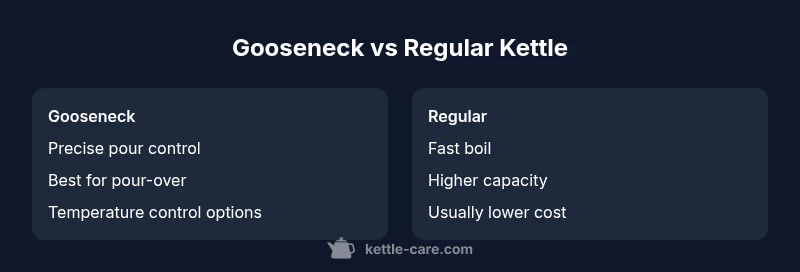
For many home brewers, the comparison you are making often centers on the phrase gooseneck kettle vs regular. A gooseneck kettle features a long, narrow spout that enables deliberate water flow with micro-adjustments, contributing to even saturation of coffee grounds or tea leaves. A regular kettle, by contrast, usually has a rounded, broad spout designed for rapid boiling and quick filling. This fundamental difference in pouring dynamics affects extraction, flavor development, and brew time. In practical terms, gooseneck designs reward patience and technique, while regular designs reward speed and simplicity. The choice influences daily routines as well as how you approach temperature targets, pour rate, and cup consistency. According to Kettle Care, gooseneck kettles excel in pour-over precision, while regular kettles prioritize speed and convenience.
Design and materials: gooseneck vs regular
Material choice and build quality shape how a kettle performs beyond the silhouette of the spout. Gooseneck kettles are commonly offered in stainless steel with wooden or heat-resistant handles, and some premium models feature copper or brushed finishes for heat distribution and aesthetics. Regular kettles come in a wide range of materials as well, including stainless steel, aluminum, and glass, often with larger handles and wider bodies for easier filling. The narrow gooseneck design tends to place a focus on balance and grip, whereas regular kettles emphasize capacity and durability for everyday use. In both cases, the choice of material influences heat retention, scale resistance, and ease of cleaning. From a safety standpoint, stainless steel and borosilicate glass are durable and easy to descale, while copper surfaces require more routine maintenance to preserve luster and avoid tarnish.
Temperature control and consistency
One of the biggest differentiators in the gooseneck kettle vs regular debate is how temperature is managed in brewing. Many gooseneck models, especially electric versions with thermostatic controls, offer adjustable temperature targets and hold functions. This makes precise temperature control accessible for delicate tea varieties and precise coffee extractions. Regular kettles branded for speed often provide a simple boil with no fine-tuned temperature options, though some electric models include basic temperature presets. On stovetop gooseneck and regular kettles, your control depends on external heat management and timing. Temperature consistency matters for extraction yield and flavor profile, so the ability to hit and hold a target temperature can be a decisive factor in favor of gooseneck designs for serious brewers.
Pouring dynamics: control, speed, and technique
Pouring technique is where the gooseneck design truly shines. The slender, curved spout enables a slow, predictable water stream, reducing splashing and enabling uniform saturation. This is especially important for pour-over coffee, where 1–3 minute pours can determine aroma and crema. Regular kettles pour faster, which is convenient for boiling large quantities or preparing tea that does not require extreme precision. For many users, the gooseneck’s control translates into more consistent cup profiles, while the regular kettle’s speed supports quick mornings and large families. Practically, the choice comes down to whether you want meticulous control or maximum convenience.
Use cases: pour-over coffee, tea, and other beverages
Gooseneck kettles excel in pour-over coffee, where precise water flow helps manage extraction and balance. They also aid tea enthusiasts who experiment with water temperature for different leaf varieties. Regular kettles shine in everyday tasks, from boiling water for instant noodles to preparing hot chocolate or tea with less emphasis on exact temperatures. If you routinely brew specialty coffees or delicate teas, a gooseneck kettle aligns with your goals. For households seeking speed, simplicity, and greater volume per boil, a regular kettle is often the more practical choice. The ideal setup may involve owning one of each, especially for mixed brewing needs.
Heat source considerations: electric, stovetop, and compatibility
Kettle compatibility with your heat source is a practical concern. Electric gooseneck kettles offer precise temperature control and keep-warm features, making them great for regulated brewing sessions. Stovetop gooseneck kettles rely on your flame intensity, and while the control over pour is excellent, you’ll depend on visual cues and timing. Regular kettles follow the same heat-source logic but with less emphasis on precise temperature targets. If you need flexibility across multiple heat sources, look for kettles with reliable safety features, wide compatibility bases, and sturdy, long-lasting materials. Pay attention to handle design, lid fit, and the ease of using the kettle on an induction surface if that matters in your kitchen.
Cleaning and maintenance differences
Descaling and routine cleaning are essential for both types, but gooseneck designs often feature a narrower neck and small or restricted openings that can accumulate mineral buildup. Regular kettles may tolerate heavier use and simpler cleaning routines but can suffer from mineral deposits that affect boiling performance. Use a standard descaling solution or a citric acid-based cleaner and rinse thoroughly. For copper or brass components, polish or specialized cleaners may be needed to maintain appearance. Regular maintenance extends the life of either kettle and preserves flavor integrity in brewed beverages.
Durability, warranty, and long-term value
Durability often tracks with material choice and construction quality. Stainless steel gooseneck models tend to be robust, with good heat distribution and long-term resistance to corrosion. Regular kettles vary widely in build quality, with some low-cost models showing wear more quickly under intense daily use. Warranty terms can differ significantly by brand and model, so review coverage for parts such as the lid, handle, and inside finish. In terms of long-term value, a higher upfront investment in a well-made gooseneck kettle may pay off via improved brewing consistency and reduced waste, but if your needs lean toward fast boiling and high volume, a dependable regular kettle may yield better cost-per-use.
Price ranges and value proposition
In general, gooseneck kettles cover a broader price spectrum than regular kettles. Expect lower-cost gooseneck options to start around modest price points and escalate with build quality, temperature control features, and materials. Regular kettles tend to offer lower price bands, with more affordable options that still deliver reliable performance for everyday boiling. When evaluating gooseneck vs regular on price, weight the cost against your brewing goals, frequency of use, and desire for precision. If you brew coffee or tea frequently and seek repeatable results, a gooseneck option with temperature control may provide better value over time; for casual daily boiling, a regular kettle can be the most economical choice.
Practical buying checklist: step-by-step decision guide
- Define your primary use: pour-over coffee, tea, or broad boiling needs.
- Decide on heat source compatibility: electric vs stovetop and induction readiness.
- Evaluate pouring control vs speed: are you investing in precision or convenience?
- Check temperature control options: presets, hold temperature, or no control.
- Consider capacity needs: single-serve vs multiple cups per boil.
- Review materials and maintenance: stainless steel, copper, glass, and descaling requirements.
- Compare price ranges and warranties: longer warranties may reflect higher value.
- Read user reviews focused on real brewing outcomes and long-term durability.
- Plan for future upgrades: would you prefer both a gooseneck for precision and a regular kettle for fast boils?
- Verify safety features and ergonomic design: handle comfort, lid fit, and spout alignment.
The result should be a kettle that fits your typical brewing style and kitchen setup, not just the most expensive option on the shelf.
Common mistakes and practical tips
A common misstep is buying based on aesthetics rather than brewing needs. If you rarely brew with precision techniques, a gooseneck may sit idle. Conversely, skimping on build quality to save money leaves you with a brittle handle or a warped lid. Regular maintenance can prevent scale buildup and ensure even heat distribution. When using a gooseneck kettle on a gas stove, keep the flame modest to avoid overheating the handle and ensure stable pouring. For electric models, regularly check the power cord and plug for wear and ensure the safety shutoff is functioning properly. Finally, descaling every few months depending on water hardness helps preserve flavor and performance over time.