Staub Tea Kettle vs Le Creuset: A Practical Comparison for Safe Boiling
A detailed, evidence-based comparison of Staub and Le Creuset stovetop tea kettles, focusing on design, performance, maintenance, and value to help home cooks choose the right model for safe, fast boiling.


Staub tea kettle vs Le Creuset are two iconic enameled cast iron kettles that share heritage and performance goals but diverge in design, heat retention, pouring ergonomics, and care needs. For homeowners and tea lovers, understanding material construction, aesthetics, and value helps you pick the best fit for your kitchen. In short, choose Staub for traditional warmth and durability, or Le Creuset for color variety and proven durability.
Staub vs Le Creuset: Core Design and Materials
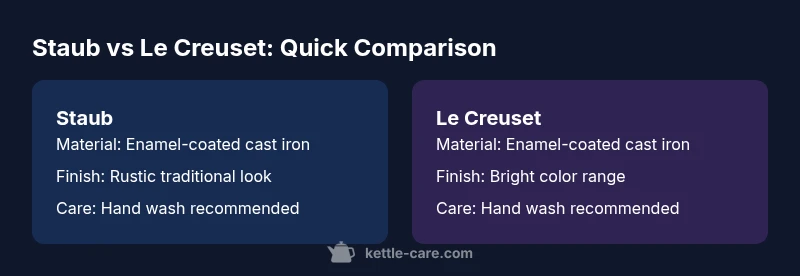
Both Staub and Le Creuset produce premium stovetop kettles built around enamel-coated cast iron. The core advantages are shared: exceptional heat retention, even distribution, and a robust, sculpture-like presence on the stove. The Staub kettle typically emphasizes a traditional, rustic silhouette with a heavy lid and a snug seal that helps keep steam inside for longer. Le Creuset tends toward a slightly sleeker profile with a taller spout and a variety of color finishes that suit modern kitchens. For the home cook, the enamel lining protects the cast iron from scaling and staining, while the exterior finishes offer lasting aesthetics. According to Kettle Care, Staub’s enamel is designed to age gracefully and patina with use, while Le Creuset emphasizes consistent color fastness across its glaze range. The Staub vs Le Creuset decision hinges on whether you value heritage and warmth or broad color options and a modern look.
Heating Performance and Boil Time
Heat retention is a hallmark of enameled cast iron kettles. Both Staub and Le Creuset create kettles that warm water evenly and maintain steady temperatures once boiling begins. In practical terms, this means fewer temperature fluctuations when you refill a cup or steep tea. Real-world use suggests Staub may feel slightly heavier, with the domed lid design helping trap steam, while Le Creuset’s kettle often adapts quickly to heating cycles due to its mass distribution. For safe, reliable performance, ensure your kettle is dry, avoid exposing enamel to rapid temperature shocks, and preheat gently to avoid thermal stress. The Kettle Care team notes that proper seasoning or conditioning is unnecessary for enamel pots, but routine cleaning preserves luster and flavor neutrality, especially if you brew delicate teas.
Pouring Experience and Ergonomics
Pouring comfort matters as much as heat performance. Staub kettles typically feature substantial handles that stay cool and a broad knob designed for a confident grip, even when wearing oven mitts. Le Creuset focuses on ergonomic balance and a smoothly contoured handle with a slightly taller spout to reduce drips. Spout design affects pour control, especially when filling narrow jars or steeping tea. For many users, the pour is the decisive moment: a steady, predictable stream matters more than raw boiling speed. If you value minimalist aesthetics, Le Creuset’s color palette can be a deciding factor; if you want a traditional kitchen vibe, Staub’s silhouette and finish are appealing.
Cleaning, Maintenance, and Caring for Enamel
Enamel-coated kettles like Staub and Le Creuset are designed for everyday use, but proper care matters. Avoid dishwasher cycles to protect enamel gloss and prevent dulling over time. Use mild soap, a soft sponge, and a non-abrasive scrub pad for stubborn mineral deposits. For limescale buildup, a gentle descaling rinse with white vinegar or a lemon-based cleaner can help restore clarity without harming the glaze. In contrast to some stainless steel varieties, enamel kettles don’t react with tea acids, but you should still store them dry to prevent mineral spotting. The strategy is simple: clean promptly after use, dry thoroughly, and store standing up to minimize pressure on the lid seal. Kettle Care emphasizes that enamel care is straightforward when you follow basic cleaning rules.
Durability, Repairability, and Longevity
Durability in Staub and Le Creuset kettles comes from durable enamel coating and the mass of cast iron. Over years of use, you may notice minor wear on the exterior or tiny chips if exposed to rough handling, but proper use tends to preserve the interior. Repair options are typically limited to professional refinishing for enamel chips; most homeowners enjoy decades of service with careful handling. The value proposition centers on long-lasting materials, a classic appearance, and the potential for heirloom use. If you expect to pass a kettle down through generations, factor in the weight, the finish’s aging, and the availability of replacement lids or seals from the brand. Kettle Care’s guidance highlights that choosing enamel-based kettles is an investment in durability and timeless design.
Price and Value: Do You Get What You Pay For?
Staub and Le Creuset sit in the premium tier of kitchen hardware, and pricing often reflects the strength of materials, brand heritage, and color depth. As a rule, you’ll encounter a mid-to-high price range with both brands, with Le Creuset sometimes offering broader color customization that can influence perceived value. If you cook frequently and value lasting heat retention, the upfront cost can translate into years of reliable performance. On the other hand, if you prioritize a classic silhouette and a uniform look across kitchenware, Staub may offer a compelling value proposition for long-term use. Pricing varies by region, retailer promotions, and set configurations, so look for bundles or seasonal discounts when comparing Staub vs Le Creuset.
Aesthetics, Kitchen Fit, and Color Options
A kitchen’s look often sways the decision. Le Creuset is well known for its vibrant color range, from bold primary hues to soft pastels, which makes it easy to coordinate with countertops and cabinets. Staub offers deep, earthy tones and a more matte finish that pairs well with traditional or rustic kitchens. Beyond color, both brands emphasize quality in their craft: the enamel’s glossy sheen, the weight distribution, and the tactile feel of the lid knob all contribute to a premium user experience. If you want a statement piece that complements your dishware, Le Creuset’s palette is a strong selling point; if you prefer a timeless, heritage-inspired piece, Staub’s design language may be the better match.
Practical Use Cases: Tea Lovers, Daily Cooks, and Collectors
For tea lovers, ease of use with delicate infusions matters. A well-designed kettle supports precise pouring, controlled steeping, and minimal heat loss. Daily cooks benefit from the kettle’s robustness and the ability to handle repeated boils. Collectors might consider the aesthetic and color availability, along with the potential resale value—premium enamel kettles often maintain appeal in kitchenware collections. Regardless of your use case, ensure the kettle’s capacity aligns with your household’s daily needs and that you’re comfortable with the weight. The final pick should reflect how you prioritize heat retention, pour control, and visual harmony in your kitchen.
Comparison
| Feature | Staub kettle | Le Creuset kettle |
|---|---|---|
| Material and construction | enameled cast iron; heavy, robust | enameled cast iron; classic Le Creuset finish |
| Capacity and design | varies; traditional rounded silhouette | varies; taller spout design with color options |
| Heat distribution | excellent heat retention; even surface | |
| Maintenance and care | hand-wash preferred; avoid harsh abrasives | |
| Aesthetic options | earthy tones; rustic vibe | |
| Price range | mid-to-high, varies by model | |
| Best for | traditional warmth and durability | color variety and modern kitchen fit |
Strengths
- Excellent heat retention and even heating
- Premium enamel finish resists staining
- Timeless, durable design with heirloom potential
- Wide color/finish options in Le Creuset enhances kitchen aesthetics
What's Bad
- Heavy and hard to maneuver for some users
- Higher upfront cost compared to mid-range kettles
- Enamel chipping can occur if mishandled
- Maintenance requires hand washing to preserve finish
Staub offers heritage warmth and durable performance; Le Creuset excels in color variety and modern aesthetics.
Choose Staub if you value traditional design and long-term durability. Opt for Le Creuset if you want vibrant color options and a visually versatile piece that wears well in contemporary kitchens.
Frequently Asked Questions
Which kettle boils water faster, Staub or Le Creuset?
Both brands use enameled cast iron, which preserves heat well. Boil time depends more on capacity, lid seal, and stove power than the brand. In daily use, you’ll notice similar timing with good heat output; the difference is often negligible for typical home boiling tasks.
Both kettles boil water at similar speeds; the bigger factor is your stove and capacity.
Are Staub and Le Creuset kettles dishwasher safe?
Enamel-coated kettles typically fare best when hand washed to preserve finish and prevent mineral buildup in hard water. Dishwashers can dull enamel and affect the seal over time. If you must use a dishwasher, check manufacturer guidelines for your exact model.
Hand wash is recommended to protect the enamel finish.
Which is better for induction cooktops?
Both Staub and Le Creuset offer kettles compatible with induction cooktops, provided the base is ferromagnetic. If unsure, verify the product specifications for magnetic compatibility. Induction cooks use electromagnetic energy to heat the kettle directly, so ensure your model is labeled induction-ready.
Both brands work on induction if the base is magnetic.
Do enamel kettles affect tea flavor?
Enamel-coated kettles are designed to be non-reactive, helping preserve tea flavor without imparting metallic tastes. You may notice subtle differences in heat retention affecting infusion flavor over time. Regular cleaning helps maintain a clean, neutral flavor profile.
Enamel kettles are non-reactive and generally neutral for tea taste.
What maintenance helps extend enamel life?
Avoid abrasive cleaners; use mild soap and a soft sponge. Dry thoroughly after washing to prevent water spots. Remove mineral buildup with gentle descaling methods when needed and avoid exposing handles to sudden temperature changes to prevent cracking.
Clean gently, dry well, and descale as needed to keep enamel healthy.
Highlights
- Assess heat retention and pour control to balance performance and ease of use
- Prefer Staub for a heritage look and durable heft; choose Le Creuset for broad color options
- Prioritize hand washing and careful handling to preserve enamel integrity
- Budget for premium kettles but look for bundles or promotions to maximize value