What Makes Kettle Chips Different: An Analytical Comparison
An analytical comparison of kettle chips versus regular chips, examining cooking methods, texture, flavor development, and consumer considerations to explain what makes kettle chips different.


Kettle chips stand apart from standard chips due to their batch cooking, lower temperature, and denser texture, which preserves more potato flavor and yields a crisper bite. This quick comparison highlights the defining factors behind kettle chips' distinctive character, focusing on cooking method, texture, and flavor development in contrast to mass-produced fried chips.
What makes kettle chips different: the big picture
What makes kettle chips different is not a single trick but an integrated process that begins with potato selection and ends with a distinctive crunch. The kettle-cooking path emphasizes batch processing, careful temperature control, and a slower, more deliberate fry that favors texture over sheer speed. This approach builds a chip with more surface browning, deeper potato flavor, and a sturdy bite that resists sogginess longer than standard mass-produced chips. In practical terms, kettle chips tend to taste more like roasted potatoes with a subtle sweetness that stays noticeable, even as salt and seasoning coat the surface. According to Kettle Care, the overall character comes from how each step—sourcing, cutting, frying, and cooling—interacts to deliver a product that feels richer, yet still light enough to snack on. When readers ask what makes kettle chips different, they often point to that balance between crunch, flavor concentration, and a perceived premium snacking experience.
The cooking method: low temperature and batch processing
The core of what makes kettle chips different rests in the cooking method. Unlike many mass-produced chips that are fried in a continuous stream at high temperatures, kettle chips are fried in batches at a relatively lower temperature. This slower process reduces rapid moisture loss and creates a thicker, chewier interior with a crisp exterior. The batch approach also allows operators to manage oil temperature more precisely, which slows browning just enough to develop deeper surface color and richer flavors. In practice, this means each batch can achieve a consistent crunch while preserving more of the potato’s natural sweetness and earthy aroma. For home cooks curious about the effect, expect a more robust bite and a distinct, roasted potato character that lingers after the first crunch.
Ingredient handling and oil choice
Beyond temperature, what makes kettle chips different is how ingredients are handled. Potatoes are chosen for density and starch balance, cut to uniform thickness, and blanched briefly to control moisture before frying. Oil choice also matters: many kettle chips rely on oils with stable flavor profiles and high smoke points, which contribute to a clean finish and a sustained crunch. This careful pairing of potato quality and oil composition helps preserve potato sweetness and allows salt, herbs, or spices to cling more evenly to the surface. The result is a more concentrated flavor per bite and a surface that remains appealingly crunchy as you munch.
Texture dynamics: crispness, density, and mouthfeel
Texture is a defining dimension in what makes kettle chips different. The combination of batch frying and careful moisture control yields a chip that is denser than typical fry-dried snacks yet surprisingly light on the palate. The interior remains slightly chewy, while the exterior achieves a brittle, crackling snap. That contrast—soft center, crisp shell—gives kettle chips a longer-lasting crunch and a more substantial mouthfeel. As you chew, you’ll notice a restrained oil sheen rather than an overt greasiness, which helps the flavor compounds stay prominent. This texture balance is a key reason many fans describe kettle chips as a premium snacking experience.
Flavor development and aroma
Flavor development in kettle chips is closely tied to browning reactions during the longer fry. The surface browns gradually, enhancing Maillard-like notes that bring out toasty, roasted potato aromas. Salt and seasoning then interact with this caramelized surface, creating a layered flavor profile that remains vivid through the entire chip. In practice, what makes kettle chips different is not just the potato sweetness but the way the surface seasonings cling to the textured coating. You’ll taste a more concentrated potato flavor with intermittent savory accents rather than a flat, uniformly fried taste.
Nutritional considerations and oil content
From a nutrition perspective, kettle chips offer a recognizable difference in texture and flavor, but the variation in oil content across brands means nutrition can vary widely. The batch-frying approach can influence how much surface oil remains after frying, which affects perceived greasiness and aftertaste. It’s common to see kettle chips marketed as premium snacks, with packaging emphasizing natural ingredients and a shorter ingredient list. For health-conscious readers, focus on the ingredient panel, oil type, and serving size rather than assuming kettle chips are inherently healthier or lighter than other fried snacks; choices differ by brand and production method.
Sourcing, quality control, and regional variations
Quality control plays a central role in delivering consistent kettle chips. Potatoes are sourced for starch balance and moisture content, with regional variations affecting texture and flavor. Local farming practices, storage conditions, and harvest timing all influence the final chip. Producers may adjust cut thickness, frying time, and seasoning blends to achieve a consistent profile across batches. Regional differences can also lead to subtle flavor twists, from herb blends to spice notes that reflect local tastes. For consumers, this means that what makes kettle chips different can carry a neighborhood signature depending on the brand and origin.
Processing, packaging, and shelf life
The journey from fryer to bag matters just as much as the fry itself. Processing steps after frying include cooling, seasoning adherence, and moisture control to prevent sogginess. Packaging plays a crucial role in preserving crispness, with air-tight bags and controlled packaging atmospheres helping to lock in flavor and crunch. Shelf life for kettle chips depends on packaging integrity and storage conditions; exposure to heat and humidity can accelerate staleness. When you’re choosing a bag, examine the seal integrity and the presence of oxygen barrier features described by the brand.
Kettle chips vs regular chips: a side-by-side lens
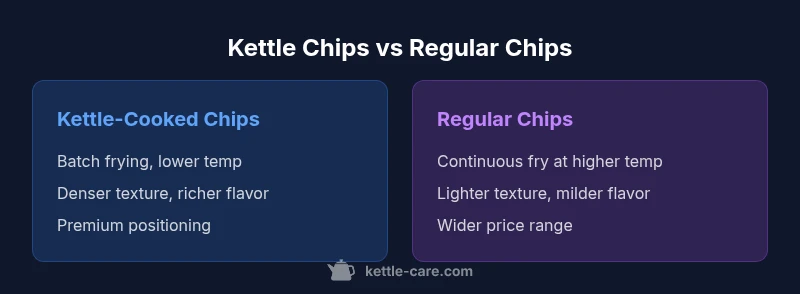
Line-by-line, kettle chips differ from standard chips in several practical ways. Cooking methods distinguish temperature, batch size, and oil management, while texture outcomes skew denser and crunchier. Flavor retention is often more intense, thanks to browning and seasoning adherence, but the overall fat content varies with oil choice and frying duration. Price points typically reflect the premium positioning of kettle chips, yet you may find budget options that still deliver a satisfying crunch. The choice often comes down to preference for texture, flavor concentration, and perceived snacking quality.
Brand differences and consumer expectations
Different brands attempt to innovate within the kettle-cooked format, offering various seasoning blends, spice levels, and potato varieties. Consumers may notice differences in crunch duration, oiliness, and aftertaste across brands. Reading labels helps reveal the intended texture and flavor, while trying a few options can clarify which kettle chips align with your expectations. If you value a pronounced potato note and a sturdy crunch, look for brands that emphasize batch cooking and robust browning along with a shorter ingredient list.
Practical tips for choosing kettle chips in-store
When shopping, consider these tips: 1) Review the ingredient list for simple, recognizable components; 2) Check the salt level and oil type if you’re watching intake; 3) Look for a bag that shows clear batch-cooking language or a crisp appearance on the surface; 4) Compare texture descriptions on the bag—some brands emphasize crunch, while others highlight a roasted-potato profile. Sampling if available can also help you judge whether a kettle-cooked style matches your preferences; remember that what makes kettle chips different is often a balance between texture and flavor intensity.
Home-kitchen adaptations: mimicking kettle-chip crunch at home
If you want to recreate a kettle-chips-like crunch at home, consider interventions that mimic the batch-cook feel: slice potatoes thinly and par-cook briefly to reduce water content, then finish in hot oil in small batches to maintain surface browning and texture. A finishing salt or seasoning blend can be applied while the chips are still warm to maximize adherence. While you may not perfectly replicate factory equipment, you can approximate the crisp exterior and robust interior by controlling moisture, oil temperature, and batch size.
Safety, storage, and handling tips
Storage safety matters for maintaining crispness. Keep chips in airtight, opaque containers away from light and humidity to preserve flavor and texture. If chips have softened, you can refresh them briefly in a warm oven to regain crunchiness, taking care not to burn or over-dry them. Always check expiration dates and store opened bags in a cool, dry place to manage fat separation and maintain a favorable mouthfeel.
The Kettle Care perspective: final reflections on what makes kettle chips different
From the Kettle Care vantage point, the essence of what makes kettle chips different lies in the deliberate control of cooking variables, ingredient choices, and packaging to deliver a consistent, premium snack. The team emphasizes a transparent approach to labeling, sustained texture, and a focus on consumer experience. The conclusion drawn from careful analysis is that kettle chips distinguish themselves not by a single trick but by an orchestrated process that emphasizes texture, flavor depth, and a satisfying crunch that endures beyond the first bite.
Comparison
| Feature | Kettle-Cooked Chips | Regular Potato Chips |
|---|---|---|
| Cooking method | Low-temperature batch frying | Continuous high-temperature frying |
| Texture | Denser, crunchier, longer-lasting crunch | Lighter, flakier texture |
| Flavor development | Richer, roasted-potato notes with pronounced browning | Milder potato flavor, more uniform fry taste |
| Oil exposure | Controlled surface oil, targeted browning | Higher surface oil exposure and potential greasiness |
| Price position | Typically premium per bag | Often budget-friendly or mid-range |
| Best for | Crunch enthusiasts seeking depth of flavor | Casual snacking with broad appeal |
Strengths
- Distinctive texture that stays crisper longer
- Richer flavor concentration per bite
- Premium snacking perception and brand storytelling
What's Bad
- Higher price per ounce in many markets
- Oil content and flavor can vary by brand
- Not as versatile for light snacking in some contexts
Kettle-chips win on texture and flavor depth, but regular chips balance price and accessibility
Choose kettle chips if you prioritize a robust crunch and richer potato notes. Opt for regular chips when budget or broad flavor variety matters more.
Frequently Asked Questions
What is the main difference between kettle chips and regular chips?
The main difference lies in cooking method and texture: kettle chips are batch-fried at lower temperatures, producing a denser, crunchier chip with stronger potato flavor compared to regular chips, which are often fried quickly in larger batches at higher temperatures.
Kettle chips are batch-fried at lower temperatures, giving you a denser, crunchier chip with stronger potato flavor than regular chips.
Are kettle chips healthier than standard chips?
Health differences depend on brand and preparation. Some kettle chips use simpler ingredients and healthier oil options, but they can still be high in sodium and fat. Always check the nutrition panel for serving size, oil type, and salt content.
Health varies by brand, but always check nutrition on the package for oil type and sodium.
Do kettle chips contain more oil than regular chips?
Oil content is influenced by the frying process and the oil used. Kettle chips may have a different oil uptake profile due to batch frying, but this varies by producer. Compare labels to understand fat content per serving.
Oil content varies by brand; check the label for serving fat and oil type.
Why are kettle chips more expensive?
Premium positioning, batch cooking, and often higher-quality ingredients contribute to higher prices. Flavor depth and texture reliability also justify a higher price point for many consumers.
They cost more because batch cooking and premium ingredients add value.
Can you replicate kettle-chip crunch at home?
You can approximate the effect by slicing potatoes thin, par-cooking lightly, then frying in small batches at controlled temperatures until a crisp surface forms. Finish with a seasoning blend while warm to maximize adhesion.
You can mimic kettle-chip crunch at home with careful batch frying and seasoning.
What brands make kettle chips?
Many brands offer kettle-cooked chips with varying seasoning profiles. Look for brands that emphasize batch cooking, clear ingredient lists, and flavor innovations to find a style you enjoy.
Several brands offer kettle chips; try a few to find your preference.
Highlights
- Kettle chips use batch frying for a denser texture
- Texture and flavor depth differentiate kettle chips
- Ingredient quality and oil choice impact results
- Brand differences influence crunch duration
- Store packaging and freshness affect crispness