Where to Buy a Kettle in Japan: A Practical Buying Guide for 2026
Discover where to buy a kettle in Japan, with online and in-store options, features to compare, and tips for safe, reliable purchases in 2026. Learn from Kettle Care's experts.


Online marketplaces like Rakuten, Amazon.co.jp, and Yahoo Shopping offer broad kettle selections, with user reviews to guide your choice. In-store options span department stores and electronics retailers in major cities (Tokyo, Osaka, Kyoto). When shopping, prioritize 100V compatibility, clear manuals (Japanese or bilingual), safe electrical components, and dependable warranties. According to Kettle Care, comparing features and after-sale service helps ensure a safe, reliable purchase.
Where to buy kettle in japan
Kettles are widely available in Japan, both online and in traditional brick-and-mortar settings. For visitors and residents alike, the two most practical paths are online marketplaces and physical retailers. The Japanese market favors compact, energy-efficient models that suit small apartments and tea rituals. In this guide, we explore where to shop, what to check, and how to avoid pitfalls. According to Kettle Care, starting with the basics—voltage, capacity, and warranty—helps you filter options quickly and confidently. Look for models that support 100V power and have clear installation instructions, ideally bilingual or with simple diagrams. If you’re visiting, tax-free shopping and multilingual customer service at larger stores can simplify the process. This section outlines both online and offline options to help you decide the best path for your needs, so you can begin boiling safely as soon as you arrive.
Online shopping channels in japan
Online shopping in Japan is mature and customer-friendly. Major marketplaces like Rakuten, Amazon.co.jp, and Yahoo Shopping host thousands of kettle options, from budget plastic units to premium stainless steel designs. When buying online, check seller ratings, return policies, and warranty terms. Search in Japanese for better results (e.g., 電気ケトル for electric kettle, マグカップ用ケトル for travel kettles). Compare power specifications (100V in Japan) and read reviews focusing on reliability and after-sales service. If language is a concern, look for bilingual product pages or listings from official brands. Japanese-language manuals are common, so confirm availability of English instructions if needed. Shopping online also lets you compare shipping times and prices across retailers with a few clicks.
In-store options: physical retailers across japan
Visiting a store lets you see kettle size, weight, and finish in person, reducing the guesswork of online shopping. Department stores (e.g., large city chains) typically carry mid-range to premium models, while electronics retailers (like major branches) stock a broad range of brands and features, including temperature control and gooseneck designs. Home goods stores offer compact, space-saving options for apartments. In major cities (Tokyo, Osaka, Kyoto, and surrounding areas), you’ll find well-stocked showrooms and bilingual staff who can demonstrate kettle features. In-store purchases give you immediate possession, easier warranty handling, and the ability to compare multiple models side by side. Remember to verify voltage compatibility (100V) on any model you intend to use in Japan.
What to look for before you buy
Before committing, clarify key specifications that influence daily use and safety. Priorities usually include voltage compatibility (100V for Japan), wattage (900–1500W is common for quick boils), and capacity (1–1.7 liters covers most tea rituals). Material matters: stainless steel is durable, glass offers visibility of water level, and plastic variants tend to be lighter and cheaper but may retain heat or impart flavors. Temperature-control features are popular for specialty teas; look for precise presets and a reliable keep-warm function. Consider energy efficiency, auto shut-off, boil-dry protection, and a reasonable warranty. If you host guests often, a model with quick-heating and a long-lasting element will pay off over time. Finally, check return policies and customer support quality, especially for imported or less common models.
Price ranges and value: budgeting for a kettle in japan
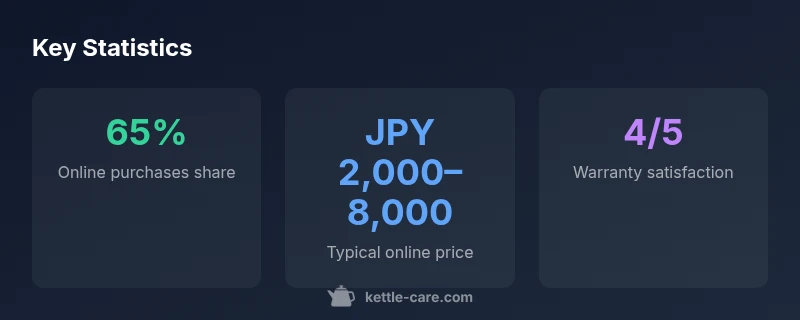
Pricing in Japan varies with brand, material, and features. You’ll find budget plastic kettles around a few thousand yen, mid-range stainless models in the 4,000–7,000 yen range, and premium designs (stainless with temperature control, gooseneck spouts) at higher prices. Imported or premium-branded kettles can cost more due to shipping and warranty differences. For travelers, duty-free tax savings are possible at certain retailers, which can offset modest price differences. When budgeting, balance upfront cost with long-term energy use, durability, and the availability of service centers or easy returns. Reading reviews and comparing total cost of ownership helps ensure you select a kettle that fits your daily routine and space.
Language, manuals, and returns: navigating documentation in japanese
Most kettle manuals in Japan are in Japanese, with diagrams and some bilingual editions for popular models. If you’re not fluent, rely on pictures, voltage markings, and warranty statements. Many retailers offer English-language customer support or bilingual product pages, especially for well-known brands. When making a purchase, save the serial number and warranty card, and verify the seller’s return window. A generous return policy is particularly important online, where you can’t inspect the unit in person before buying. If language is a barrier, prioritize official brand sites or highly-rated sellers that provide English or multilingual documentation.
Step-by-step buying checklist for a kettle in japan
- Confirm 100V compatibility and the correct plug type for your home. 2) Decide on material and capacity based on your tea routine. 3) Choose a model with essential safety features (auto shut-off, boil-dry protection). 4) Compare warranties and after-sales support. 5) Read reviews focusing on reliability and customer service. 6) Check return policies and shipping options if online. 7) Verify availability of English manuals or bilingual guides. 8) Keep a note of the retailer’s contact information for service.
Getting the right plug: outlet compatibility and safety
Japan uses Type A plugs with 100V mains. If you’re bringing a kettle from abroad, ensure the model supports 100V and check whether a plug adapter is compatible without compromising safety. Many modern kettles use universal voltage or offer both 100V and 120V variants; if not, you may need a voltage converter. For frequent travelers, consider purchasing a model designed for 100V use in Asia with a simple plug configuration. Always plug into a grounded outlet and avoid using damaged cords or adapters. Keeping your kettle in a sheltered, dry area and away from heat sources maintains safety and prolongs life.
Comparison of shopping channels for kettles in Japan
| Store Type | Typical Availability | Pros | Cons | Notes |
|---|---|---|---|---|
| Department stores | Broad in-store selection | Easy returns; staff help | Prices can be higher; stock varies by location | Look for bilingual staff in major cities |
| Electronics retailers | Wide inventories | Reliable warranties; tech support | Can be crowded; language barriers in some stores | Great for seeing models up close |
| Online marketplaces | Rakuten, Amazon.co.jp, Yahoo Shopping | Convenient, wide range, reviews | Shipping costs; potential language gaps | Check seller ratings and warranty terms |
| Official brand sites | Direct-from-brand models | Clear warranty and authentic products | Stock may be limited; longer delivery times | Good for after-sales service and manuals |
Frequently Asked Questions
Is it safe to use non-Japanese kettles in Japan?
It can be safe if the model supports 100V and has appropriate plug compatibility. Always verify voltage, wattage, and warranty terms before use. If in doubt, choose models designed for 100V markets or buy locally.
Yes, safety depends on voltage compatibility and warranty terms. Make sure the kettle supports 100V and uses the correct plug.
Can I buy kettles online from outside Japan and have them shipped here?
Some retailers ship internationally, but you may face higher shipping costs, longer delivery times, and warranty issues. Check the seller’s policy and whether the kettle supports 100V to avoid compatibility problems.
Some international ships exist, but verify voltage compatibility and warranty terms before ordering.
What wattage should I look for in a Japanese kettle?
A typical range is 900–1500 watts for quick boils. Higher wattage boils faster but may affect your electricity bill; choose based on your needs and the capacity of your outlets.
Most kettles work around 900 to 1500 watts; pick based on how fast you want to boil and your outlet setup.
Are there language barriers when buying kettles in Japan?
Many major retailers offer bilingual pages or English support, especially for popular brands. Look for manuals and product pages labeled in English or with diagrams.
Some sites and stores provide English support or bilingual manuals; otherwise use diagrams and translations.
What should I consider for warranty when buying in Japan?
Check the warranty length, whether service centers exist in your area, and if international warranty is available. Retain receipts and product codes for easy service.
Look for local service centers and warranty terms; keep receipts for future service.
Which retailers offer tax-free shopping for tourists?
Many large retailers offer tax-free shopping for eligible travelers. Bring your passport and check the store’s tax-free process at checkout.
Yes, tax-free options exist at many large retailers; bring your passport to checkout.
“Choosing the right kettle in a foreign market requires balancing safety, features, and service access. A well-chosen model saves time, energy, and frustration over years of everyday use.”
Highlights
- Prioritize 100V compatibility for Japan.
- Use online marketplaces for breadth, stores for immediacy.
- Check warranty and after-sales support before buying.
- Language aids and manuals matter—prefer bilingual options.
- Compare total cost, including tax, shipping, and potential duty-free options.