Copper Kettles: Care, Cleaning, and Safe Use Guide
Discover practical steps to care for copper kettles, from selecting tin-lined builds to cleaning, descaling, and safe heating practices that protect flavor and extend lifespan. A practical guide for homeowners and tea lovers.


By the end of this guide you will know how to select, clean, and maintain copper kettles for safe, flavorful boiling. You’ll learn simple cleaning routines that protect patina, how to descale mineral buildup without scratching, and the best heat practices to avoid scorching. Gather a soft sponge, mild dish soap, a copper-safe cleaner, a drying cloth, and a non-abrasive scrub if needed.
What makes copper kettles unique
Copper kettles have a long history in kitchens for their rapid heat conduction and elegant patina. The metal conducts heat quickly and evenly, reducing hot spots and speeding up boiling. Most traditional copper kettles are lined with tin to preserve taste and prevent copper from leaching into water. The tin lining, while protective, requires careful maintenance to avoid pitting or bare copper exposure. In safe use, you’ll notice copper kettles excel at flavorful tea and soups, especially when you brew at controlled temperatures. Regular polishing isn't required, but a gentle wipe after use prevents water spots and helps maintain the kettle’s luster.
Copper kettle construction: Tin lining and safety
Tin-lined copper kettles are common because tin protects against copper exposure and preserves a clean, slightly sweet taste. The lining is generally durable but can wear with heavy scrubbing or prolonged contact with highly acidic liquids. Avoid aggressive cleaners that strip tin or nick the surface; instead, use copper-safe cleaners and a soft cloth. If the tin lining shows bright copper beneath or flaking, stop using the kettle and seek professional assessment. When used correctly, copper kettles deliver fast heat transfer and reliable durability, making them a favorite among tea lovers and home cooks.
How to choose a copper kettle
Start with a tin-lined copper kettle from a reputable maker. Look for a thick-walled body for even heating and a sturdy handle that stays cool during boiling. Check the base—flat and wide bases distribute heat evenly on gas, electric, or induction surfaces (with an appropriate bottom plate). Consider capacity in the 1–2 liter range for everyday tea, and ensure the spout design minimizes drips. Finish quality matters: a smooth interior liner and clean exterior without obvious dents indicate better longevity. Finally, verify care instructions from the manufacturer and confirm compatibility with your stove type.
Daily use practices for safety and performance
Use medium to medium-low heat to prevent rapid temperature changes that can warp the tin lining and discolor copper. Always pre-warm water by filling the kettle with a small amount of cool water prior to heating to reduce thermal shock. When boiling, avoid leaving the kettle unattended for long periods and never boil dry. Pour slowly to minimize spillage and heat loss, then dry the exterior and interior promptly after use to prevent water spots. On induction stoves, use a copper kettle with a compatible flat base or a magnetic plate to ensure efficient boiling.
Cleaning and descaling copper kettles
Regular cleaning helps maintain appearance and flavor. Rinse with warm water after each use and wipe dry with a soft cloth. For routine cleaning, use a mild dish soap and a non-abrasive sponge to avoid scratching the tin lining. Descale only when there’s mineral buildup: create a gentle paste with baking soda and water or use a copper-safe descaler following package directions. Rinse thoroughly and re-season the interior by boiling clean water a moment before next use. Avoid harsh acids that strip the tin lining.
Maintaining patina and longevity
Patina is a natural protective layer that forms on copper; some crafters value it for aesthetics, while others prefer a bright finish. Clean away heavy oxide deposits gently to avoid removing patina unevenly. To preserve even color and luster, buff with a microfiber cloth after drying and store in a cool, dry place. If you wish to brighten the exterior occasionally, use a copper-safe polish and follow with a light rinse. Regular maintenance reduces the risk of pinholes in the lining and extends kettle life.
Tools & Materials
- Soft sponge(Non-abrasive sponge for routine cleaning)
- Mild dish soap(Gentle detergent free of harsh chemicals)
- Copper-safe cleaner(Non-acidic cleaner suitable for tin-lined copper)
- Non-abrasive scrub (optional)(Use only for stubborn tarnish, avoid tin lining damage)
- Drying cloth or microfiber towel(For drying and buffing to prevent water spots)
- White vinegar or lemon juice (optional)(Can aid descaling when mixed with baking soda)
- Baking soda (optional)(Mild descaler paste mixed with water)
- Oven mitts or pot holders(To handle hot kettle safely)
Steps
Estimated time: 30-45 minutes
- 1
Inspect the kettle and prepare
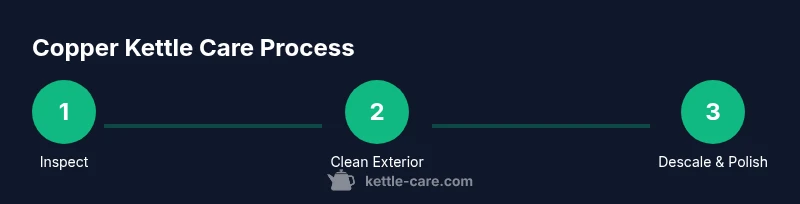
Before any cleaning, examine the tin lining for wear or exposed copper. Check for dents, leaks, or a warped base. If you see bare copper, discontinue use until professionally assessed to ensure safety and flavor integrity.
Tip: If you notice damage, do not continue using the kettle until repaired. - 2
Rinse and clean exterior
Rinse the kettle with warm water to remove loose dust. Apply a small amount of mild dish soap to a soft sponge and gently clean the exterior, avoiding abrasive pads. Rinse thoroughly with warm water to remove all soap residue.
Tip: Use a light touch to preserve the tin lining. - 3
Clean the interior and tin lining
Fill the kettle with warm water and a tiny amount of dish soap, then swirl. For stubborn stains, apply a copper-safe cleaner following the product directions. Rinse completely to prevent soap residue from altering flavor.
Tip: Never use harsh abrasives on the interior; they can damage the tin lining. - 4
Descale when necessary
If mineral buildup is visible, create a mild descaling paste with baking soda and water or use a copper-safe descaler per directions. Let sit briefly if needed, then scrub lightly and rinse well. Boil fresh water once to rinse any remaining residue.
Tip: Avoid strong acids that can erode tin lining. - 5
Polish and condition patina
Dry the kettle completely, then buff exterior with a microfiber cloth. If desired, apply a copper-safe polish in small circular motions and wipe clean. This maintains shine without removing patina in a patchy way.
Tip: Frequent light polishing is better than heavy, infrequent polishing. - 6
Store and re-season
Store the kettle in a dry place away from humidity. Before the next use, rinse, and boil clean water to re-season the interior surface, especially after long storage or descaling.
Tip: Keep the lid off briefly during storage to avoid moisture buildup.
Frequently Asked Questions
Can copper kettles be used on induction cooktops?
Copper kettles work on induction only if the base is ferromagnetic or if you use a magnetic induction plate. Always check the base specification before using on induction.
Copper kettles work on induction if the base is magnetic or with an induction plate. Check the base spec first.
Is tin lining safe for drinking water?
Tin lining is generally considered safe for drinking water when intact. Avoid aggressive cleaners that could wear the lining and always rinse well after cleaning.
Tin lining is usually safe when intact; avoid harsh cleaners and rinse well after cleaning.
How do I remove tarnish safely without damaging tin lining?
Use a mild copper-safe cleaner or a gentle baking soda paste. Gently scrub and rinse, then dry to prevent water spots. Avoid abrasive pads inside the kettle.
Gently scrub tarnish with a copper-safe cleaner or baking soda paste, then rinse and dry.
Is it safe to descale with vinegar or lemon juice?
Light descales can be done with mild acids like vinegar or lemon juice diluted in water, but avoid prolonged exposure and always rinse thoroughly. Use copper-safe descalers if in doubt.
Diluted vinegar or lemon juice can be used for light descaling, but rinse well afterward.
How long will the tin lining last with regular use?
Lining lifespan depends on usage and care. Regular gentle cleaning and avoiding harsh acids helps protect the lining longer; replacement may be needed if wear becomes evident.
Lining lifespan varies; care and gentler cleaning help it last longer, but wear may eventually require replacement.
Watch Video
Highlights
- Choose tin-lined copper kettles from reputable makers.
- Use gentle cleaning to protect tin lining and patina.
- Descale as needed with safe methods to avoid copper exposure.
- Maintain heat control to prevent scorching and warping.
- Store properly to extend kettle life.