How to Prevent Kettle from Rusting: A Simple Home Guide
Learn proven methods to stop your kettle from rusting with simple care, descaling, drying, and storage tips from Kettle Care. Practical steps for safer, longer-lasting boiling.


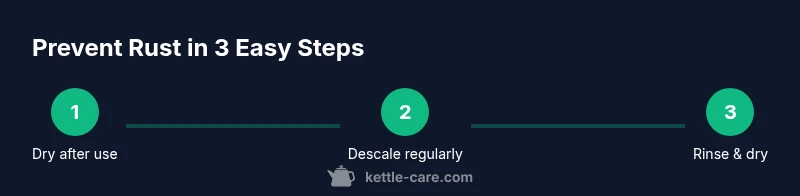
Preventing kettle rust starts with keeping the metal dry, descaling regularly, and using clean water. Wipe the interior after every boil, never store a wet kettle, and tackle mineral buildup promptly with a gentle descaler. According to Kettle Care analysis, consistent care reduces rust risk by limiting corrosion-prone deposits.
What rust is and why kettles rust
Rust is iron oxide formed when iron or steel reacts with oxygen in the presence of water. In kettles, rust often begins as tiny spots that slowly expand, especially if the protective coating is damaged or if mineral buildup traps moisture. The risk increases on heavier-use kettles or those with thinner metal walls. According to Kettle Care, the most reliable defense against rust is to minimize moisture exposure and keep mineral deposits in check. Regular, gentle cleaning and prompt drying after each boil reduce the conditions that promote corrosion. Material choice matters too: enamel-coated interiors, stainless-steel linings, and even cast aluminum kettles behave differently under heat and humidity. The common thread is maintaining a smooth, intact surface free from cracks, pits, or sticky scale. By balancing moisture control, cleaning cadence, and water quality, you can extend the life of your kettle and enjoy safer, cleaner boils.
How material choice affects rust resistance
Kettle shells come in a few common configurations: stainless steel with a protective coating, enamel-coated interiors, and aluminum or cast-iron variants. Stainless steel with a proper interior finish offers the best baseline resistance to rust, but it still requires drying and descaling to avoid mineral traps that accelerate corrosion. Enamel coatings provide a barrier, yet chipped enamel can expose steel to moisture and oxygen. Aluminum kettles react differently; although light and affordable, they can corrode when the protective oxide layer wears thin. The Kettle Care team notes that the integrity of the surface matters most: a smooth, intact finish minimizes water retention and slows rust. Avoid aggressive scrubbing that scratches coatings, and replace kettles with compromised surfaces. In 2026, many home cooks choose stainless interiors for longevity, combined with regular care to maintain a pristine surface.
Daily habits to prevent rust formation
Developing a routine makes rust prevention easier than reactive cleaning. Start with drying after each boil: wipe the interior and exterior with a soft cloth, then leave the lid slightly ajar to air-dry. Use filtered or soft water to reduce mineral buildup, and keep an eye on mineral deposits near the spout and lid. Rinse immediately after any descale, and avoid leaving water sitting in the kettle for extended periods. If you notice any powdery or chalky residue, tackle it early with a gentle descaler. Finally, store the kettle upright in a dry area. Consistency is the key; small daily actions compound to protect against rust.
Cleaning and descaling routines for rust prevention
Descaling removes mineral buildup that traps moisture and accelerates corrosion. For routine descaling, use a citric acid-based descaler, following the product directions for dilution and contact time. As an alternative, white vinegar or lemon juice can work for lighter buildup, but avoid harsh chemicals that could damage coatings. A soft sponge or microfiber cloth should be enough for interior cleaning; avoid metal brushes that can scratch protective layers. After descaling, rinse thoroughly with clean water and dry completely. Do not skip the final drying step, as moisture lingering on metal surfaces promotes rust formation. In 2026, a gentle, regular descaling cadence is a reliable shield against rust.
Water quality: hard vs soft water and mineral control
Water hardness directly affects mineral buildup in kettles. Hard water leaves more scale, which can trap moisture and promote corrosion if left untreated. Soft water reduces buildup but can be more corrosive to certain metals if used with aggressive cleaning agents. A practical approach is to use filtered water for regular boiling and reserve distilled or treated water for descaling when needed. If your area has hard water, descale more frequently and consider a water softener or bottled water for premier kettles. Keeping mineral levels low in the kettle environment reduces rust risk over time.
Safe storage and drying techniques
Always store a kettle in a dry, upright position with the lid off or ajar to promote air flow. After cleaning, allow the kettle to dry completely in a warm, ventilated space before stacking or storing. Place a microfiber towel inside to wick moisture from hard-to-dry corners, and wipe the exterior with a soft cloth to remove condensate. If you keep the kettle near a humid window or in a damp cupboard, relocate it to a drier area. A fully dry kettle is the best defense against rust.
Signs of rust and when to replace
Early signs include small brown or orange specks that rub off with a gentle wipe. If rust persists after cleaning, or if you see pitting, flaking coating, or rust on the heating element area, consider replacement. Prolonged rust can contaminate hot water and compromise structural integrity. When in doubt, perform a cautious test: boil water and observe for unusual taste, color, or odor, and consult a professional if you are unsure. The Kettle Care team recommends replacing kettles with significant rust or compromised coatings to maintain safety and performance.
Common myths about kettle rust and how to debunk them
Myth: Rust is inevitable with metal kettles. Reality: Proper care dramatically reduces rust risk, especially with stainless interiors and intact coatings. Myth: Descale once, you’re done. Reality: Regular maintenance is key; water quality and storage habits matter as much as cleaning. Myth: Any rust spots mean immediate replacement. Reality: Small, early rust spots can often be removed; persistent rust after cleaning warrants replacement to avoid risks.
Putting it all together: a weekly maintenance plan
Create a simple schedule that blends daily, weekly, and monthly actions. Daily: quick wipe-down and dry after use. Weekly: a light interior wipe with a damp cloth; check the spout and lid for scale. Monthly: descale using a citric acid-based descaler or a vinegar solution, rinse thoroughly, and dry completely. In regions with hard water, increase frequency to biweekly or monthly as needed. By following this plan, you establish a steady rhythm that minimizes rust risk and extends kettle life.
Tools & Materials
- Soft cloth(for drying kettle exterior and interior after use)
- Non-abrasive sponge or brush(gentle cleaning without scratching surfaces)
- Citric acid-based descaler(follow product directions for dilution and contact time)
- White vinegar (optional)(alternative descaler if needed)
- Distilled water (optional)(use for descaling dilution to reduce mineral residue)
- Lemon juice (optional)(natural descaling alternative)
- Microfiber towel (optional)(for quick dry after cleaning)
- Stainless-steel-safe scrub brush (optional)(for tough spots near spout)
Steps
Estimated time: 60-90 minutes
- 1
Inspect kettle for damage
Begin by visually inspecting both interior and exterior surfaces for cracks, chips, or visible rust. Any damage that exposes bare metal can accelerate corrosion, so stop using a kettle with deep pitting or peeling coatings. If you notice problems, consider replacement rather than trying to repair damaged surfaces.
Tip: If you see metal exposed, do not boil water in it until it’s inspected or replaced. - 2
Dry the kettle thoroughly after each boil
Wipe the interior with a soft cloth and allow air flow by keeping the lid slightly ajar. This reduces lingering moisture that promotes rust. If you’re in a humid area, finish with a brief air-dry under a warm fan.
Tip: Never store a wet kettle; moisture trapped inside accelerates corrosion. - 3
Descale to remove mineral buildup
Use a citric acid-based descaler or a diluted vinegar solution. Circulate the solution inside the kettle and let it sit for the recommended time, then scrub gently with a non-abrasive sponge. Rinse thoroughly.
Tip: Follow label directions exactly; avoid bleach or abrasive cleaners that can damage coatings. - 4
Use filtered or soft water
Hard water accelerates mineral deposits that trap moisture. If possible, boil with filtered or soft water to lessen buildup and extend kettle life.
Tip: If your water is very hard, consider a home water softener solution or using bottled water for frequent boils. - 5
Clean interior and spout corners
Pay attention to the spout lips and lid rims where mineral pockets form. Use a soft brush to reach tight spots, then rinse well to remove any residue.
Tip: Avoid metal brushes that scratch enamel or stainless coatings. - 6
Rinse and air-dry completely
After cleaning or descaling, rinse with fresh water and dry each surface thoroughly. A fully dry kettle is less prone to rust.
Tip: Dry with a microfiber towel for best moisture removal. - 7
Store kettle upright in a dry area
Choose a cupboard or shelf away from steam, heat, and humidity. Leave the lid slightly open to promote air circulation.
Tip: If you store near a window, ensure the space is well-ventilated. - 8
Address rust promptly if it appears
If you detect rust, descale again and inspect for coating damage. If rust persists or worsens, replace the kettle to avoid contaminating boiled water.
Tip: Early action prevents rust from becoming a safety issue.
Frequently Asked Questions
Can stainless steel kettles rust?
Stainless steel resists rust but can corrode if the coating is damaged or exposed to prolonged moisture. Regular drying and descaling help maintain the surface.
Stainless kettles resist rust, but you still need to dry them after use and descale regularly.
Is rust in a kettle dangerous to drink?
A small rust spot isn't ideal in hot water, but persistent rust can indicate corrosion. If rust is present, discontinue use and replace the kettle to avoid exposure to rusty water.
Rust in hot water isn’t ideal; if you see rust, stop using and consider replacement.
What descaler should I use?
Citric acid-based descalers or white vinegar are effective for mineral removal. Always follow the product directions and rinse well after descaling.
Citric acid descalers or white vinegar work well—follow the label.
How often should I descale my kettle?
Descale frequency depends on water hardness. In hard-water areas, descale monthly; in softer regions, every 2–3 months may be sufficient.
Hard water means you descale more often.
Can rust be repaired or should I replace the kettle?
Small rust spots may be removable with descaling, but persistent rust or coating damage usually warrants replacement for safety and performance reasons.
If rust stays after cleaning, replace.
Watch Video
Highlights
- Dry after every use to deter rust
- Descale regularly to remove mineral deposits
- Use filtered water to limit buildup
- Store upright and completely dry
- Replace kettles with persistent rust or coating damage