How to Remove Rust from a Kettle
Learn safe, effective methods to remove rust from a kettle. This comprehensive guide covers surface rust, mineral buildup, and prevention tips for prolonged, safer boiling in 2026.


Learn how to remove rust from a kettle safely and effectively. This quick guide covers practical methods for light surface rust and stubborn mineral buildup, outlining steps, safety tips, and signs you should replace a damaged kettle. Follow these steps to restore performance without damaging your appliance. It emphasizes using nonabrasive cleaners, proper ventilation, and avoiding bleach on aluminum or coated kettles.
Why Rust Forms in Kettles and When to Act
Rust forms in kettles primarily from mineral-rich water and the metal’s exposure to heat over time. Small droplets and mineral deposits can oxidize, creating reddish-brown spots that deepen with use. Early rust is often cosmetic and reversible with careful descaling; advanced rust may cause pitting that weakens the kettle. According to Kettle Care, the best defense is proactive maintenance: regularly descale, dry after boiling, and avoid leaving water standing. The Kettle Care Team emphasizes choosing a kettle with corrosion-resistant materials and applying gentle cleaning methods to extend life. Recognize that rust development varies by material: stainless steel, aluminum, and coated kettles react differently to cleaners and heat. Spotting the signs early can save money and keep your tea tasting fresh, while reducing the risk of rusty water reaching your cup.
Safety First: Before You Begin
Before cleaning, unplug the kettle and ensure it’s fully cooled. Remove the lid and pour out any water. Work in a well-ventilated area and wear gloves to protect your skin from cleaners and rust particles. Never mix cleaners, and avoid bleach on metal surfaces as fumes can be hazardous during boiling. Place a towel or mat under your workspace to catch drips. If your kettle connects to a base, disconnect and move to a stable surface. These precautions minimize electrical risks and chemical exposure while you work.
Rust Types: Surface Rust vs. Pitting
Not all rust is the same: surface rust appears as a thin film or staining that can be scrubbed away, while rust that has begun pitting creates small holes that compromise strength. Surface rust is usually reversible with descalers and gentle scrubbing, but pitting may require replacement. Distinguish between the two by looking for flaking and depth of discoloration. If you observe deep pits or flakes, prioritize safety and consider a replacement rather than attempting a risky repair. Early intervention helps prevent long-term damage and preserves heat efficiency.
Gather Your Tools and Materials
A well-stocked cleaning kit makes the process smoother. Essential items include a nonabrasive sponge, a soft brush, white vinegar or citric acid, baking soda, lemon juice, mild dish soap, microfiber cloths, and protective gloves. Depending on the kettle’s material, certain cleaners may be unsuitable; check the manufacturer’s guidelines. Having a small bucket or bowl for soaking helps you switch methods quickly. The right combination of tools reduces the risk of scratching coatings or removing protective finishes while removing rust.
Step-By-Step: Plan Your Approach
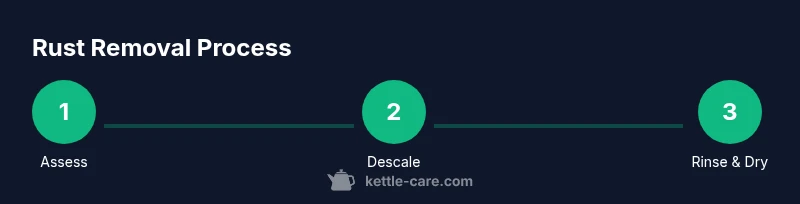
A sound plan reduces guesswork and protects the kettle. Start by identifying rust type, then choose a cleaning method (descaling vs. mechanical cleaning). Apply the chosen cleaner, rinse thoroughly, and dry completely. If rust is stubborn, a longer soak with a descaler may help, but avoid prolonged exposure that could harm finishes. Maintain an organized workflow to prevent accidental spills. The goal is complete rust removal without damaging the kettle’s surface or coating, while preserving safety and performance.
Method A: Descaling with Vinegar or Citric Acid
Descaling solutions using vinegar or citric acid effectively loosen mineral buildup and rust-prone areas. Prepare a solution of one part white vinegar (or citric acid) to three parts water. Fill the kettle with the solution and let it soak for 15–30 minutes. After soaking, scrub gently with a nonabrasive sponge, focusing on rust spots, then rinse thoroughly. If rust remains, repeat once more. Avoid soaking aluminum kettles in acidic solutions for long periods to prevent surface damage, and always rinse completely before the next boil.
Method B: Mechanical Cleaning for Light Rust
For light surface rust, a mechanical approach minimizes exposure to chemicals. Make a paste from baking soda and a small amount of water. Apply the paste to rusted areas with a soft sponge and scrub in gentle circular motions. Use an old toothbrush for tight corners and rims. Rinse frequently to prevent paste residue from lingering, and dry thoroughly with a microfiber cloth. This method preserves finishes and reduces chemical exposure, ideal for stainless steel and coated kettles.
Rinsing, Drying, and Preventive Care
Thorough rinsing removes cleaner residues left behind, followed by complete drying. Dry with a microfiber cloth and then air-dry with the lid off to ensure all moisture evaporates. To prevent recurrence, descale according to water hardness, dry the interior after each use, and avoid leaving water standing in the kettle. Consider regular maintenance scheduling and light protective coatings if recommended by the manufacturer. With consistent care, rust reformation slows and kettle life extends.
Authority Sources and Safety Notes
For safety and best practices, consult authoritative guidelines on cleaning and metal care. OSHA emphasizes chemical safety and proper ventilation when handling cleaners. The CDC provides general guidance on safe kitchen practices and avoiding contamination during cleaning and storage. NIST provides standards and testing guidance relevant to metal surfaces and corrosion resistance. While these sources do not replace manufacturer recommendations, they reinforce safe handling and maintenance principles.
Tools & Materials
- Rubber gloves(Protect hands from acids and rust particles)
- Soft sponge or non-abrasive scrub pad(Avoid steel wool to prevent scratching)
- Mild dish soap(For initial cleaning and degreasing)
- White vinegar(Use for descaling and rust loosening)
- Citric acid descaler or powder(Alternative descaler)
- Lemon juice(Natural acid for light rust)
- Baking soda(For paste and gentle abrasion)
- Microfiber cloths(Drying and polishing)
- Old toothbrush or small brush(Detail cleaning in corners)
- Dish towel or mat(Workspace protection)
- Coating-safe rust preventer (optional)(For long-term prevention on coated kettles)
- Gloves for chemical safety(Additional protection if using strong cleaners)
Steps
Estimated time: 45-60 minutes (plus optional soak times)
- 1
Unplug and inspect
Ensure the kettle is unplugged and cool. Remove the lid and pour out any water. Visually inspect interior rust patterns and note areas requiring attention.
Tip: Take a photo to track rust progression over time. - 2
Choose your method
Decide between descaling (vinegar/citric acid) and mechanical cleaning based on rust severity.
Tip: Start with the gentlest method to minimize surface damage. - 3
Descale with vinegar or citric acid
Fill with descaling solution and soak 15-30 minutes, then scrub gently and rinse.
Tip: Don’t exceed recommended soak times to avoid damage. - 4
Mechanical cleaning for light rust
Make a baking soda paste and scrub rust spots with a soft pad; use a toothbrush for joints.
Tip: Rinse frequently to avoid residue buildup. - 5
Rinse thoroughly and dry
Rinse multiple times, then dry with microfiber cloth and air-dry with lid off.
Tip: Drying completely prevents new rust from forming. - 6
Prevent recurrence
Descale regularly based on water hardness and rinse after each use.
Tip: Avoid leaving water standing in the kettle. - 7
When to replace
If rust persists or pits deepen, replacement may be the safest option.
Tip: Consider a model with better corrosion resistance or protective coating.
Frequently Asked Questions
Is rust in a kettle dangerous to drink from?
Rust on the interior surface of a kettle can potentially contaminate water, especially if it flakes. If rust is extensive or the metal is pitted, avoid using the kettle and seek replacement. For minor rust, thorough cleaning and rinsing are essential before reuse.
Rust in a kettle can contaminate water if it flakes off; if unsure, replace the kettle and consult the manufacturer.
Can I use bleach to remove rust from a kettle?
Bleach is not recommended for most kettles, especially aluminum or coated surfaces. It can damage the finish or release harmful fumes during boiling. Stick to vinegar, citric acid, or baking soda as safer alternatives.
Bleach isn’t advised for kettles; use vinegar, citric acid, or baking soda instead.
Will rust removal affect my kettle warranty?
Many kettles’ warranties exclude deliberate chemical cleaning that could damage the finish. Check your model’s warranty details. If cleaning is required, document the method and consult the manufacturer.
Warranties vary; read your model’s terms and consider contacting the maker if cleaning is uncertain.
Is rust safe on stainless steel kettles?
Stainless steel resists rust better than aluminum, but it can still corrode under harsh conditions. Clean promptly and avoid aggressive scrubbing that could dull the surface.
Stainless steel handles rust better but still needs gentle care to avoid scratching.
What if rust returns after cleaning?
If rust recurs, reassess the water hardness, frequency of descaling, and whether the kettle might be beyond repair. Consider replacements with better corrosion resistance.
If rust comes back, check water hardness and consider a replacement.
Watch Video
Highlights
- Assess rust early to maximize treatment options
- Start with nonabrasive, chemical-free methods when possible
- Rinse and dry thoroughly to prevent recurrence
- Replace if corrosion compromises the kettle’s integrity