When to Change Kettle: Signs, Timelines, Safety, Longevity
Discover when to change kettle: signs of wear, mineral buildup, leaks, and safety concerns. This Kettle Care guide helps you decide between repair and replacement with practical timelines and maintenance tips.


Knowing when to change kettle helps prevent leaks, rust, and poor heating performance. In this guide you will learn the key signs that signal replacement, how to assess older kettles, and practical timelines for descaling and parts replacement. By the end, you’ll be able to decide whether to repair or replace with confidence.
Why Knowing When to Change Kettle Matters
Knowing when to change kettle is not just about keeping your tea hot. It is a safety and efficiency issue that affects your kitchen routine and your energy bill. According to Kettle Care, regular checks help prevent rust exposure, mineral residue from scale, and potential leaks that could cause burns or water damage. An aging kettle can also become energy-inefficient, taking longer to boil and using more electricity. In this section we lay out the core reasons to track the kettle's condition, what counts as wear, and how to document a simple inspection routine you can perform every few months. By staying proactive, you reduce the risk of sudden failure and ensure your boiling water remains clean and safe for drinking or cooking.
Signs Your Kettle Is Nearing End of Life
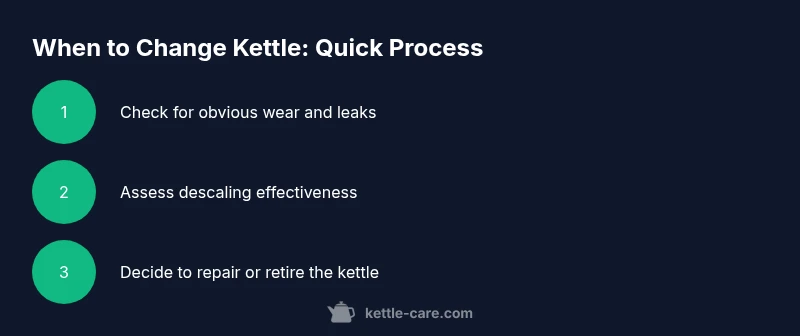
A kettle will start to show signs well before it fails completely. Look for interior rust or discoloration that shows through the metal, persistent mineral buildup that resists descaling, cracks or chips in the body or lid, and a loose or warped handle or lid seal. Leaks at the base or around the spout, steam escaping from joints, and unusual noises during heating are red flags. If the kettle heats unevenly or shuts off unexpectedly, that can indicate a failing thermostat or element. Finally, if the kettle takes noticeably longer to reach a boil, it may be losing efficiency and could be nearing the end of its life.
Maintenance vs Replacement: How to Decide
Maintenance can extend life in many cases, but there are limits. If a kettle is only a few years old and local repairs and descaling restore performance, repair is sensible. But when wear accumulates, repairs become costly or unsafe. Compare the cost and effort of descaling, replacing parts, and possible performance declines against the price and features of a new model. Consider factors such as safety, heat efficiency, and warranty coverage. If the reliability of hot water is critical for coffee or tea rituals, a new model with modern safety features may be the best long-term choice.
Descaling and Maintenance Milestones
Descaling helps remove mineral deposits that dull performance and shorten boiler life. In regions with hard water, plan to descale more often; in softer water areas, less frequent maintenance may be sufficient. A routine descaling involves using a descaling solution or a safe household alternative, filling the kettle with the solution, letting it sit, and then rinsing thoroughly. After descaling, boil clean water a few times to flush any remaining residue. Regular cleaning of the exterior and lid seals also helps prevent leaks and keeps the kettle looking like new. Keep an eye on the interior walls for rust or pitting, and address these signs promptly.
Replacement Timing: Practical Timelines
Replacement timing depends on use, build quality, and how well you maintain the kettle. If you use a kettle daily, expect to upgrade or replace every several years. In cases of repeated malfunctions such as inconsistent heating, repeating leaks, or new corrosion, replacement is often the safer option. When evaluating a new kettle, compare build materials, not just price, and look for a model with a reliable auto shut-off, a robust lid seal, and a solid warranty. Modern kettles with better insulation and faster heating can also reduce energy use over time, which matters for frequent tea and coffee drinkers.
Quick Maintenance Checklist
- Inspect the kettle interior for rust or heavy mineral buildup
- Descale using a safe solution or white vinegar if permitted by manufacturer
- Rinse thoroughly and boil fresh water to remove residue
- Check the lid seal and spout for signs of wear
- Test the auto shut-off and boiling time
- Consider replacing if signs persist after maintenance
Safe Disposal and Recycling of Old Kettles
Before discarding an old kettle, check local e-waste guidelines. Many kettle components can be recycled; remove any remaining water and ensure the cord is detached if possible. Some manufacturers offer take-back programs that make disposal easier and more environmentally responsible. If you are unsure, contact your municipal waste disposal authority for instructions on safe disposal.
Authority Sources
For safety and maintenance guidelines, refer to energy and consumer safety resources from government or university sources. See the following for general safety and energy efficiency considerations: energy.gov, cdc.gov, fda.gov.
Tools & Materials
- Kettle descaling solution or white vinegar(Use as directed by manufacturer; avoid harsh acids on sensitive finishes)
- Soft sponge or cloth(Non-abrasive to protect interior coating)
- Non-abrasive scrub brush(Optional for tough mineral buildup on exterior)
- Measuring cup(For accurate descaling solution measurements)
- Safety gloves(Protect hands during descaling and handling hot surfaces)
- Towel or microfiber cloth(Dry surfaces after cleaning)
- Replacement kettle (for comparison)(Useful when evaluating options side by side)
Steps
Estimated time: 45-60 minutes
- 1
Inspect for signs of wear
Check interior walls for rust, cracks, or pitting and evaluate lid seal integrity. Note any leaks or unusual odors.
Tip: Document the issues with photos or notes for later reference - 2
Test heating performance
Boil a small amount of water and observe for even heating, time to boil, and any abnormal sounds or stops.
Tip: If heating is inconsistent, it may indicate an element issue - 3
Decide on maintenance vs replacement
If minor issues exist and descaling restores performance, maintenance is reasonable. If multiple failures occur, replacement is safer.
Tip: Balance safety, cost, and reliability in your decision - 4
Research replacement options
Compare materials, capacity, warranty, auto shut-off, energy use, and safety features across models.
Tip: Prioritize durable materials like stainless steel and solid lids - 5
Implement the chosen path
If repairing, replace worn seals or parts. If replacing, choose a model that fits your daily routine and remove old kettle safely.
Tip: Follow local disposal rules for the old unit - 6
Dispose of the old kettle properly
Unplug, empty, dry completely, and follow local e-waste guidelines for disposal or recycling.
Tip: Use manufacturer take-back if available
Frequently Asked Questions
When should I replace my kettle instead of repairing it?
If the kettle shows persistent rust, ongoing leaks, or heating irregularities after maintenance, replacement is safer and more cost-effective in the long run.
If rust or leaks persist after maintenance, replace the kettle.
Is using vinegar to descale my kettle safe?
Descaling with vinegar is common and effective for mineral buildup, but check the manufacturer guidelines. Rinse thoroughly before using again.
Yes, but always follow the manual and rinse well.
How often should I descale my kettle in a typical home?
Descale based on water hardness and usage; in hard water areas you may need it more often, while softer water requires less frequent descaling.
Depends on water hardness and use; descale as needed.
What features indicate a durable kettle?
Look for solid construction, stainless steel or BPA-free parts, a reliable lid seal, good warranty, and automatic shut-off.
Durability shows in build, materials, warranty, and safety features.
Can I keep using a kettle with a small interior rust spot?
A small interior rust spot is a warning sign; avoid continued use and replace if rust worsens.
Rust inside is a red flag—don't keep using.
How should I dispose of an old kettle?
Follow local e-waste rules, recycle metal components, and check manufacturer take-back programs.
Recycle or return to maker following local rules.
Watch Video
Highlights
- Inspect regularly for rust and leaks
- Descale when mineral buildup affects performance
- Choose repair or replacement based on safety and reliability
- Select durable models with strong warranties
- Dispose responsibly and recycle where possible