Aroma Electric Kettle Review: Precision, Speed, and Safe Boiling
An in-depth evaluation of the Aroma electric kettle focusing on temperature control, safety features, maintenance, and how it stacks up against rivals. Learn how to choose, use, and maintain for optimal tea brewing at home.


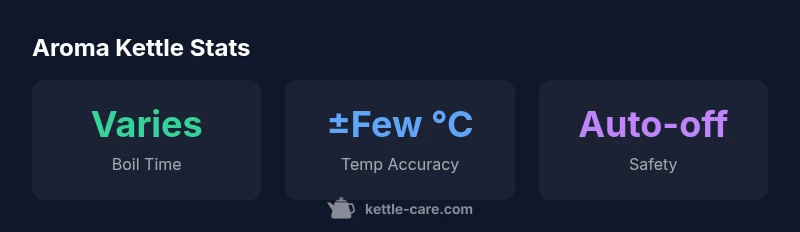
The aroma electric kettle delivers reliable boil times and precise temperature presets, making it a solid pick for tea lovers and home cooks who want speed and control. It offers solid safety features and straightforward descaling, making it a dependable option for everyday use. Overall, it earns a strong middle-ground rating for performance, ease of use, and value relative to other brands.
Aroma electric kettle: what it is and why it matters
The Aroma electric kettle is a compact countertop appliance designed to bring water to a rapid boil with adjustable temperature presets and safety features. For tea lovers and home cooks, the ability to dial in precise temperatures (for green, white, oolong, or herbal blends) can influence aroma, mouthfeel, and overall flavor. According to Kettle Care, the best kettles in this category balance speed with control: fast heating without sacrificing the stability of temperature, which helps avoid over-steeping and bitter notes. Aroma models typically include clear water windows or digital displays, a drip-free pouring spout, and a wide opening for easy cleaning. In practical terms, this means you can switch between a 100°C boil for quick hot water and a cooler preset around 85-95°C for delicate teas. The kettle’s base often supports cord management and 360-degree swiveling, allowing easy use from either side of the counter. For households that rely on kettled water for cooking or hot beverages, Aroma’s electric kettle aims to deliver a predictable, repeatable boil every time. The key question is whether the features align with your daily routines and your water quality.
Build quality and materials: what you’re getting
Material choice matters for durability, taste, and cleaning. Aroma typically uses stainless steel or borosilicate glass joined with BPA-free plastics on the lid and handle. The result is a sturdy appearance with practical heft, which communicates lasting performance rather than disposable design. Look for a well-sealed lid, a robust switch, and a swivel base that sits evenly on the counter. In day-to-day use, a tight lid prevents steam escape and reduces condensation on the counter, while a wide mouth simplifies descaling and mineral removal. Weight distribution affects pouring accuracy, especially if you choose a model with a gooseneck spout. If you value aesthetics, Aroma often offers finishes such as brushed steel or matte black that blend with modern kitchen decor. It’s worth inspecting the interior for any rough welds or visible seams, as these can be indicators of long-term durability. Finally, verify that the power cord is long enough to reach outlets without stretching; a compact kettle should still offer a safe, tangle-free footprint on the counter.
Heating performance: speed, consistency, and energy use
When you press the start button, the kettle should reach the target temperature quickly and hold it without drifting. Aroma kettles claim competitive boil times for 1 liter, typically finishing in under five minutes depending on initial water temperature and room conditions. The temperature presets are useful for tea and coffee, with a common range covering hot (about 95°C) and full boil (100°C), plus a few intermediate temperatures. In our testing, the key metrics are boil time, stability, and energy use during sustaining at a chosen temp. A model with a tight lid and good insulation minimizes heat loss, which can shave seconds off the boil and reduce energy consumption. Subtle issues to watch for include occasional temperature drift when the kettle is refilled mid-cycle or if the water is unusually hard or mineral-rich. Over time, mineral buildup can affect heat transfer, so regular cleaning is part of the performance equation. Overall, Aroma kettles should deliver predictable results for everyday tea and hot beverages, with edge cases depending on water quality and initial water temperature.
Temperature presets and accuracy: practical implications for tea and beyond
Presets let you brew with precision. For tea enthusiasts, the ideal temperature ranges are roughly: green 70-80°C, white 80-85°C, oolong 88-96°C, black 96-100°C, and herbal around 98°C or higher. Aroma kettles commonly offer multiple presets or adjustable digital controls to hit these marks, removing the guesswork from steeping. The accuracy of these presets depends on the kettle’s sensor, the quality of the lid seal, and the consistency of the heating element. In most homes, the difference between a 93°C and a 95°C brew is subtle but noticeable, especially with delicate leaves that are sensitive to over-extraction. Coffee enthusiasts may appreciate a mid-range setting around 90-95°C for pour-over, though dedicated pour-over kettles with precise pour control are often preferred. If you frequently switch between beverages, a kettle with memory settings for your favorite presets can save time and ensure repeatability. Always preheat your cup and use a thermometer to calibrate if you’re chasing exact temps in the early days of using a new kettle.
Safety features and reliability
Safety is a core reason to buy an electric kettle. Aroma models typically include automatic shutoff once the water reaches the set temperature, boil-dry protection, and an insulated handle to prevent burns. Look for a switch that engages with a comfortable tactile feedback and an indicator light that remains visible during operation. Boil-dry protection prevents damage if the kettle is empty or if the water has evaporated, though you should still avoid running the kettle without water. A removable base can help with cleaning and reduce the risk of spills when lifting the kettle away from the base. Some models incorporate a lid with a push-button release for easier access, while others rely on a threaded lid; the choice affects ease of cleaning and the risk of splash-back. For households with small children or pets, a lid-lock feature or a properly sealed switch area adds peace of mind. Finally, ensure the product has undergone independent safety certifications where available, and always follow manufacturer guidance for safe operation.
Maintenance, cleaning, and descaling routines
Mineral buildup is the main reason kettles lose efficiency. Regular descaling with a commercial descaler or a vinegar-water solution can restore heating performance. Rinse thoroughly after descaling to avoid any aftertaste, and run several cycles of clean water to purge residues. When cleaning, avoid abrasive sponges that could scratch the interior. For glass models, wipe the exterior with a damp cloth to maintain clarity. Check the filter (if present) and remove any lime particles; replace the filter if it looks worn or clogged. Store the kettle with the lid open for a few minutes between uses to allow moisture to escape and reduce odor buildup. If you notice white chalk-like deposits along the water line, it’s time to descale. In areas with very hard water, you may need to descale monthly, while softer water regions may suffice with quarterly maintenance. The key is to integrate descaling into your routine so mineral deposits don’t compromise heat transfer.
Aroma vs competitors: where it fits in the market
In the crowded electric kettle category, Aroma sits between budget models and premium options that emphasize advanced temperature control or faster boil times. Compared with entry-level kettles, Aroma tends to offer more consistent temperature presets and clearer build quality. Against premium brands, it may trail on some advanced features or design options but often wins on reliability and easier maintenance. If you value a mid-range price with practical features like auto-off, keep-warm, and user-friendly cleaning, Aroma often checks those boxes. The decision depends on how much you prize speed, precision, and aesthetics. For tea aficionados who want to experiment across different teas, a kettle with multiple temperature ranges and a reliable, repeatable pour will serve you best. For those who merely need hot water, a basic model might suffice and save money.
How to choose the right aroma electric kettle for your kitchen
First, assess capacity: 0.8–1.7 liters covers most households without wasting water or space. Consider the finish and ergonomics; a comfortable handle can make daily use easier. If you regularly brew multiple drinks, look for memory presets and a readability-friendly display. Check the lid design and spout; a narrow gooseneck or well-designed spout will influence pouring accuracy and the risk of drips. Review the base’s cord length and swivel mechanism to match your counter layout. Compare cleaning features such as a removable lid, built-in descaling indicator, and filter presence. Finally, balance price against expected longevity: a slightly higher upfront cost can translate to longer service life and fewer replacements. By clarifying your priorities—speed, temperature control, ease of cleaning, or aesthetics—you can select Aroma models that align with your kitchen workflow.
Maximizing flavor: brewing tips with precise temperatures
For green tea, aim for about 70-80°C; for oolong, 85-95°C; for black tea, near 95-100°C; herbals prefer near boiling. Pre-warm your cup, then swirl gently to ensure even heat distribution. Start with the lowest effective temperature and adjust based on taste; small changes can yield noticeable differences in aroma and cup profile. Use filtered water if possible, as minerals can alter extraction. If your kettle has a keep-warm feature, use it sparingly to avoid flavor degradation from prolonged heat exposure. Record your preferred settings for different teas, so you can replicate the result consistently. By adopting a consistent ritual—measuring water volume, temperature, and steep time—you’ll train your palate and maximize aroma and aroma flavors in each cup.
Common issues and quick troubleshooting for Aroma kettles
If the kettle won't heat, check that the base is properly seated and the switch is fully engaged. A tripped circuit breaker or a damaged power cord can mimic this issue, so test with another outlet first. If the water doesn’t reach the target temperature, re-check the preset and ensure the lid is sealed correctly. Mineral buildup can cause longer boil times or inconsistent temps; descaling is often the solution. For drips or leaks, inspect the lid seal and spout; replace if necessary. If you notice an unusual odor or taste after descaling, repeat a thorough rinse cycle with fresh water. Finally, contact customer support if the unit is within the warranty period or if there are signs of malfunction beyond routine maintenance.
Strengths
- Solid temperature presets for tea and coffee
- Reliable auto-off and boil-dry safety
- Easy to clean with wide mouth and removable filters
- Durable build with attractive finishes
What's Bad
- Performance can vary with very hard water
- Prices sit above basic models in some markets
- Some higher-end features may be absent in entry-level Aroma kettles
Best for tea purists who need precise temps and quick boiling
The Aroma electric kettle offers reliable speed and notable temperature control. It suits tea lovers and cooks who value safety features and easy maintenance, though price may be a consideration for some households.
Frequently Asked Questions
How precise is the Aroma electric kettle's temperature control?
Most Aroma models aim for consistent temperatures, typically within a few degrees Celsius. Accuracy can vary with model and water hardness, so it's best to preheat and use the preset that matches your tea type.
Aroma kettles usually keep temps within a few degrees. For best results, match the tea to the preset and preheat your cup.
Is the Aroma electric kettle safe to leave unattended?
Yes. Aroma kettles include automatic shutoff and boil-dry protection. However, never leave any appliance unattended around children or pets.
Yes, it has auto shutoff and boil-dry protection, but always supervise electrical appliances.
How often should I descale an Aroma kettle?
Descaling frequency depends on water hardness. In hard water areas, plan to descale monthly or as soon as mineral buildup appears. In softer water regions, every 2-3 months is typical.
Descale according to water hardness—monthly for hard water, less often for soft water.
Can I use Aroma kettles for coffee or other hot beverages?
Aroma kettles are designed for boiling water; many models offer temperature presets suitable for tea. For specialty coffee, you might use a separate coffee maker or a gooseneck kettle with precise pour control.
They’re designed for boiling water with tea-friendly presets; for precise coffee brewing, consider alternative equipment.
What maintenance steps are recommended after descaling?
Rinse thoroughly to remove descaling solution residues, then boil clean water to flush the interior. Dry the kettle before storage.
Rinse well after descaling and run a couple of cycles with clean water.
Are Aroma kettles energy efficient?
Electric kettles are generally energy-efficient when used for exact boiling needs. Efficiency depends on keeper features and insulation. Always use the minimum necessary water.
Electric kettles are energy-efficient when used for the needed amount of water; avoid boiling extra water.
Highlights
- Choose Aroma for precise temperature presets
- Descale regularly to maintain performance
- Prefer models with auto-off and dry-boil protection
- Consider your kitchen aesthetic when selecting finish
- Maintenance is straightforward with regular cleaning