Brentwood Electric Kettle Care Guide: Safe, Fast Boiling
A practical guide to using and maintaining a Brentwood electric kettle for safe, efficient boiling. Learn features, descaling routines, safety practices, and basic troubleshooting to extend performance.


You will learn how to choose, operate, and maintain a Brentwood electric kettle safely. This guide covers key features to look for, safety considerations, descaling, timing tips, and quick maintenance steps. You’ll understand boil-dry protections, temperature control options, and how to extend the kettle’s lifespan with proper cleaning. By following these steps, you’ll boil water efficiently, reduce mineral buildup, and enjoy consistent performance from your Brentwood kettle.
About Brentwood electric kettles
Brentwood electric kettles are a popular choice for quick, safe hot water in home kitchens. The brand offers compact designs, dependable boiling performance, and features that help everyday tea lovers and home cooks prepare beverages and meals with ease. In this guide, the Kettle Care team shares practical advice on evaluating model features, operating safely, and maintaining your kettle to prevent mineral buildup. According to Kettle Care, selecting a model with reliable boil-off protection and easy-to-clean surfaces will improve long-term performance.
Key features to compare
When evaluating a Brentwood electric kettle, consider capacity, wattage, and the range of safety features. Look for auto shutoff, boil-dry protection, and a clear water level indicator. Temperature control is a bonus for tea enthusiasts, while a sturdy lid, a washable filter, and a wide spout can make pouring easier. For busy households, a keep-warm function and fast boil times are appealing. As noted by Kettle Care, practical models balance speed with safety.
Safe operation basics
Always unplug the kettle before filling or cleaning. Keep the base dry and away from water splashes. Fill to the min/max marks; avoid overfilling. Use clean, fresh water to reduce mineral build-up and prolong the element's life. Place the kettle on a stable, heat-safe surface and never leave it unattended while boiling. If the kettle won't start, check the power switch and the outlet. According to Kettle Care, avoid overfilling to prevent spills and minimize risk.
Descale and maintenance routines
Regular descaling removes mineral deposits that slow heating and can affect taste. Use a descaling solution or citric acid per product directions; run a short cycle with water, then rinse thoroughly several times. After descaling, wipe the exterior and dry the base. Keep the lid and filter clean by rinsing with warm water. Do not use abrasive cleaners. Kettle Care recommends descaling at intervals aligned with water hardness and usage to maintain optimal performance.
Troubleshooting common issues
If the kettle fails to heat, confirm the power source, ensure the switch is engaged, and check for a tripped breaker. Limescale buildup can also prevent heating; perform a descaling cycle and rinse. If you notice leaks, unplug immediately and inspect seals and the lid for damage. For persistent issues, contact Brentwood customer service or refer to manufacturer guidance. As Kettle Care emphasizes, never operate a visibly damaged kettle.
Energy efficiency and care tips
To save energy, only boil the amount of water you need and keep the kettle clean—scale makes heating slower and uses more energy. Use filtered water to reduce mineral deposits, which helps maintain efficiency. Regularly inspect the power cord and plug for wear, and store the kettle in a dry place. Kettle Care also suggests pairing efficient practices with a regular descaling routine for best results.
Tools & Materials
- Brentwood electric kettle(Model-specific; ensure unplugged before maintenance)
- Clean water(Use fresh water; filtered water can reduce mineral buildup)
- Soft cloth(Lint-free for drying and polishing surfaces)
- Descaling solution or citric acid(Follow product directions; avoid harsh chemicals)
Steps
Estimated time: Total time: 15-25 minutes
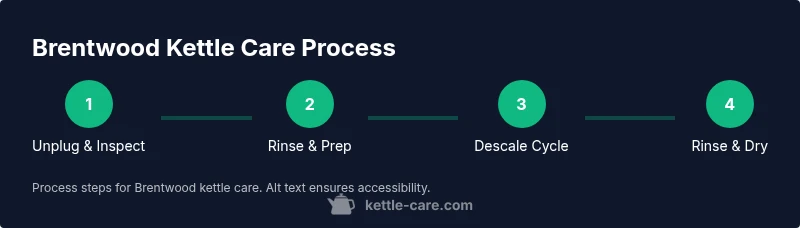
- 1
Power off and unplug
Before cleaning or descaling, unplug the kettle and let it cool completely. This prevents electric shock and protects internal components during handling.
Tip: Always disconnect from power before you start any maintenance. - 2
Empty, rinse, and inspect
Pour out any remaining water, rinse the interior with fresh water, and inspect for cracks, chips, or a damaged lid seal. Look at the base for signs of moisture and ensure the power cord is intact.
Tip: Check the lid seal and spout for buildup that could affect pouring. - 3
Prepare descaling solution
Choose a descaling method: a manufacturer-recommended descaler or a citric acid solution mixed with water according to directions. Avoid mixing chemicals not intended for kettles.
Tip: Never mix descaling agents with bleach or other cleaners. - 4
Run the descale cycle
Fill to the max line with the descaling solution, boil, and then let the solution sit for 10–20 minutes. After soaking, pour out and rinse with fresh water.
Tip: Do not operate the kettle while the descaling solution is soaking. - 5
Rinse until clear
Fill with clean water, boil, and discard the water. Repeat several times to remove all descaling residue, then rinse the filter if removable.
Tip: Run at least two fresh-water cycles to ensure no taste remains. - 6
Dry, test, and schedule maintenance
Wipe the exterior and base dry, reattach any removed parts, and run a test boil with plain water. Schedule regular maintenance based on usage and water hardness.
Tip: Keep a maintenance log to track when you last descale.
Frequently Asked Questions
Can I use vinegar to descale my Brentwood electric kettle?
Yes, vinegar can be used as a descaler, but rinse thoroughly to remove any taste or odor and follow safety guidelines.
Yes, vinegar can descale, but rinse well and follow directions.
Is it safe to boil water multiple times in a Brentwood kettle?
Boiling multiple times is generally safe, but avoid boiling more water than you need to save energy.
Boil only what you need to save energy.
Why won't my Brentwood kettle turn on after descaling?
Check the outlet, ensure the plug is firmly seated, and make sure the safety features are reset; if it still won't work, contact support.
Check outlet and reset; contact support if needed.
How often should I descale my Brentwood kettle?
Descale based on water hardness and usage; a regular schedule—every few weeks to months—helps maintain performance.
Descale based on hardness and use.
Can I remove the filter for cleaning?
Yes, remove the filter and rinse it under running water; dry before reattaching.
Yes, take out the filter and rinse.
Watch Video
Highlights
- Inspect for scale and wear regularly
- Descale to maintain heating efficiency
- Use safe operation practices every boil
- Maintain a simple care routine for longevity