Breville Water Kettle Care: Safe, Fast Boiling Guide
Learn safe, efficient care for your Breville water kettle with step-by-step instructions, descaling tips, and maintenance routines to keep it boiling quickly and safely.


This guide helps you safely operate and maintain a Breville water kettle for faster boils and longer life. It covers model features, safe usage, and routine descaling. You will learn how to select the right Breville model, set up for daily use, and perform essential maintenance with confidence.
Understanding Breville's safety and build quality
Breville water kettles are designed to deliver rapid boils with safety features that protect both you and your appliance. Breville models typically use durable stainless steel or BPA-free plastic, often housing a concealed heating element to minimize mineral buildup and simplify cleaning. A well-engineered lid, comfortable handle, and a sturdy base are hallmarks of reliable daily use. Auto shut-off, boil-dry protection, and, in higher-end models, temperature sensors help prevent dry boils and overheating. According to Kettle Care, the best Breville kettles balance performance with safety, ensuring the kettle remains cool to the touch on the base and stops heating as soon as the water reaches the set temperature. Regular checks of the power cord and the base prevent wear that could lead to electrical hazards. When you understand these safety cues, you can enjoy fast boils with greater peace of mind for tea, coffee, or hot water routines.
Key features across Breville models
Breville offers a range of features across its electric kettles to suit different kitchens and user preferences. Look for rapid-boil elements, keep-warm settings, and temperature control in higher-tier models. A removable limescale filter helps reduce mineral particles in your hot water, while a cordless base promotes easy pouring. Design details like a wide spout, ergonomic handle, and clearly marked water level guide improve everyday usability. Some models include insulated walls to keep the exterior cool, which helps prevent accidental burns. In all cases, a reliable auto-off mechanism paired with an audible alert ensures you know when the water has boiled. If you value precise temperature control for tea or specialty coffees, concentrate on models with adjustable temperatures and hold-time options. This variety lets you tailor the kettle to your taste and routine while maintaining safety standards.
How to choose the right Breville kettle for your kitchen
Choosing the right Breville water kettle starts with capacity, power, and specialized features. If you frequently entertain or brew multiple servings, a 1.7–1.8 liter capacity is common and practical. For speed, choose models with higher wattage (typically around 1500–3000W depending on region) to reduce boil times. Consider whether you want keep-warm functions, temperature presets, or a quick-pour spout for one-handed operation. Cordless bases add convenience for left- or right-handed use and simplify storage. Material choice matters for durability and cleaning; stainless steel and BPA-free plastic are common, with stainless steel often preferred for longevity and flavor neutrality. Look for a model with a clean lid closure, a visible min/max water level, and a reliable descaling indicator if available. Finally, read user reviews to gauge real-world performance, noise level, and reliability. In short, match your kitchen size, tea/coffee habits, and comfort with features to a Breville model that fits your lifestyle.
Proper setup and daily use for safety and speed
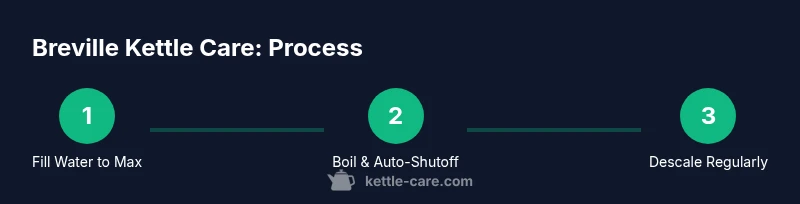
Begin with a dry inspection: ensure the kettle body, lid, and base are clean and free from damage, then plug into a dedicated outlet. Fill only to the recommended max line to prevent overflow or dry-boil risks. Use cold water to avoid thermal shock to a hot kettle, and always secure the lid before turning it on. The base should remain stable on a heat-resistant surface, and avoid wrapping the cord around the base, which can trip or pull the unit. When boiling, listen for the audible shut-off cue and feel the exterior for heat only where intended. After boiling, carefully pour and allow the kettle to cool before refilling. If you notice any unusual smells or noises, stop using the kettle and seek service.
Cleaning and descaling to extend life
Regular descaling removes mineral buildup that can impair performance. Start with a descaling solution or citric acid designed for kettles; follow the package directions for dilution. Rinse thoroughly with fresh water several times to remove any descaler residue. Wipe the exterior with a damp microfiber cloth to maintain the finish and remove fingerprints. Avoid harsh cleaners or abrasive scrubbing that could scratch the surface. If you live in a hard-water area, plan a monthly descaling routine; in softer regions, every few months may suffice. Always unplug the kettle before cleaning and let it cool completely before handling.
Troubleshooting common issues
If the kettle doesn’t heat, first check that it’s properly plugged in and switched on, and ensure the power outlet is functioning. A persistent failure to boil could indicate mineral buildup inside the heating element or a faulty auto-shutoff switch; unscrew the base and inspect for obvious debris, never tampering with the internal components beyond basic cleaning. A whistling or buzzing sound may signal air trapped in the system or scale buildup near the spout. For persistent issues, consult the Breville warranty or contact Kettle Care for guidance on safe troubleshooting steps. If you notice a burnt smell or odd taste, descaling and thorough rinsing are recommended before further use.
Energy efficiency and safe usage tips
To optimize energy use, boil only the amount of water you need. Pre-warm the kettle by rinsing with cold water prior to first use, then fill to the required level. Keep the kettle on a dry, level surface away from heat sources and children’s reach to prevent accidents. Regular descaling improves efficiency by reducing heat transfer resistance. If you frequently prepare hot beverages, consider models with temperature presets to avoid overheating water and wasting energy. Finally, replace any worn seals or lids promptly to maintain a tight seal and reduce heat loss.
Care routine and long-term storage
Develop a simple care routine: weekly quick wipe-down, monthly descaling, and quarterly check of the power cord and plug. Store the kettle in a cool, dry place away from direct sunlight to preserve the exterior finish and prevent warping. If you’ll be away for an extended period, ensure the kettle is dry to prevent mold growth and remove any batteries or accessories that could degrade in storage. By establishing a regular care schedule, you’ll maximize performance and prolong the life of your Breville water kettle.
Tools & Materials
- Citric acid descaler(Use according to package directions; effective against limescale.)
- Distilled water(For descaling mixtures and safe rinsing.)
- Soft microfiber cloth(For drying and polishing the exterior.)
- Non-scratch sponge or brush(Gentle cleaning around spout and lid.)
- Measuring spoons (optional)(For precise descaler concentration if needed.)
Steps
Estimated time: 20-30 minutes
- 1
Inspect safety and power setup
Unplug the kettle and inspect the cord and plug for any wear. Place the unit on a dry, stable surface away from edges. Confirm the lid closes securely and the base sits firmly. This reduces the risk of shock or accidental spills before you start.
Tip: If you see frayed cords, discontinue use and contact service rather than attempting DIY repair. - 2
Fill to the recommended max line
Open the lid and fill with cold water up to the max indicator. Avoid overfilling to prevent spills and ensure accurate boiling times. Use filtered water when possible to reduce mineral buildup.
Tip: Pour slowly to avoid splashing and ensure even heating. - 3
Boil and observe safety features
Switch on the kettle and wait for the auto-off mechanism to trigger. Listen for the click and note the silent shut-off when boiling is complete. Do not lift the kettle during boiling unless the base is unplugged first.
Tip: If the auto-off doesn’t engage, remove power and inspect the base for debris. - 4
Test the exterior and path of boil
Carefully touch the exterior after boiling to verify it’s not excessively hot. Pour into a safe vessel and check the water level marks again. This confirms safe operation and accurate measuring for future uses.
Tip: Keep hands and face away from steam vents to avoid burns. - 5
Descale the kettle
Prepare a descaling solution or citric acid as directed, fill partially, and run a boil cycle. Rinse thoroughly with fresh water until all residues are gone. Dry the exterior with a microfiber cloth.
Tip: Do not mix descaling agents with other cleaners; always rinse completely. - 6
Dry and reassemble
Wipe dry all surfaces and let the kettle air-dry completely before storage. Reassemble any removable parts and secure the lid. Store in a dry place away from heat sources.
Tip: Avoid leaving water inside the kettle for long periods to prevent odor formation. - 7
Schedule routine maintenance
Set a reminder for monthly quick clean and quarterly descaling checks based on water hardness. Replace worn filters or seals as needed to maintain performance and safety.
Tip: Record dates of descaling and cleaning to track your maintenance history.
Frequently Asked Questions
Are Breville kettles dishwasher safe?
Most Breville kettles should not be placed in a dishwasher, especially the electrical components. Always consult the user manual for care guidelines. For routine cleaning, use a damp cloth and mild soap on the exterior and avoid submerging the base.
Breville kettles are generally not dishwasher safe. Wipe the exterior with a damp cloth and follow the manual for cleaning.
Can I descale with vinegar?
Vinegar is not always recommended for kettles. Descale with a citric acid-based descaler or a manufacturer-approved descaler. Always rinse thoroughly after descaling to remove any taste or odor.
Use citric acid or a descaler rather than vinegar, and rinse well after descaling.
Why isn't my Breville kettle boiling?
Possible causes include a faulty power connection, a blown fuse, or mineral buildup inside the heating element. Check the outlet, inspect the power cord, and perform a quick descaling if buildup is suspected. If issues persist, contact support.
Check the outlet and power cord first; if it still won’t boil, descaler may be needed or professional help.
What water should I use to reduce scale?
Use filtered or soft water when possible; hard water accelerates mineral buildup. Regular descaling is recommended in areas with hard water to maintain performance.
Filtered water helps reduce scale and keeps your kettle performing well.
How often should I descale my Breville kettle?
Descale according to water hardness and usage. In hard-water regions, descaling monthly can be appropriate; in softer regions, every few months may suffice. Always monitor for mineral buildup and descale as needed.
Descale based on how hard your water is and how often you use the kettle.
Is it safe to keep water in the kettle after boiling?
It's best to empty the kettle after boiling to prevent mineral buildup and odor. If you need to keep water hot, use a model with a keep-warm setting and only for short durations.
It's safer to drain after boiling and re-fill when needed.
What maintenance should I perform yearly?
Do a thorough exterior clean, inspect the lid and base for wear, check the filter, and ensure the auto-off mechanism remains reliable. Replace worn parts as needed and review the user manual for model-specific guidance.
Inspect the exterior, lid, and base yearly; replace worn parts as needed.
Watch Video
Highlights
- Choose Breville models with features that match your needs.
- Prioritize safety features and proper handling during boiling.
- Descale on a regular schedule to maintain performance.
- Keep exterior clean and dry for longevity and aesthetics.
- Use the step-by-step routine to maintain safety and efficiency.