Electric Kettle Temperature Control: A Practical How-To
Master precise brewing with electric kettle temperature control. Learn to choose kettles with reliable presets, set and verify target temps, maintain accuracy, and tailor ranges for tea and coffee.


With an electric kettle temperature control, you can dial in exact brewing temperatures for different teas and coffees. This guide teaches you how to select a kettle with reliable presets, how to set and verify target temperatures, and how to maintain consistent pours. You'll see practical steps, safety tips, and recommended temperature ranges for popular hot beverages.
How electric kettle temperature control works
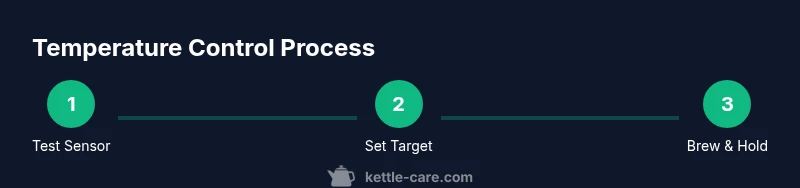
Electric kettles with temperature control rely on a heating element, a temperature sensor, and a microcontroller to regulate heat. When you select a target temperature, the sensor monitors the water and the controller adjusts power to reach and hold that temperature. Some models offer a dedicated 'hold' function that keeps the water near the target for a set period. The result is repeatable performance and better flavor control. According to Kettle Care, the most important factor is the feedback loop: accurate sensing plus a responsive heater. Mineral buildup can cause sensor drift, so regular descaling helps preserve accuracy. If your kettle uses a manual dial, you may have less precision but can still achieve good results by calibrating against an external thermometer. Always use filtered water when possible, since minerals affect heat transfer and sensor readings. This section differentiates presets from custom targets and explains how to verify performance.
Why precise temperature matters for tea and coffee
Precise temperature control matters because different beverages extract flavors at different temperatures. Water that's too hot can scorch delicate greens or oolongs, while water that's too cool under-extracts robust blacks and robust coffees. By dialing in 60°C–100°C (typical range across models) and adjusting in small increments, you tailor flavor, aroma, and mouthfeel. Kettle Care analysis shows that even small deviations—5–10°C—can noticeably shift sweetness, acidity, and bitterness. For tea, green leaves often prefer 70–80°C, oolong around 85–95°C, and black tea around 90–100°C; for coffee, most pulped brews benefit from about 90–96°C. Understanding these relationships helps you brew with confidence and reduces waste.
How to evaluate a kettle's temperature control before buying
When shopping, prioritize accuracy, speed, and consistency. Look for a thermometer-sensor pairing that reports real-time water temperature, a clear hold function, and stable power delivery. Check the stated accuracy range (e.g., ±1–2°C) and test the unit if possible. Prefer models with multiple presets and the ability to set a precise target in 1–2°C steps. Consider energy features like auto shut-off, boil-dry protection, and energy-saving modes. Finally, read user reviews about how well the temperature control performs under mineral-rich water and over time. The right kettle should feel responsive and trustworthy from first use.
Common temperature presets you’ll encounter
Most temperature-control kettles offer presets spanning roughly 60°C to 100°C, with common defaults around 60°C, 80°C, 90°C, and 100°C. Some models allow 1–5°C increments, others offer broader steps (5–10°C). Note that presets and hold times vary by brand; there is no universal standard. If your kettle does not show exact temps, use certified external gear to verify. Also consider whether the kettle supports separate presets for different beverages, which can speed up routine brewing and remove guesswork.
Calibrating and verifying temperature accuracy at home
Calibrating temperature control is about verifying the built‑in readings against an external thermometer. Boil water, then measure the actual water temperature as the kettle reaches the target. If there is a consistent offset (e.g., the display reads 100°C but the thermometer shows 98°C), use the remaining time to adjust your brewing target accordingly or contact the manufacturer for calibration options. Descale regularly to prevent mineral buildup from skewing heat transfer and sensor readings. Keep a small log of your adjustments so you can reproduce results.
Best practices for brewing different beverages
For tea, align the target temperature with the leaf type and oxidation: green tea around 70–80°C, white tea around 75–85°C, oolong 85–95°C, black tea 90–100°C, and herbal teas near 95–100°C. For coffee, most pour-overs land in the 90–96°C range, while espresso usually uses 88–92°C water with specific pressure. Use a preheat step to minimize heat loss, and pour promptly after the target temp is reached to maintain consistency. Adjust times based on your taste preferences and the specific tea leaves or coffee grind.
Using the hold or keep-warm feature effectively
The hold function is convenient for batching or multiple cups, but it can slowly drift away from the target temperature. Set a short hold window (5–10 minutes) for most brews, and re-check the temperature just before pouring. If the hold causes significant drift, consider turning off the hold and reheating briefly before serving. Remember that repeated heating cycles waste energy and can affect flavor stability over time.
Maintenance: keeping temperature control accurate
Regular maintenance is essential for accuracy. Descale monthly or as needed depending on mineral content in your water, using a citric acid or vinegar-based descaler according to the manufacturer’s instructions. Wipe the exterior and sensor area to remove dust and steam condensate. If your kettle has a removable filter, clean it to prevent mineral buildup that can alter heat transfer. Store the kettle away from direct drafts to avoid temperature fluctuations during preheating.
Safety considerations and common pitfalls
Always fill to the minimum water level before turning on, never operate empty, and use the boil-dry protection features. Avoid touching hot surfaces and keep hands away from steam vents. If you notice erratic temperature readings, stop using the kettle and consult support. Some kettles’ sensors are sensitive to mineral buildup or scale; if you can’t descale effectively, you may need a replacement. Safety and careful handling are paramount when working with hot liquids.
Energy efficiency and cost considerations
Using temperature control reduces wasted energy by heating only to the needed target. Choose kettles with automatic shut-off and energy-saving modes, and avoid repeatedly boiling water for small amounts. When brewing multiple cups, preheat the mug or cup to reduce the energy load. By maintaining accuracy and minimizing unnecessary reheating, you improve overall efficiency and reduce utility costs.
Troubleshooting: temperature control seems off
If you notice temperature drift or inconsistent results, start by descaling the kettle and recalibrating with an external thermometer. Check for sensor blockages, clean the heating element area if accessible, and verify that the power supply is stable. If issues persist, test with a different water source or another kettle to isolate whether the problem is mineral content, sensor drift, or a hardware fault. Seek manufacturer guidance if needed.
Quick-start: your first precise brew in minutes
- Place clean water in the kettle and plug in. 2) Select a target temperature appropriate for your beverage. 3) Bring water to the target, using a thermometer to verify accuracy if possible. 4) Hold briefly if your recipe calls for a stable temperature, then pour. 5) Record results and adjust future brews to taste. With practice, you’ll dial in reliable targets quickly.
Tools & Materials
- Electric kettle with temperature control(Check if it has adjustable presets or a dial; verify accuracy range.)
- Digital thermometer or calibrated external thermometer(Used for validating internal readings during calibration.)
- Measuring cup or graduated jug(Helps ensure consistent water volumes during tests.)
- Filtered water(Minerals affect heat transfer and sensor readings.)
- Descaling solution (citric acid or approved descaler)(Used to remove mineral buildup and preserve accuracy.)
- Soft cloth or microfiber towel(For cleaning exterior and sensor area.)
Steps
Estimated time: Total time: 25-40 minutes
- 1
Inspect and prepare
Unbox and inspect the kettle for any damage. Fill with clean filtered water to the minimum line and place on a dry, stable surface.
Tip: Check that the base is steady and the cord is not in the way during testing. - 2
Power on and select target
Turn on the kettle and choose a target temperature appropriate for your beverage. If your model has presets, select one close to your ideal range.
Tip: If unsure of the exact preset, start with a mid-range target like 90°C and adjust later. - 3
Verify target with external thermometer
Boil water and measure the temperature as the kettle approaches the target. Compare the reading with the display.
Tip: Note the offset and test at multiple temperatures for accuracy mapping. - 4
Calibrate or adjust targets
If you observe consistent drift, adjust your brewing targets or use the hold feature to maintain accuracy.
Tip: Document any adjustments for repeatable results. - 5
Brewing test batch
Brew a test cup using your target temperature and assess flavor, aroma, and mouthfeel.
Tip: Record taste notes and compare against your ideal profile. - 6
Use hold temperature wisely
If you plan multiple brews, enable hold for a short window and recheck just before pouring.
Tip: Short holds reduce drift and energy waste. - 7
Maintenance check
Descale the kettle if mineral buildup is visible and wipe the sensor area clean.
Tip: Follow the manufacturer’s descaling directions to avoid damage. - 8
Record and refine
Note the temperatures used and resulting flavor outcomes. Adjust future targets accordingly.
Tip: Create a quick brewing log for consistency. - 9
Store and reuse
Store in a dry place; ensure the kettle is cool before storing to avoid sensor exposure to heat stress.
Tip: Avoid leaving water in the kettle long-term to prevent mineral buildup.
Frequently Asked Questions
Do all electric kettles offer temperature control?
No, many kettles offer basic boil functions without adjustable temperature. Look for models labeled with temperature presets or adjustable temp control for best results.
Not all kettles have temperature control. Look for models with adjustable temperature presets for precise brewing.
What is the ideal temperature for green tea?
Green tea typically brews best around 70–80°C, depending on the variety and leaf size. Delicate greens may prefer the lower end of this range.
Green tea usually needs about 70 to 80 degrees Celsius. Adjust within that range for taste.
Can temperature presets be inaccurate?
Presets can drift over time due to sensor wear or mineral buildup. Regular descaling and occasional external verification help keep accuracy high.
Presets can drift; descale regularly and verify with an external thermometer.
Is it safe to keep water warm for long periods?
Keep-warm is convenient but adds energy use and potential flavor change. Use short holds and recheck temperature before serving.
Keep-warm is handy but use short holds and recheck temperature before drinking.
How often should I descale to maintain accuracy?
Descale based on water hardness and usage. In hard water areas, a monthly descaling cycle is common; otherwise, every 2–3 months works for many households.
Descale according to water hardness; monthly in hard water areas is common.
Watch Video
Highlights
- Know your beverage target temperatures and set them precisely.
- Regular descaling preserves sensor accuracy and heat transfer.
- Use an external thermometer to verify kettle readings.
- Maintain a short hold period to balance efficiency and consistency.