How Does a Kettle Work Step by Step
Discover how a kettle converts electricity into heat to boil water, with a clear step-by-step guide, safety tips, and maintenance advice from Kettle Care.


In this guide, you’ll learn how a kettle converts electricity into heat and brings water to a boil, step by step. We cover the main components, how heat is transferred, safety features, and practical tips for faster, safer boiling at home. This practical approach helps tea lovers and home cooks understand the science behind safe, efficient boiling.
How electricity powers a kettle
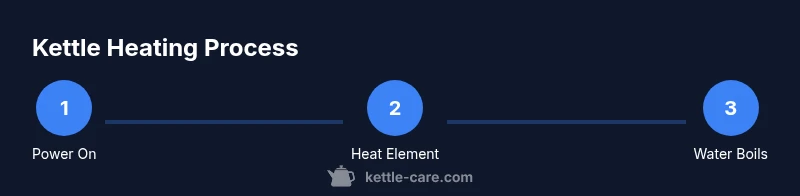
Electric kettles rely on a heating element that converts electrical energy into heat. When you switch on the kettle, current flows from the power source into the heating element, usually located at the base or inside the element itself. The electrical resistance causes the element to heat up, transferring energy to the water through metal walls or a surrounding vessel. This is the core physics behind boiling: energy in equals heat out, raising the water temperature until it boils. In this section we answer the question how does a kettle work step by step, from power-on to the moment the water reaches rolling boil. The speed and efficiency depend on several factors: the kettle's wattage, the volume of water, water temperature, and the kettle's design. Higher wattage generally boils water faster, but efficiency also comes from good insulation and a well-sealed lid that minimizes heat loss. In the kitchen, you'll notice that some models have a concealed heating element under a flat plate, while others house a coil inside the base contact. Either design ultimately transfers heat through metal to the water, which is why safe handling and proper lid closure matter. According to Kettle Care, a well-designed kettle reduces heat loss via tight seals and an accurate thermostat, delivering consistent boils with less energy waste. For tea lovers, the precise boil matters because water at slightly different temperatures affects flavor extraction. Home cooks also benefit from predictable boiling times when preparing sauces, broths, or rehydrating foods. In short, electricity powers the kettle's element, heat travels to water, and the science of boiling drives your next cup or recipe.
The core components and safety features
A kettle contains several essential parts that work together to create a safe boil. Central is the heating element, which can be an exposed coil or a concealed disc. The element converts electrical energy to heat, heating the water as it sits in contact with the kettle's metal walls. A thermostat or temperature sensor monitors water temperature and triggers a switch when boiling or near boiling is reached. In electric kettles, an automatic cut-off shuts off power to prevent dry-boil and reduce energy waste. Most models also include boil-dry protection, which automatically powers down if there is little or no water inside. The lid and spout design help minimize steam escape and maintain a tight seal. The base or handle is engineered to keep the hot surfaces away from the exterior, protecting hands during pouring. For safety, kettles often have a pressure-relief vent or a safe locking lid to prevent steam burns. If you own a stovetop kettle, the heating is achieved by the metal bottom and the steam whistle is the signal that water has reached a boil. Across both types, the build quality matters: a sturdy handle, a robust seal around the lid, and materials that resist corrosion prolong life and reduce the risk of leaks. Performance is also affected by water quality; hard water creates mineral buildup that can insulate the element and slow boiling. Kettle Care highlights how regular maintenance descaling, cleaning the spout, and checking the power cord keeps your kettle safe and efficient. In practice, understanding these components helps you diagnose issues quickly, like a non-responsive switch or a slowly heating element, without guessing at the cause.
How heat transfer heats the water
Heat transfer is the bridge between the electrical energy inside your kettle and the liquid you drink. When the heating element gets hot, it transfers energy to the water by conduction through the metal walls, and convection within the water moves heat from the bottom to the top. As water molecules gain kinetic energy, they begin to move faster, forming bubbles that rise as steam. At sea level, water reaches boiling at 100 C, though altitude and water impurities can shift the exact boiling point slightly. The kettle's lid helps trap heat and steam, increasing the rate of boil by reducing heat loss. For most home kettles, the design aims for a quick, uniform boil, so the element sits near the bottom to maximize contact with cooler water as it circulates. Because mineral deposits (limescale) can act as a barrier to heat transfer, descaling keeps efficiency high and prevents longer boil times. If you measure temperature with a thermometer, you will notice a rapid rise when the kettle is empty or lightly filled, followed by a near-flat plateau near boiling as bubbles begin to form. When water reaches the boiling point, many kettles automatically shut off or switch to a keep-warm mode. Pouring requires care: tilt slowly to avoid steam burns, use a heat-resistant handle, and keep your fingers away from the steam vent. The Kettle Care approach to efficiency stresses that using the exact minimum water for your intended drink reduces energy use; reuse leftover hot water only if it is safe and within the kettle's design limits. Throughout this section, you'll see that steam, pressure, heat transfer, and design choices interplay to produce the familiar, satisfying boil we rely on every day.
Troubleshooting common performance issues
Even well-made kettles can run into consistent problems. If your water isn't reaching a rolling boil, check the water level: keep it between the minimum and maximum marks, because too little water takes longer to boil and can trigger safety shutoffs. If the kettle hums or seems to stall, mineral buildup on the heating element creates insulation and slows heat transfer; descale according to the manufacturer's directions. A non-functional auto shut-off is often caused by a faulty thermostat or a weak micro switch in the lid mechanism; consult a technician if this occurs, as DIY repairs can be dangerous. If your kettle is slow to boil after descaling, consider using filtered water to reduce mineral content and recheck the kettle's performance after cleaning. For stovetop kettles, whistle timing can indicate that water has reached a boil; if the whistle stops prematurely, ensure the lid is properly sealed and the spout is clear of obstructions. Electrical problems such as tripped circuits or a damaged power cord require proper inspection; never operate a damaged unit. In summary, routine maintenance, correct water levels, and attentive cleaning minimize issues and extend the life of your kettle. The Kettle Care guidelines emphasize safety first: unplug before cleaning, wait for the element to cool, and never immerse the electrical base in water.
Tools & Materials
- Kettle (electric or stovetop)(Any model; ensure lid and base are intact)
- Power source or heat source(For electric kettles, a grounded outlet; for stovetop, a safe hob)
- Timer(Useful for precise boiling experiments or tea timing)
- Cleaning cloth(Soft cloth for exterior wipe-downs after use)
- Descaling solution or citric acid(Use for mineral buildup every few months)
Steps
Estimated time: Total time: 6-8 minutes
- 1
Identify kettle type and safety features
Check whether your kettle is electric or stovetop. Note auto shut-off, boil-dry protection, stay-cool handle, and any lid-lock mechanisms. Understanding these features helps you use the right procedure and stay safe.
Tip: Refer to the user manual or manufacturer site for your model's safety features. - 2
Fill to the recommended water level
Pour water only up to the min/max line indicated inside the kettle. Avoid overfilling to prevent boiling water from spilling and ensure efficient heat transfer.
Tip: If you’re unsure, err on the side of slightly less water for quicker boils. - 3
Position kettle securely on base or hob
Place the kettle so the base is stable and the spout is unobstructed. Close the lid firmly to minimize steam escape and improve heat retention.
Tip: Make sure the cord is tucked away to prevent snagging during pouring. - 4
Connect power and initiate boil
For electric kettles, plug in and switch to the boil setting; for stovetop kettles, place on a hot burner. Listen for the indicator or watch the water level.
Tip: Do not leave the kettle unattended while it’s boiling. - 5
Wait for water to reach boiling point
Most kettles reach rolling boil in 2–5 minutes depending on wattage and water volume. The boiling process means vigorous bubbles and return to a steady boil.
Tip: If your model uses a thermostat, it will cut off automatically at boil. - 6
Turn off automatically or manually
If your kettle has auto shut-off, it will stop once boiling is detected; if not, switch off manually after you hear the whistle or see full boil.
Tip: Avoid touching the hot surfaces immediately after boil. - 7
Pour safely and avoid steam burns
Lift the kettle with the handle, tilt away from your body, and pour slowly into your cup or teapot. Keep hands and face clear of steam.
Tip: Use a heat-resistant glove if you must handle a hot kettle. - 8
Cool, clean, and store
Allow the kettle to cool on a heat-safe surface before wiping. Clean the exterior and rinse the interior to remove residue.
Tip: Regular descaling extends life and maintains fast boils.
Frequently Asked Questions
What is the basic principle behind a kettle's heating element?
Kettles use a heating element that converts electrical energy into heat, transferring it to the water to reach boiling. A thermostat or sensor helps regulate the temperature, and auto shut-off stops power once boiling is detected.
Kettles heat water by converting electrical energy into heat, then automatically stop when boiling is reached.
Why does my kettle switch itself off before boiling?
Most kettles have an automatic shut-off when boiling is detected to prevent overheating; if it stops early, check the lid seal, water level, and mineral buildup.
Most kettles switch off automatically when boiling, so check seals and mineral buildup if it stops early.
Can I use a stovetop kettle for tea?
Yes. A stovetop kettle boils water by heating the metal body; it often whistles when boiling and requires careful handling to avoid burns.
Yes, stovetop kettles work by heating on the stove and often whistle when done.
How do I descale a kettle effectively?
Descale by using a descaling solution or citric acid with water, bring to boil, then rinse thoroughly. Repeat as needed based on hardness.
Descale with citric acid or a descaler, boil, and rinse well.
Is it safe to reboil water in a kettle?
Reboiling is generally safe but can concentrate minerals and affect flavor; allow adequate cooling between boils and avoid long-term repeated cycles.
Reboiling is usually safe but can affect flavor due to minerals building up.
What maintenance helps extend kettle life?
Regular descaling, wiping the exterior, checking the power cord, and storing the kettle with dry hands protect against leaks and corrosion.
Regular descaling and careful cleaning extend kettle life.
Watch Video
Highlights
- Know your kettle's safety features and design
- Fill to the recommended min/max water level
- Understand auto shut-off and boil-dry protection
- Descale regularly to sustain heat transfer
- Pour safely and allow to cool before storage