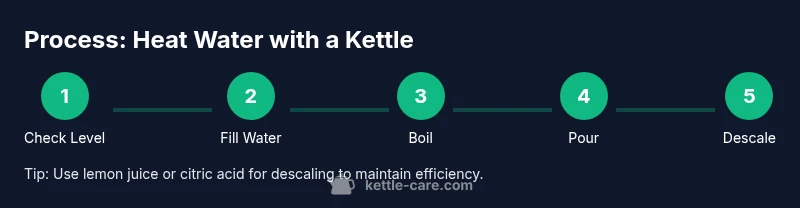
Kettle to Heat Water: Safe, Fast Boiling Guide
Learn to heat water safely and efficiently with a kettle, whether electric or stovetop. This guide covers selection, safety checks, step-by-step boiling, descaling, and energy-saving tips for tea lovers and home cooks.


You will learn how to heat water safely and efficiently using a kettle (electric or stovetop). This quick guide covers kettle selection, pre-boil checks, and a clear, step-by-step boiling process, plus essential safety tips and maintenance. By the end you’ll boil water quickly without spills or burns.
Why heat water efficiently matters
According to Kettle Care, choosing the right kettle and using correct safety practices reduces risks and speeds up boiling. Heating water is a daily task in most kitchens, yet many households waste energy by overfilling, boiling longer than needed, or leaving a kettle to run dry. Efficient boiling protects your kettle from scale buildup, extends its life, and lowers your energy bill over time. In this section we explore how different kettle designs heat water, common energy mistakes, and practical adjustments you can make to speed up boiling without sacrificing safety. For tea lovers and home cooks, the goal is hot water on demand without compromising flavor or safety.
Electric kettles vs stovetop kettles: heating methods compared
Electric kettles heat water with an integrated element, often offering rapid boil, auto-off, and temperature presets. Stovetop kettles rely on your burner to transfer heat, which can be gentler on some materials but slower to reach a boil. Electric models typically boil faster and shut off automatically, helping prevent overboiling, while stovetops let you monitor the process more closely. Trade-offs include energy efficiency, noise, and the type of tea you brew. For everyday use, most households benefit from a quick, reliable electric kettle with safe auto-off and a sturdy lid.
Pre-boil checks: water quality and kettle condition
Begin with clean water and a well-maintained kettle. Hard water can leave mineral deposits (limescale) that reduce efficiency and shorten kettle life. Check the lid seals, spout, and base for residual buildup and ensure the power cord (for electric kettles) is intact and untangled. If you notice an odd odor or taste, descale the kettle before the next boil. Routine checks help you boil water faster and protect your family from contaminants.
Step-by-step overview: heat water safely
This section provides a practical overview of safe boiling. Start with proper water levels, use appropriate heat settings, and never leave a kettle unattended once it’s on. If you own a temperature-controlled kettle, select the target range suited to your beverage (e.g., 92–96°C for green tea, 96–100°C for black tea). Always allow the kettle to auto-off or switch it off manually once you hear the whistle or the indicator light changes. Pour carefully to minimize splashes and burns.
Maintenance and descaling for longevity
Descaling removes mineral buildup that impedes heat transfer. Use a mild descaler or household options like white vinegar or citric acid, following the manufacturer’s instructions. Rinse thoroughly after descaling and dry all surfaces to prevent new mineral deposits. Regular maintenance keeps boil times consistent and protects the kettle’s heating element, ensuring years of safe use.
Energy-saving tricks for daily boiling
Small changes add up. Only fill the kettle with the exact amount of water you need, keep the lid closed, and use a kettle with an automatic shutoff. If you routinely boil water for multiple uses, consider warming your cup or pot with hot water from a previous boil rather than starting a fresh boil for every cup. Position the kettle away from heat sources that could reduce efficiency, and prefer insulated kettles when possible to maintain a safe, steady boil.
Authority sources and further reading
For safety standards and best practices, consult reputable sources. Energy guidance from government and academic institutions can help you make better choices about energy use and safety in boiling water. The following resources provide additional context on safety and efficiency to complement this guide:
- Energy.gov (U.S. Department of Energy) – general energy efficiency and consumer safety guidance.
- NIST (National Institute of Standards and Technology) – standards and best practices for household appliances.
- CDC (Centers for Disease Control and Prevention) – safe handling of hot liquids and kitchen safety recommendations.
Tools & Materials
- Kettle (electric or stovetop)(Ensure it is in good condition, free of cracks, and suitable for your stove or base.)
- Measuring cup(Use for accurate water amounts to avoid overfill.)
- Kitchen timer(Track boil time and prevent overheating.)
- Thermometer (optional)(Useful for reaching specific temperatures for tea types.)
- Heat-resistant gloves or towels(Helpful when handling a hot kettle or pouring.)
- Descaler or citric acid/vinegar (optional)(For periodic descaling to maintain efficiency.)
Steps
Estimated time: 8-12 minutes
- 1
Check water level and prepare
Inspect the kettle for damage and ensure the lid closes securely. Fill with cold water up to the recommended max line using your measuring cup for accuracy.
Tip: Never exceed the max fill line; overfilling can cause spills or boiling over. - 2
Position on heat source or base
Place the kettle on its base or on a stable burner. Keep cords clear and away from hot surfaces to prevent tangling or tipping.
Tip: A stable setup reduces the risk of spills and ensures even heating. - 3
Power on and set to boil
Turn the kettle on and, if available, enable auto-off or temperature presets. For tea, select a target temperature if your model supports it.
Tip: If your kettle lacks temperature control, expect a full boil and reset to your preferred tea temperature after pour. - 4
Monitor until boil
Watch for rolling bubbles or a whistle and wait until the kettle indicates it has boiled. Do not remove the kettle from heat until you hear the signal.
Tip: Avoid opening the lid during boiling to prevent heat loss and splashes. - 5
Pour safely and control temperature
Switch off (or let auto-off engage) and pour water slowly to your cup or teapot. Let the liquid settle briefly to avoid scalding.
Tip: Use a heat-resistant handle and pour slowly to prevent burns. - 6
Clean, dry, and store
Rinse the kettle, wipe the exterior, and dry thoroughly. If needed, descale on a regular schedule to maintain efficiency.
Tip: Regular descaling keeps boil times consistent and extends kettle life.
Frequently Asked Questions
What is the fastest way to heat water with a kettle?
Use a high-wattage electric kettle with auto-off and a secure lid. Keep the water near the recommended max line to avoid extra reheating and ensure a rapid, safe boil.
For a fast boil, use a modern electric kettle with auto-off and keep the lid closed; this minimizes heat loss and speeds up boiling.
Can I heat water to a specific temperature with a kettle?
Some electric kettles include temperature controls; otherwise, bring to a full boil and allow cooling to the target temperature with patience. A thermometer can help if you need precise temps.
Yes, if your kettle has temperature settings; otherwise you can gauge with a thermometer after boiling.
Is it safe to leave water boiling in a kettle unattended?
No. Leave the kettle unattended only if you have automated shutoff. Always stay nearby during boiling to prevent spills and potential accidents.
It's best to stay nearby or rely on auto-off kettles to reduce risk.
How often should I descale my kettle?
Descale based on mineral content and usage. In hard water areas you may need it every 1–3 months; soft water areas less frequently.
Descale as needed, especially if you notice slower boils or white mineral deposits.
Why does my kettle whistle or hiss?
Whistling usually means steam is escaping. It can indicate a lid or spout seal issue or simply that the kettle has reached full boil and the whistle is signaling it’s time to pour.
A whistle typically means it’s boiled; check seals if the sound seems abnormal.
What kettle is best for tea brewing?
A kettle with precise temperature control helps brew different teas. A wide spout and easy pour improve control, while a stable base prevents tipping.
For tea, pick a temperature-controlled kettle with smooth pouring.
Watch Video
Highlights
- Choose the right kettle and use it safely
- Fill to the correct level to prevent spills
- Electric kettles with auto-off offer safer, faster boils
- Descale regularly to maintain efficiency