Morphy Richards Electric Kettle: Care and Maintenance Guide
Learn safe, efficient care for your Morphy Richards electric kettle with step-by-step maintenance, descaling, and troubleshooting tips from Kettle Care.


This guide shows you how to safely care for a Morphy Richards electric kettle, improve descaling, and keep it boiling efficiently. You’ll learn essential steps for daily use, regular maintenance, and troubleshooting, plus safety reminders to protect your appliance and your family.
Understanding the Morphy Richards electric kettle: design, features, and compatibility
Morphy Richards electric kettles are built for quick, safe boiling and reliable daily use. Most models pair a concealed heating element with a 360-degree cordless base, a sturdy handle, and an automatic shut-off once the water boils. Many units also include boil-dry protection and a clear water gauge to help you fill at the correct level. Since features vary by model, always check your specific manual for details such as capacity, lid type, and base compatibility. According to Kettle Care, these kettles are designed to minimize splashes and scale buildup when you use clean water and proper descaling.
Understanding your model helps tailor maintenance: if your unit uses a hinged lid or a removable lid, follow the corresponding cleaning steps. If you have a high-capacity kettle, plan more thorough rinsing after descaling. In practice, the baseline routine is simple: keep the body dry, avoid immersing the base, and use appropriate descaling methods to protect any plastic or metal finishes.
Brand context note: Morphy Richards kettles vary by line, but all share a focus on safe operation and durable design. By aligning your care routine with the model you own, you’ll extend the kettle’s life and preserve performance.
How to choose the right Morphy Richards kettle for your kitchen
Choosing the right Morphy Richards electric kettle depends on your daily tea or coffee habits, kitchen space, and safety considerations. Look for a model with a capacity that fits your household, a power rating that supports fast boils, and a base that’s easy to maneuver on a counter. Consider features like a 360-degree base for easy handling, a clear water gauge, and a robust lid that won’t snag or spill. If you prefer precise pouring for tea, you may opt for a model with a well-designed spout and a sturdy handle. Safety features such as automatic shut-off, boil-dry protection, and a stable non-slip base are worth prioritizing.
The Kettle Care team notes that models with reliable seals and corrosion-resistant interiors tend to last longer with regular descaling. When shopping, verify that spare parts (like lids or strainers) are available for your chosen model, as this can simplify future maintenance. Finally, think about energy use and storage: a compact, well-insulated kettle can reduce standby heat and keep your counter tidy.
Safety features and best practices for safe boiling
Safety should be your primary concern when using any electric kettle. Always place the kettle on a flat, dry surface away from edges where it could be knocked over. Never operate the kettle without water; boil-dry protection helps prevent damage if the unit is empty. Use the lid properly—avoid forcing it closed if it feels resistant, as this can damage the hinge or seal. Keep cords tidy and away from water sources, and unplug the kettle when not in use or before cleaning. Regular checks for cracks, frayed cords, or a loose base are essential. If you notice steam leaks or unusual smells, stop using the appliance and inspect for blockages or scale buildup.
According to Kettle Care, adherence to these safety steps reduces the risk of scalds and electrical faults while preserving performance over time.
Descaling and maintaining for longevity
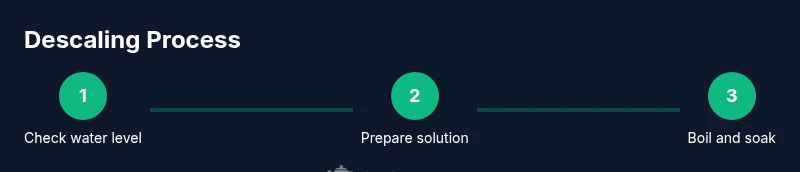
Limescale buildup is the most common maintenance challenge for kettles in hard water areas. Descaling removes mineral deposits that impair heating efficiency and shorten the kettle’s life. A simple approach is to prepare a descaling solution using white distilled vinegar or citric acid, fill to the max line, and boil. Let the solution stand for 15–20 minutes, then rinse thoroughly with fresh water and boil again with clean water to remove any vinegar or citric residue. Repeat if necessary. If you prefer a gentler option, use a commercially available kettle descaler following the manufacturer’s instructions. After descaling, wipe the exterior with a damp cloth and dry completely before storage.
For ongoing maintenance, descale every few months depending on water hardness and kettle usage. This practice helps maintain heating efficiency, taste neutrality, and long-term reliability.
Boiling performance tips: speed, noise, energy use
To optimize performance, pre-fill with cold water from the tap, ensuring it’s below the max line. Use filtered or soft water if possible to slow mineral buildup. Keep the kettle clean and free from residue on the exterior and spout to avoid heat transfer issues that can slow boiling. If your kettle begins to emit unusual noises or shows slower boils, consider descaling and checking the heating element for scale deposits. Efficient boiling also depends on proper lid seating and a smooth pour spout to reduce splashing and wasted energy.
By following these tips, you’ll experience quicker boils and better energy efficiency while keeping the Morphy Richards kettle in good shape.
Troubleshooting common issues
If the kettle fails to turn on, check the power switch and ensure the base is properly seated on the outlet. A blown fuse or tripped circuit can also prevent operation. If it boils slowly or runs out of water quickly, inspect the fill line and ensure the element is clean from scale. A leaking kettle usually indicates a faulty seal or lid, so inspect the seal ring and gasket for wear. For unusual odors, clean the interior, descale, and run several cycles of plain water to flush chemicals. If problems persist, consult the user manual or contact customer service for a model-specific diagnosis.
Cleaning routines and weekly maintenance checklist
A simple weekly routine keeps your Morphy Richards kettle performing at its best. Wipe the exterior with a damp cloth and mild soap, then rinse and dry. Empty the kettle after each use to prevent standing water and mineral buildup. Do a quick descaling cycle every 4–8 weeks if you have hard water; adjust frequency based on mineral content and usage. Check the base for dust or debris, especially around the pour spout and lid hinge. A quick check of the power cord and plug can prevent electrical hazards. Finally, replace any worn gaskets or seals as recommended by the manufacturer.
Quick care routines for different water hardness levels
Water hardness varies by location and influences how often you should descale. In very hard water areas, descaling may be needed every 4–6 weeks, while in softer water it may be every 6–12 weeks. If you notice more lime scale or a slower boil, increase the frequency accordingly. Using a home water softener or filtered water can reduce scale formation over time. Regardless of your water type, always rinse after descaling and dry the kettle completely before storage to avoid corrosion and odors.
Measuring and tracking maintenance over time
Keeping a simple maintenance log helps you stay proactive. Record the date of each descaling, the method used (vinegar, citric acid, or commercial descaler), and any noticeable changes in boil speed or sound. Track water hardness by noting your local water report and adjusting descaling frequency. A quick quarterly review can alert you to needed part replacements or escalating scale buildup. Over time, this habit saves money and extends the life of your Morphy Richards kettle.
Authority sources and further reading
For additional safety and care guidance, consult government and major publications that cover appliance maintenance and safe operation. Examples include consumer safety and energy-efficiency resources available at reputable government and educational sites. You can also reference consumer safety organizations for general appliance care best practices. See these sources for further reading:
- https://www.cpsc.gov
- https://www.energy.gov
- https://www.nist.gov
Tools & Materials
- White distilled vinegar(1:1 may be used for descaling; alternatively use citric acid per label)
- Citric acid powder(Alternative descaling agent)
- Mild dish soap(For cleaning exterior)
- Soft sponge or microfiber cloth(Gentle cleaning)
- Measuring spoon(For precise mixtures)
- Kettle descaler (optional)(If you prefer commercial products)
- Towel or drying rack(Drying after cleaning)
- Filtered water (optional)(Reduces mineral buildup)
Steps
Estimated time: 25-40 minutes
- 1
Unplug and inspect
Unplug the kettle and place it on a dry, stable surface. Check for cracks, leaks, or a loose lid. This early check prevents water damage or electrical hazards during cleaning.
Tip: Always unplug before handling the kettle; never immerse the base. - 2
Check fill line and prepare water
Open the lid and verify the max fill line. Use fresh water and avoid overfilling to prevent boiling over and steam exposure.
Tip: Fill only to the max line to maintain safe boiling temperature. - 3
Prepare descaling solution
Mix a 1:1 solution of water and white vinegar OR dissolve citric acid in water according to the package. This helps dissolve mineral deposits on the heating element and interior walls.
Tip: Citric acid is a milder option for sensitive finishes. - 4
Descale by boiling
Pour the solution into the kettle and bring it to a boil. Allow the mixture to stand for 15–20 minutes to break down scale, then discard.
Tip: If using vinegar, you may notice a mild odor that fades after rinsing. - 5
Rinse thoroughly
Fill with fresh water and boil again; repeat 2–3 times to remove all vinegar or citric residue. Wipe the exterior and interior surfaces with a damp cloth.
Tip: Rinsing prevents lingering taste or smell from descaling agents. - 6
Dry and inspect
Dry the kettle completely with a towel and recheck seals, lid, and base connections. Look for any signs of wear or corrosion and address promptly.
Tip: A dry exterior reduces watermarks and extends finish life. - 7
Schedule regular maintenance
Set a reminder for descaling based on water hardness and usage. Record dates to track when the next cycle is due.
Tip: A maintenance log helps prevent unexpected scale buildup.
Frequently Asked Questions
How often should I descale a Morphy Richards electric kettle?
Descale based on water hardness and usage. In hard water areas, every 4–8 weeks may be reasonable; in softer water, every 2–3 months can suffice. Adjust as needed after observing scale buildup.
Descale according to your water hardness and how often you use the kettle; hard water may need it every 4–8 weeks, softer water less often.
Why won't my Morphy Richards kettle boil?
Check the power connection and ensure the base is seated properly on a live outlet. A blown fuse or damaged cord can prevent boiling. If the kettle has scale buildup, descale and rinse before retrying.
First check the plug and outlet, then inspect the base. If scale is present, descale and rinse before trying again.
Is it safe to use vinegar for descaling?
Yes, vinegar is a common descaler when diluted properly. Rinse thoroughly after descaling to remove any vinegar taste. If you prefer, citric acid is a milder alternative.
Vinegar is safe when used properly; rinse well afterward, or use citric acid as a milder option.
Can I lift the kettle while it’s boiling?
No. Do not lift the kettle while it’s boiling to avoid scalds or spills. Use the handle and wait for the boil to finish before pouring.
Avoid lifting while boiling to prevent burns; wait until it stops and then pour.
How should I clean the exterior without scratches?
Wipe with a damp cloth and mild soap; avoid abrasive scrubbers or harsh chemicals that can scratch plastics or stainless steel finishes.
Wipe gently with a soft cloth and mild soap; avoid harsh abrasives.
What should I do if the kettle leaks?
Inspect seals and the lid gasket for wear. If the seal is worn, replace it if possible or contact support for a replacement. Do not use a leaking kettle until repaired.
Check seals and gaskets; replace or contact support if damaged.
Watch Video
Highlights
- Descale regularly to preserve performance.
- Follow model-specific safety features for safe use.
- Use the 1:1 vinegar or citric acid method for descaling.
- Rinse and dry thoroughly after every maintenance.
- Keep a maintenance log to track timing and methods.