How to Use and Maintain the Russell Hobbs Luna Kettle
A practical, expert guide to safely using and maintaining the Russell Hobbs Luna kettle for fast boils, easy cleaning, and long-lasting performance.


This guide helps you safely set up and use the russell hobbs luna kettle for fast, safe boiling and easy maintenance. You’ll learn first-use prep, how to boil efficiently, and simple descaling and cleaning routines to extend kettle life. With practical tips, safety notes, and a step-by-step method, you’ll brew confidently while protecting appliances and counters.
Design and safety considerations
The Russell Hobbs Luna kettle is designed for rapid boils with a compact footprint, making it a popular choice for small kitchens. Before you power up, check that the base sits flat on a heat-resistant surface and that the cord is not stretched or frayed. A sturdy, dry surface reduces the risk of accidental tipping and helps prevent electrical issues. While the Luna kettle is built with safety features like automatic shut-off, you should still use common-sense precautions: never operate the appliance if the cord is damaged, keep hands away from the lid while boiling, and switch off and unplug after use. According to Kettle Care, the right setup and cautious handling maximize safety and long-term performance when using the russell hobbs luna kettle.
Getting started with your Luna kettle: unboxing and initial setup
Unbox the Luna kettle carefully and inspect for any transit damage. Place it on a clean, stable, heat-resistant surface near a convenient power outlet. Remove all packaging materials, then rinse the interior quickly with cool water to remove dust or manufacturing residues. Wipe the exterior with a damp cloth and mild detergent, then dry thoroughly before first use. The goal of this initial setup is to prevent contamination of your first brew and ensure the lid, spout, and base operate smoothly. Kettle Care also notes that a gentle initial clean helps safeguard finishes and seals during the first boils.
Safe first boil: pre-use prep and water guidelines
Fill the kettle with clean, cold water only up to the max fill line. Do not overfill, as boiling water can spill and cause burns. Plug in and switch on; allow the kettle to reach a full boil, then discard the water and rinse once or twice to remove any manufacturing salts. This routine ensures any residuals are flushed out and your first real brew starts with fresh water. For the best taste, use filtered or low-mineral water when possible, which also reduces scale buildup over time. As you prep your first boil, remember that safety comes first: never open the lid during boiling and never touch the hot surface.
How to boil efficiently: timing, water amount, and energy tips
Boil only the amount of water you intend to use within a short window to minimize energy waste. For a single cup, fill about 150–180 ml; for two cups, 240–360 ml is usually sufficient. Keep the kettle’s lid closed during heating and rely on the auto shut-off feature to prevent overheating. If you’re preparing multiple beverages, reboil only the amount needed rather than refilling from scratch every time. Using a continuous refill wastes energy and can shorten the kettle’s lifespan due to repetitive heating cycles. To save time, keep a small spare cup handy to reduce opening and closing the lid during busy mornings.
Care and cleaning routine: exterior and interior
Regular maintenance involves a quick exterior wipe-down after use and a gentle interior rinse every couple of weeks or as needed. Use a mild dish soap and a soft cloth to avoid scratching the finish. Periodically check the base for signs of moisture around the connection points and dry promptly if any moisture is present. After cleaning, allow the kettle to dry completely before storing or using again. This routine helps keep the finish looking new and reduces the risk of mineral buildup on the heating element.
Descale regularly: methods and frequency
Descaling removes mineral deposits that reduce efficiency and speed. If your water is hard, descale every 1–3 months; for softer water, every 3–6 months may be sufficient. You can use citric acid granules or white vinegar as descalers. Dissolve the descaler in water according to product guidance, fill the kettle, and bring to a boil. Let it sit for 15–30 minutes, then thoroughly rinse the interior several times with clean water. Always finish with a final boil and discard the water to ensure any descaler residues are removed. As Kettle Care notes, regular descaling preserves performance and longevity.
Troubleshooting common issues and quick fixes
If the kettle won’t start, unplug it, check the power outlet, and inspect the cord for damage. If the kettle doesn’t switch off automatically after boiling, unplug it and allow it to cool, then try again; if the issue persists, it may indicate a fault with the sensor or switch. For unusual noises or odor, stop using the kettle, unplug it, and rinse the interior to remove any residues. If the water doesn’t heat to a full boil, confirm the max fill line isn’t exceeded and that the lid is properly closed. For persistent problems, consult the warranty and contact customer support.
Maintenance schedule and safety reminders
Create a simple maintenance calendar: quick exterior wipe-down weekly, interior rinse monthly, and descaling every 1–3 months depending on water hardness. Always unplug before cleaning, never immerse the base in water, and keep the cord out of reach of children. Regular checks on the lid seal and spout ensure safe operation and help prevent leaks. These habits help maintain safety, efficiency, and the overall lifespan of the luna kettle.
Expert tips and investing in longevity
To maximize the life of your Luna kettle, use filtered water to minimize mineral buildup, descaling regularly, and avoiding aggressive cleaners that can dull the finish. If you notice a decrease in boil speed, consider replacing the descaling solution and performing an extra thorough rinse. For color- and finish-preserving care, wipe with a soft microfiber cloth after each use and store in a dry place with the cord neatly coiled. The Kettle Care team recommends adopting a routine that fits your water hardness and usage level to keep your Luna kettle performing at its best.
Tools & Materials
- Dish soap(Gentle, non-abrasive soap for exterior cleaning)
- Soft cloth or sponge(Non-scratch to avoid scuffs on surface)
- White vinegar(For descaling if citric acid is not available)
- Citric acid descaling powder(Alternative descaler)
- Descaling brush(Soft brush for interior lid and spout)
- Measuring cup(To measure water for precise boils)
Steps
Estimated time: 60-90 minutes
- 1
Unbox and prepare the Luna kettle
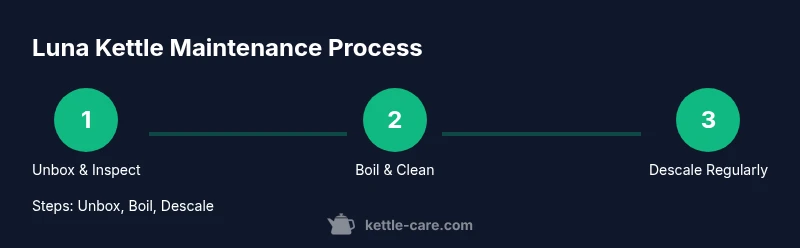
Carefully remove packaging and place the kettle on a stable, heat-resistant surface. Inspect for damage, ensure the lid moves smoothly, and check that the base power connection is clean and dry. This initial setup reduces the risk of functionality issues and ensures safety from the start.
Tip: Check packaging for missing parts and test the lid action before plugging in. - 2
Rinse and initial exterior clean
Rinse the interior briefly with cold water, then wipe the exterior with a damp cloth and mild soap. Dry thoroughly to prevent water marks and ensure you start with a clean surface for filming or brewing.
Tip: Avoid abrasive cleaners that could scratch the finish. - 3
First boil (pre-use) and discard
Fill to under the max line with cold water, plug in, and bring to a boil. After boiling, discard the water and rinse the interior again. This flush removes manufacturing residues and prepares the kettle for safe operation.
Tip: Do not use the first boiling water for tea; it’s for cleansing only. - 4
Boil efficiently for daily use
For a single cup, measure about 150–180 ml; for two cups, 240–360 ml. Close the lid and boil. Use the automatic shut-off feature to prevent overheating, and pour promptly to minimize heat loss.
Tip: Boil only what you need to save energy and time. - 5
Descale on a regular schedule
If water is hard, prepare a descaling solution with citric acid or vinegar and fill the kettle. Let it boil, then switch off and let it sit for 15–30 minutes before rinsing thoroughly. A complete rinse is essential to remove any descaler residues.
Tip: Always finish with a thorough rinse and a quick boil to clear residues. - 6
Exterior and interior maintenance
Wipe the exterior after use to prevent fingerprints and water stains. Rinse the interior monthly and after descaling to ensure no residue remains. Dry all parts completely before storage.
Tip: Keep the base dry and never submerge it in water. - 7
Cord management and storage
Coil the cord loosely and avoid wrapping it tightly around the base. Store in a dry area away from heat sources. Proper cord management reduces wear and prevents tangles.
Tip: Use the cord clip if your model includes one to keep the cord tidy. - 8
Safety reminders and warranty awareness
Unplug before cleaning, never touch hot surfaces, and check seals periodically. Familiarize yourself with the warranty terms and keep receipts for future service needs. Safety and maintenance go hand in hand for longevity.
Tip: Record your purchase date for warranty eligibility. - 9
Maintenance cadence and longevity
Establish a simple cadence: weekly exterior wipe-down, monthly interior rinse, and descaling every 1–3 months depending on water hardness. This rhythm helps sustain fast boils and reliable safety features over time.
Tip: Consistency beats occasional deep cleans for keeping a kettle performing well.
Frequently Asked Questions
Is the Russell Hobbs Luna kettle safe to use with hard water?
Hard water can accelerate mineral buildup, so descaling more frequently is recommended. Using filtered water helps reduce scale and keeps performance consistent.
Hard water can increase mineral buildup, so descale more often and consider filtered water to keep performance steady.
Does the Luna kettle have automatic shut-off?
Yes, the Luna kettle is designed with an automatic shut-off feature that activates once the water reaches a boil, helping prevent overheating.
It has automatic shut-off when boiling is complete, which helps prevent accidents.
Can I descale with vinegar?
Vinegar is a common descaler and can be used, but rinse thoroughly to remove any vinegar taste and ensure no odor remains.
You can use vinegar, just rinse well afterward to remove any taste or smell.
How much water should I fill for a single cup of tea?
For a single cup, fill roughly 150–180 ml (about 5–6 oz) to minimize waste and heat exposure.
Aim for about 150 to 180 milliliters for one cup.
Is it safe to touch the lid while boiling?
No. Keep hands away from the lid while boiling and use the handle to pour. Allow the kettle to cool before touching any interior parts.
Avoid touching the lid during boiling and use the handle only.
What should I do if the kettle stops boiling unexpectedly?
Check the power outlet, cord for damage, and ensure the base connection is dry. If the issue persists, contact support under warranty terms.
If it stops boiling, check power and the cord, then contact support if needed.
Watch Video
Highlights
- Unbox and set up safely before first use
- Descale regularly to preserve performance
- Boil only the water you need for efficiency
- Keep exterior clean and base dry for longevity
- Follow safety guidelines to protect yourself and the appliance