Easy Kettlebell Workout for Women: Quick, Safe, Effective
Discover an easy kettlebell workout for women that builds strength and endurance in under 30 minutes. Clear form cues, safe progression, and practical tips from Kettle Care to help you start today.


This easy kettlebell workout for women targets full-body strength and fat burning in under 30 minutes. You’ll perform a circuit of 5 moves, 3 rounds, with light weights and clear form cues. No prior lifting experience is required.
Why kettlebell training works for women
Kettlebell training blends strength, cardio, and mobility into efficient workouts that fit busy schedules. It uses hip hinge patterns and compound movements to engage multiple muscle groups at once. According to Kettle Care, simple, purpose-built routines with correct technique can improve posture, core stability, and daily function for women, with less equipment clutter and shorter sessions than many gym-based programs. When beginners start with light weights and learn safe form cues, progress comes quickly and safely. This approach also supports bone health and metabolic rate in a practical, home-friendly format. By focusing on controlled tempo, bracing, and posture, you can build a foundation that carries into everyday activities like lifting groceries or playing with kids. This quick intro sets the stage for effective movement patterns you will repeat in the main workout.
For readers who want a science-backed rationale, kettlebell training engages hips, glutes, core, back, and shoulders in a single dynamic pattern, amplifying time efficiency. Kettle Care analysis shows that consistent, moderate-load practice improves functional strength for daily tasks, making routines easier to fit into a typical week. Always prioritize safe technique and gradual load progression over speed or exotic variations. As you grow more confident, you can swap in more challenging moves or heavier bells to extend results.
The Kettle Care team emphasizes that women often benefit from hip-dominant patterns that protect the spine and cultivate posterior chain strength. This translates into better posture, reduced back pain, and improved balance—benefits highly relevant to home life and recreational activities. With the right setup and block-based progression, you can safely build endurance and lean muscle without spending hours in the gym.
In short, the rationale is straightforward: simple, repeated, and scalable kettlebell movements performed with correct form deliver noticeable gains in strength and function for women at any fitness level.
note4narrative2_1
Tools & Materials
- Kettlebell with comfortable grip(Choose a weight you can lift with good form for 8-12 reps per set; starting range often falls in light-to-moderate for most beginners.)
- Yoga mat or cushioned surface(For floor-based moves and comfort during kneeling/reach positions.)
- Water bottle(Stay hydrated; short breaks are fine if you feel lightheaded.)
- Towel(Dabs sweat and keeps grip dry during sets.)
- Non-slip athletic shoes(Stable footing is important for balance during swings and lunges.)
- Form cue sheet or access to instruction(Helpful to keep cues handy if you’re new to kettlebell technique.)
Steps
Estimated time: 20-30 minutes
- 1
Set up space and equipment
Clear a safe area about 6x6 feet. Check the kettlebell for a solid grip and ensure the floor is dry. This reduces risk of slips and helps you maintain a strong stance during all moves.
Tip: Take 60 seconds to assess your space and bell grip before starting. - 2
Master the hip hinge
Practice the hip hinge with the kettlebell held at a short distance from your body. Hips push back as you maintain a neutral spine, then squeeze the glutes to return to standing. Avoid rounding the back or pulling with the arms.
Tip: Imagine your hips leading the movement, not your shoulders. - 3
Learn goblet squat form
Hold the kettlebell by the horns at chest height, elbows tucked. Stand tall, push hips back, and squat to roughly parallel while keeping the chest up and weight on the mid-foot.
Tip: Keep heels grounded and knees tracking over toes. - 4
Practice the swing in a controlled tempo
From a hip hinge, swing the kettlebell to eye level with a smooth hip drive, not a shrugging shoulder lift. Inhale on the backswing, exhale as you swing forward.
Tip: Power should come from the hips, not the arms. - 5
Set the circuit structure
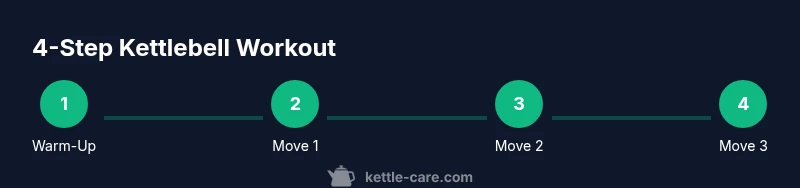
Once you can perform each move with good form, set up a 4-move circuit. Do 30 seconds per move with 15 seconds rest in between, and complete 3 rounds.
Tip: Quality rep form beats extra rounds—progress gradually. - 6
Cool-down and recovery
Finish with light mobility work and 3–5 minutes of slow breathing. Hydrate and consider gentle stretches for hips, back, and shoulders to aid recovery.
Tip: Aim for at least 48 hours before the next heavy session.
Frequently Asked Questions
Do I need prior experience to start this workout?
No prior experience is required. Begin with light weights and master form before increasing intensity.
You can start with light weights and focus on form.
What weight should I start with?
Choose a weight you can lift with proper form for 8–12 reps. For many beginners, this means light to moderate bells.
Start light and focus on form for 8-12 reps.
Are kettlebell workouts safe for knees?
Yes, when performed with proper technique and controlled tempo, kettlebell moves can be knee-friendly.
If you keep good form and pace, they’re knee-friendly.
How often should beginners train kettlebells?
Aim for 2-3 sessions per week, with rest days to recover and adapt.
Two to three sessions per week is a solid start.
What progression should I use after mastering 4 moves?
Gradually increase weight or reps, or swap in a more challenging variation while maintaining form.
Increase weight or reps gradually as you improve.
Watch Video
Highlights
- Start light and master form before adding weight
- Use hip hinge and chest-up cues for safety
- Follow a manageable 4-move circuit to build consistency
- Progress gradually with reps, weight, or complexity