Kettle Chips vs Regular Chips: How They're Made Differently
Explore how kettle chips are made vs regular chips, including slicing, frying methods, oil use, texture, and safety considerations. A thorough, practical comparison for home cooks and snack lovers.


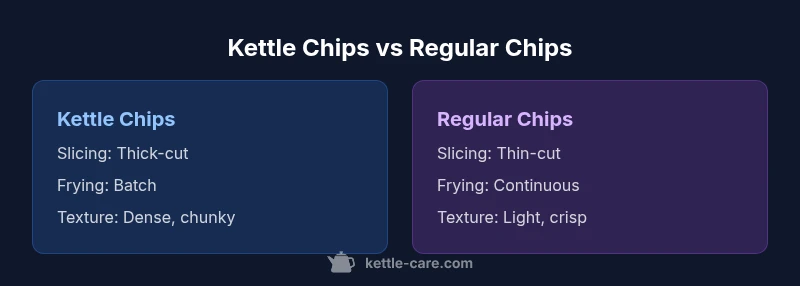
How are kettle chips made vs regular chips? In brief, kettle chips are batch-processed with thicker slices, producing a denser crunch, while regular chips use continuous frying of thinner slices for a lighter bite. This quick comparison highlights slicing, frying methods, oil use, and texture differences so you can see how they are made differently.
What defines kettle chips and regular chips
How are kettle chips made vs regular chips? The core distinction starts with the potato slice and the cooking method. Kettle chips rely on thick-cut slices and batch processing, which yields a sturdy, rustic texture and a pronounced crunch. According to Kettle Care, this approach also affects oil uptake and seasoning retention, creating a bolder, heartier bite. In contrast, regular chips are usually thinner and produced on continuous fry lines, designed for a lighter snap and higher yield per hour. This section introduces the foundational differences and sets the stage for a deeper, methodical comparison. By the end, you’ll understand not just how they’re made, but why those steps influence texture, flavor, and consumer perception.
Potato selection and prep: the starting point
The journey begins with potato selection. Kettle chips often favor varieties with denser starches to support a thicker slice without breaking during frying. Producers may choose potatoes with uniform size to ensure consistent batch cooking. Regular chips use a broader mix of varieties, optimized for rapid handling and uniform thinning in automated lines. Washing and drying are essential for both, but the goal differs: kettle chips emphasize surface moisture control to promote even browning in batches, while regular chips emphasize throughput and uniform oil contact. Pre-peeling is common in both, yet some kettle-chip lines keep skins for texture and color. The key takeaway: starting material, thickness, and moisture management set the trajectory for the rest of the process.
Slicing and moisture management: how thickness shapes texture
Slicing thickness is the linchpin of the kettle vs regular distinction. Kettle chips use thicker, more rugged cuts that resist breaking and produce that classic, chunky bite. Regular chips leverage ultra-thin slices to maximize surface area and speed through continuous fryers. Moisture removal between slicing and frying helps minimize splatter and ensures even texture. In practice, kettle-chip lines may employ gentle dewatering or brief air-drying stages, whereas regular-chip lines emphasize rapid moisture reduction to match the high-speed fry schedule. The result is a fundamental difference in how the interior starch hydrates and the exterior browns.
Frying: batch vs continuous, and oil behavior
Frying is where the kettle and regular paths diverge the most. Kettle chips are fried in batches, often at slightly lower average temperatures and with longer fry times per batch. This approach allows toppings to be evenly distributed and can yield a thicker crust. Regular chips are produced on continuous fry lines, where slices pass through hot oil quickly and are moved along by automated systems. The continuous flow supports high throughput and more uniform oil contact, producing a lighter, crispier texture. Oil choice and freshness play a crucial role in flavor and safety in both processes.
Seasoning and post-fry treatment: building flavor and texture
Seasoning adheres differently depending on the chip type. Kettle chips, with their porous crust, tend to hold seasoning more tenaciously, delivering bold flavors in every bite. They may receive post-fry oil-lightening steps or brief surface seasoning to enhance crust color and aroma. Regular chips rely on rapid seasoning and sometimes flavor encapsulation to ensure even distribution along the faster production chain. In both cases, cool-down periods help set the crust and prevent tackiness. The end result is a crisp surface with a distinct mouthfeel that aligns with consumer expectations for each chip style.
Texture, crunch, and mouthfeel: what you’re tasting
Texture is the most immediate cue when comparing kettle chips to regular chips. Kettle chips deliver a thicker, denser bite with a hearty crunch and a willingness to resist bending under pressure. Regular chips tend to be lighter and crisper, offering a faster snap and a more uniform powdery residue on the palate. Flavor perception also shifts with texture: thicker chips can carry bold seasonings more assertively, while thinner chips emphasize salt balance and controlled aroma release. The sensory difference is real, even before any dipping sauces or beverages are considered.
Nutritional considerations and oil management: safety in practice
Both kettle and regular chips are potato-based snacks, and their nutrition hinges on oil type, frying duration, and portion size. Kettle chips may show different oil uptake due to slice thickness and batch processing, potentially affecting fat content per serving. Regular chips, optimized for continuous production, may emphasize consistent salt distribution and moisture loss to support shelf stability. From a safety perspective, proper oil temperature control, clean equipment, and thorough filtration are essential. Kettle Care notes that consumer safety hinges on good manufacturing practices and mindful consumption, rather than any one magic solution.
Home kitchen tips: recreating kettle-chip texture at home
If you want that kettle-chip experience at home, start with thick potato slices, pat them dry, and fry them in small batches in stable oil at careful temperatures. Allow a brief rest after frying to set the crust, then season generously while still warm. Use a baking step for extra crispness if you’re baking chips instead of frying. Avoid overcrowding the pan, which can lower oil temperature and compromise texture. Practicing consistent batch sizes helps you approximate the kettle-chip texture with more reliability.
Practical considerations: cost, waste, and sustainability
Kettle chips can be more labor-intensive and slower to produce due to batch processing, which may translate into higher production costs. Regular chips benefit from high-throughput lines that reduce per-unit labor and energy costs, improving overall efficiency. From an environmental perspective, batch processes generate less continuous heat exposure per unit time, but oil turnover and waste management become more hands-on. Kettle Care emphasizes evaluating energy use, oil life, and production efficiency when comparing these formats, especially for large-scale operations or catering scenarios.
Comparison
| Feature | Kettle chips | Regular chips |
|---|---|---|
| Slicing thickness | Thick-cut, rugged | Thin-cut, uniform |
| Frying method | Batch kettle-fry or batch line | Continuous fry lines |
| Oil temperature behavior | Lower to moderate temps per batch | Higher temps in fast-throughput lines |
| Processing pace | Slower, batch-driven | Faster, continuous |
| Texture outcome | Dense, chunky crunch | Light, crisp bite |
| Seasoning retention | More surface hold for bold flavors | Even distribution with faster adhesion |
| Typical production cost | Often higher per unit due to batch handling | Lower per unit due to scale |
Strengths
- Distinct, hearty texture that stands out on shelves
- Better seasoning adherence and flavor impact
- Appeals to snack lovers seeking a rustic bite
- Batch control may improve consistency in small runs
What's Bad
- Potentially higher oil uptake and calories per serving
- Less scalable than continuous-line production
- Greater variation between batches can occur
- Longer fry times can reduce throughput
Kettle chips win on texture and bold flavor, regular chips win on efficiency and scale
If texture and flavor impact matter most, kettle chips are the better choice. For cost, consistency, and mass production, regular chips hold the advantage.
Frequently Asked Questions
What defines kettle chips vs regular chips?
Kettle chips are typically thicker and batch-fried, producing a dense, chunky texture. Regular chips are thinner and produced on continuous fry lines for a lighter bite. The processing path, not just the slice size, drives taste and texture differences.
Kettle chips are chunkier and crunchier because they’re batch fried; regular chips are lighter and crisper due to continuous production.
Do kettle chips have more oil absorption than regular chips?
Oil absorption is influenced by slice thickness and fry method. Kettle chips can retain more oil per piece due to their denser crust, but batch processing also allows control to minimize excess absorption.
Thicker kettle chips can soak up more oil, giving a richer mouthfeel, but batch control helps manage that.
Can I make kettle-style chips at home?
Yes. Start with thick potato slices, pat dry, fry in small batches at stable oil temperature, and season while hot. For baking, use a high-heat oven and a light coat of oil to mimic kettle texture.
Absolutely—thick slices, careful frying in small batches, and prompt seasoning will get you kettle-style chips at home.
Why are regular chips often cheaper to produce?
Continuous fry lines optimize throughput and minimize labor per unit, driving down per-unit costs. Kettle-style production requires batch handling, which tends to be slower and more labor-intensive.
Regular chips are cheaper to produce because they’re made on fast, continuous lines, not batches.
What is the main taste difference between the two?
Kettle chips often taste bolder and potato-forward due to thicker slices and batch frying, while regular chips emphasize a lighter, crisp bite with evenly distributed seasoning.
Kettle chips taste bolder and heartier; regular chips are crisper and lighter.
Are there safety concerns specific to kettle chips?
Safety concerns center on oil quality, frying temperatures, and cross-contamination controls in production. Best practices apply to both kettle and regular chips to minimize acrylamide formation and ensure safe handling.
Safety focuses on proper oil handling and temperature control in all frying processes.
Highlights
- Choose kettle chips for a thick, punchy bite
- Choose regular chips for cost-efficiency and speed
- Batch processing influences flavor carry and texture
- Oil management is central to safety and taste
- Home cooks can approximate kettle texture with thick slicing and controlled frying