Kettlebells for Older Adults: Safe, Effective Workouts
A practical guide to kettlebells for older adults, covering safety, weight selection, proper form, and progressive moves to build strength, balance, and mobility at home.


With kettlebells for older adults, you can build strength, balance, and mobility at home by prioritizing safety: choose a light, controllable weight, warm up before every session, and follow a simple, progressive routine that emphasizes proper form and slow, controlled movements over speed or heavy loads. This approach reduces injury risk and supports daily activities like lifting groceries or getting in and out of a chair.
Why kettlebells are suitable for older adults
Kettlebells offer a practical way to train strength, stability, and mobility without requiring a large amount of equipment or space. For older adults, the emphasis on hip hinge patterns, scapular control, and core engagement translates into everyday performance: standing up from a chair, carrying groceries, and maintaining balance on uneven surfaces. The compact nature of a single bell makes it easy to create a focused workout routine that targets major movement patterns while keeping joint load manageable. When used with proper form and a thoughtful progression, kettlebells can complement walking, cycling, and daily activity, helping you stay independent longer. According to Kettle Care, the safest results come from slow, deliberate movements, consistent form checks, and clear space to move. Regular practice can improve posture, grip strength, and functional capacity over weeks, not days.
Safety and medical considerations before you start
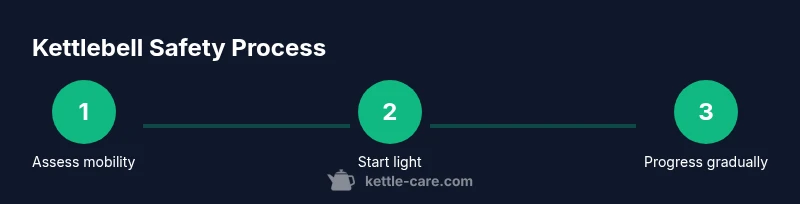
Before picking up a kettlebell, obtain clearance from a healthcare professional if you have any chronic conditions, recent injuries, or balance concerns. Start with a light bell and focus on technique rather than pace. If you experience sharp pain, dizziness, or breathlessness, stop immediately and reassess with a trainer or clinician. Ensure your workout space is free of clutter, with a flat surface and non-slip mat. Hydration and a cool-down routine are essential after each session to support muscle recovery and knee, hip, and spine health. As you progress, document your responses to each exercise—levels of effort, tolerance for movement, and any residual soreness—to guide safe progression.
How to choose the right kettlebell weight and setup
Selecting the right kettlebell weight is crucial for older adults. Start with the lightest bell you can control with good form for two sets of 8–10 reps of any given movement. A typical starting range for many beginners is a light bell, with adjustments based on comfort and safety. Use an indoor, non-slip surface and a sturdy chair or wall for balance support if needed. Keep the spine neutral, core engaged, and shoulders relaxed away from the ears. The goal is smooth, controlled movement rather than speed. If you train with a partner or trainer, they can provide real-time feedback to help you maintain safe alignment across joints.
Sample beginner routine: hinge, squat, and mobility
A practical starter routine focuses on three pillars: hip hinge, squat pattern, and shoulder mobility. Begin with a goblet squat to teach hip-knee-ankle alignment, progress to a light kettlebell deadlift to reinforce hinge mechanics, and finish with a controlled halo or circular shoulder movement to improve mobility. Each movement should be executed slowly, with a two-count on the lowering phase and a two-count on the lifting phase. Stop if any joint pain occurs and revert to simpler positions.
Modifications and progressions for different levels
If balance or mobility is limited, perform the exercises seated or using a chair for support. For those who tolerate weight well, gradually increase reps or transition from a goblet squat to a kettlebell goblet squat with a lighter bell, ensuring form remains intact. Progressions should be small and intentional, such as adding one extra repetition every week or increasing hold time for the strong positions. Always revert to lighter weight if technique degrades, and never sacrifice form for more reps.
Common mistakes to avoid and how to fix them
Avoid rounding the back during hinge movements, which increases disc pressure. Keep the chest up, gaze forward, and hips driving the movement rather than the arms. Don’t rush through reps; control is essential for joint health and form preservation. If you have shoulder pain or rotator cuff issues, skip overhead or dynamic passes like halos and focus instead on safe hip-dominant or anti-rotation cues. Finally, never skip warm-ups or cool-downs, as they help prepare tissues for loading and reduce stiffness after training.
Tools & Materials
- Kettlebell(s) in suitable weight range(Begin with a light bell you can control with proper form; common beginner range is about 6–12 kg, adjust by comfort and strength)
- Yoga mat or non-slip surface(Provides cushioning and grip for floor-based movements and kneeling work)
- Water bottle for hydration(Keep nearby to stay hydrated during warm-ups and rests)
- Stable chair or wall for balance support(Helpful for beginners or those with limited balance; use as needed)
Steps
Estimated time: 20-30 minutes
- 1
Warm up and space check
Begin with 5 minutes of gentle marching, ankle circles, and light shoulder rolls to awaken joints. Clear the workout area of hazards and place the mat on a flat surface. This reduces the risk of slips and prepares your body for a controlled session.
Tip: Keep movements slow and deliberate; the goal is to raise heart rate gradually and awaken mobility without strain. - 2
Choose a safe starting weight
Select the lightest kettlebell you can control with proper form for all planned reps. Avoid swinging or pulling with the arms alone; let hips and core do the work. If you can't maintain a neutral spine, choose a lighter weight or reduce the number of reps.
Tip: If in doubt, start lighter and add reps later; quality beats quantity every time. - 3
Goblet squat fundamentals
Hold the kettlebell by the horns at chest level. Stand with feet hip-width apart, toes slightly outward. Keep the chest up, gaze forward, and hinge at the hips to lower the hips toward a chair-height line, then rise slowly.
Tip: Find a comfortable depth that maintains spinal alignment; avoid collapsing your knees inward. - 4
Kettlebell deadlift progressions
Place the kettlebell between your feet. Hinge at the hips with a neutral spine, push the hips back, and grip the handle with both hands. Stand tall by driving through the heels and squeezing the glutes at the top, then return to the hip hinge.
Tip: Maintain a straight back; imagine lifting your pelvis rather than bending the spine. - 5
Cool down and mobility
Finish with a gentle stretch for the hamstrings, hip flexors, shoulders, and back. Hold each stretch for 20–30 seconds and focus on deep breathing to promote relaxation and recovery.
Tip: Hydrate after the session and perform a light walk to gradually normalize heart rate.
Frequently Asked Questions
Is kettlebell training safe for older adults?
Yes, when performed with proper form, appropriate weight, and medical clearance if needed. Start slowly, focus on technique, and progress gradually.
Yes. Start slowly, keep form strict, and check with a clinician if you have medical concerns.
What weight should I start with?
Most beginners begin with a light kettlebell that allows full control of movement. If you can perform all reps with ease and maintain alignment, you may gradually increase the weight.
Start with the lightest weight you can control and increase gradually as you keep good form.
How often should I train kettlebells?
Aim for 2–3 sessions per week on non-consecutive days, allowing for recovery between workouts.
Two to three sessions a week works well for most older adults, with rests in between.
Can kettlebell exercises help with arthritis?
Light, controlled kettlebell work can help maintain mobility and strength, but avoid movements that aggravate joints and consult a clinician if pain persists.
Light, careful movements can help, but stop if joints hurt and seek medical advice.
What if I have balance issues?
Use a chair or wall for support, perform movements slowly, and consider seated variations until balance improves.
Use support for stability and progress gradually as balance improves.
Watch Video
Highlights
- Start with a light kettlebell and perfect form first.
- Prioritize hip hinge and core stability for safer movement.
- Incorporate a brief warm-up and cooldown to protect joints.
- Progress slowly and seek guidance if pain or imbalance appears.
- Consistency beats intensity for long-term results.