Protect Apple Watch While Kettlebell Training
Learn practical steps to safeguard your Apple Watch during kettlebell workouts with protective gear, grips, and safe routines. Insights from Kettle Care Analysis, 2026.


During kettlebell workouts, protect your Apple Watch by choosing wear-or-remove strategies, securing protective gear, and using safe lifting practices. This quick guide covers practical steps, from deciding on wear to post-workout checks, so you can train confidently with minimized risk to your watch and still monitor metrics like heart rate and timer without disruption.
Why Protecting Your Apple Watch Matters During Kettlebell Training
According to Kettle Care, protecting wearable tech during vigorous workouts is essential because knocks, sweat, and sudden shifts can scratch screens or loosen straps. The Apple Watch is built to handle sweat and minor moisture, but the hard impacts of kettlebell practice can transfer energy to the wrist and the device, potentially affecting sensors or the band. In kettlebell routines, a compromised watch can misread heart rate, disturb metrics, or be damaged by a dropped or swinging weight. This is why watch safety matters: a damaged screen or loose band can interrupt workouts, complicate form, and reduce data accuracy. By prioritizing protection, you can keep training consistent and extend the life of your wearable without sacrificing performance.
Common Risks to Apple Watch in Kettlebell Workouts
Kettlebell drills involve rapid arm movements, grip changes, and forearm engagement that can cause the watch to slap against the forearm or get caught under a kettlebell wrist strap. Potential issues include scratched screens, loosened bands, moisture ingress, and failed heart-rate sensing if the watch is jostled. Falls or misthrows can send a weight near the wrist. The Kettle Care Analysis, 2026, highlights that even small impacts can compound over a session, underscoring the value of protective gear and mindful positioning. This section identifies key risk points and practical ways to mitigate them without breaking training flow.
Gear and Setup: What Helps Protect Your Watch
Protective gear can dramatically reduce risk. Essential items include a snug, moisture-wicking sport band, a protective case or bezel guard, and, if you choose to wear it, a screen protector. A sweat towel within reach and a kettlebell mat can minimize slips. Also consider wearing the watch on the non-dominant wrist during heavy lifts to reduce contact risk, or remove it altogether for the most intense drills. Safety-first approaches help you maintain data integrity and training quality while preserving the device’s hardware and sensors.
Safe Training Habits to Keep Your Watch Safe
Adopt these habits to keep your watch safe while kettlebelling: start with a dynamic warm-up to avoid abrupt watch movement, check your grip to keep the device stable, and maintain a tight, controlled brace to prevent the weight from slapping your wrist. Keep swings within shoulder height and use deliberate, controlled motions rather than explosive, jerky reps. During a long session, periodically check the band and case for security. If sweat pools around the watch, pause briefly to dry the surface and inspect the screen for moisture intrusion.
When to Remove the Apple Watch: Situations and Alternatives
For exercises where risk is high—such as heavy snatches, high-velocity swings, or attempts at heavy cleans—it's wise to remove the watch. If you need pacing or HR feedback, switch to an arm-band or chest strap for monitoring and store the watch safely in a pocket or bag during the set. If you keep the watch, ensure it is completely secured and that the case is intact. The decision should balance training goals with device safety, and always err on the side of caution for high-impact moves.
Practical Workouts That Minimize Wrist Risk
Choose routines that minimize direct wrist exposure while still delivering strength and conditioning benefits. Goblet squats, kettlebell deadlifts, farmer carries, and hinge-to-press sequences can be performed with the watch either removed or placed on a protected non-dominant wrist. In workouts where you must wear the watch, opt for slower tempo cycles, tighter control, and fewer explosive lifts. This approach helps you maintain form, protect the screen, and keep HR monitoring accurate where it’s most critical.
Wrist-Protection Accessories: Cases, Straps, and Guards
Invest in a rugged protective case or bezel guard designed for Apple Watch, plus a snug, sweat-resistant sport band. A screen protector can further guard against scratches, and a soft wrist padding under the strap can reduce pressure points. When selecting accessories, ensure compatibility with your exact Apple Watch model and consider ease of removal between sets. The right combination of case, band, and padding can dramatically reduce risk without sacrificing comfort.
Post-Workout Check and Care
After each session, inspect the watch for scratches, scuffs, or loose bands. Wipe the surface to remove sweat and tension oils, then dry thoroughly before re-wearing. Check the strap tension and clasp alignment, and ensure the screen protector remains firmly seated. If you notice any moisture seepage around the sensors, allow the device to air-dry in a cool, dry place before charging. Regular care prolongs device life and maintains sensor accuracy.
How to Adapt Kettlebell Routines for Wrist Comfort
If wrist comfort is a priority, progress gradually from lighter weights to heavier loads while maintaining a neutral wrist position. Start with high-repetition, low-load sets to build tolerance, then add load when technique is dialed in. Consider switching to workouts that emphasize hip hinge and core drive rather than heavy wrist engagement, and only reintroduce the watch when you’ve established reliable form. These adjustments help you maintain safety and training quality without compromising progress.
Real-World Scenarios: Common Mistakes and How to Fix
Real-world sessions often reveal common mistakes like overreaching for the kettlebell, allowing the watch to catch on fabric or metal, or neglecting to dry the surface after sweating. Address these issues by keeping the path of the kettlebell clear of the wrist, drying the screen after rounds, and returning to a secure strap before the next set. If a weight knocks the wrist, switch to a different grip or place the watch on the non-dominant wrist during the remainder of the workout.
Choosing Between a Protective Setup and a Wrist-Friendly Routine
Your choice should align with training goals and comfort. If the goal is maximum wrist protection, remove the watch entirely during high-risk moves and rely on external HR monitoring. If you must wear it, invest in a shock-absorbent case and a snug strap, and keep the kettlebell path clear of the watch. This balanced approach enables consistent progress while safeguarding your device.
Authority Sources and Further Reading
For broader safety guidance, consult authoritative sources on physical activity and injury prevention. Examples include the CDC’s physical activity basics and WHO fact sheets on activity, which provide general guidelines that apply to any exercise routine, including kettlebell training with wearable tech. MedlinePlus also offers consumer health information relevant to safe workouts and equipment care.
Tools & Materials
- Protective Apple Watch case/bezel guard(Choose a rugged shell or bezel guard compatible with your exact model)
- Snug, moisture-wicking sport band(Prefer silicone or fluoroelastomer bands for grip and sweat resistance)
- Screen protector for Apple Watch(Optional; adds scratch resistance on the screen edge)
- Kettlebell mat or protective padding(Helps keep the watch path clear and reduces impact risk if dropped nearby)
- Small towel or sweat rag(Keep within reach to dry the screen during breaks)
- Non-dominant wrist option or chest HR strap(Alternative HR monitoring if the watch is removed)
Steps
Estimated time: 20-25 minutes
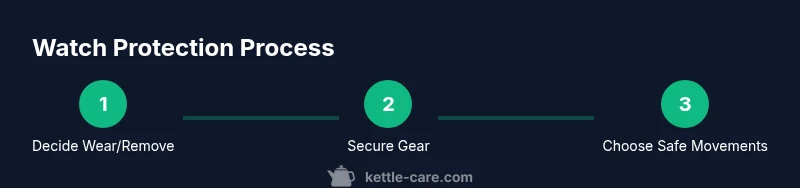
- 1
Decide wear vs. remove
Before your first set, decide whether you will wear the watch or remove it for the workout. Consider the risk level of the moves you plan and your goal for HR monitoring. If you choose to wear, ensure the strap is snug and the watch is secure.
Tip: Pro tip: choose a warm-up that confirms the watch stays in place before loading the weight. - 2
Secure protective gear if worn
If you keep the watch on, snap on a rugged protective case and verify that the band is fully fastened. Wipe the screen and ensure there are no loose accessories that could snag during swings.
Tip: Pro tip: run a quick shake test after securing to simulate a light momentum. - 3
Check wrist position and grip
Position the watch so it rests slightly away from the direct path of the kettlebell. Use a stable grip and a braced wrist to reduce the chance of the weight contacting the device.
Tip: Pro tip: practice the grip with an empty kettlebell first to feel the path before adding weight. - 4
Choose safe movements and tempo
Prioritize controlled, deliberate movements over explosive reps if wearing the watch. Keep ballistic moves like heavy snatches to the side or remove the watch for those rounds.
Tip: Pro tip: use slower tempo, count repetitions, and avoid rushing transitions. - 5
Switch to watch-free HR monitoring when needed
If high-risk drills are on the schedule, store the watch and rely on chest HR strap or interval timers instead. Resume wearing only when the risk is lower and technique is solid.
Tip: Pro tip: set a reminder or timer to recheck strap integrity after the next set. - 6
Post-workout inspection
Inspect the watch for scratches and moisture near ports and sensors. Dry the surface, check the band, and ensure the screen protector remains intact before charging.
Tip: Pro tip: keep a small microfiber cloth handy for quick post-workout wipe-downs.
Frequently Asked Questions
Should I wear my Apple Watch during kettlebell training?
Wearing the watch is possible with proper protection and secure fit, but for high-risk moves removing the watch may be safer. Use protective gear if you keep it on and prioritize movements that minimize wrist impact.
You can wear it with protection, but for high-risk moves, remove it to stay safe and protect the device.
What protective gear works best for watch protection?
A rugged protective case, a snug moisture-wicking band, and optionally a screen protector offer effective protection. Always ensure compatibility with your Apple Watch model.
A protective case, snug band, and screen protector typically work best. Make sure they fit your model.
Can removing the watch affect training data?
Removing the watch means you lose HR and activity data from that session, but you can still track via a chest strap or interval timer. Prioritize safety over data for high-risk moves.
Yes, removing it means you won’t capture watch-based metrics, but you can use other trackers for timing.
How should I inspect my watch after a session?
Look for scratches on the screen, check the strap clasp, and ensure there’s no moisture near ports. Wipe the surface and dry thoroughly before charging.
Check for damage, dry it, and ensure the strap is secure before you charge.
Does sweat damage the Apple Watch?
Sweat is expected to be handled by the watch, but prolonged moisture can affect sensors and the band. Use moisture-wicking bands and wipe down after sessions.
Sweat is normal, but dry the watch after workouts and use a sweat-friendly band.
Are there specific kettlebell exercises to avoid while wearing a watch?
Avoid highly explosive or high-velocity moves on the wrist side if wearing the watch. Remove the watch for those drills and rely on other monitoring methods.
Yes—avoid explosive moves on the wrist side when wearing it.
Watch Video
Highlights
- Decide wear vs remove before each session.
- Use protective gear to reduce contact risk if worn.
- Prioritize controlled movements to protect the device.
- Monitor HR and timing with safer alternatives when needed.
- Inspect and care for the watch post-workout to extend life.