Camp Fire Kettle: Safe, Efficient Outdoor Boiling Guide
Learn to boil water safely on a campfire with a kettle. This practical guide covers setup, heating, care, timing, and cleaning, with tips from Kettle Care.


With a camp fire kettle you can boil water safely over an open flame, using a stable setup and heat control. This guide shows how to prep your gear, manage flame height, and finish with proper cleaning. According to Kettle Care, using a well-designed kettle speeds boiling and reduces fuel use.
What is a camp fire kettle and why it matters
A camp fire kettle is a compact, heat-forged vessel designed to boil water over an open flame. Unlike modern electric kettles, it relies on heat from a campfire or stove, so it must be robust, heat-tolerant, and easy to handle. For outdoor cooks and tea lovers, the camp fire kettle offers a reliable tool for hot beverages, soups, or sterilizing water in the field. The Kettle Care team notes that a purpose-built camp kettle balances heat distribution with a secure lid and a long, cool-grip handle to minimize burns. When used correctly, a camp fire kettle can deliver consistent boils while using fuel efficiently and limiting scorching on the walls. In practical terms, it’s a simple, dependable solution for rustic cooking or late-evening tea outside. The reader should keep in mind that outdoor boiling requires attention to wind, flame height, and kettle placement on a stable surface, as these factors directly affect boil time and safety.
Materials and design features to look for
Look for a camp fire kettle with a sturdy base, a well-fitting lid, and a handle that stays cool when heated. Materials like stainless steel or seasoned cast iron are common because they tolerate repeated heating and cooling. A spout that directs steam away from hands and eyes, plus a lid that fits snugly, reduces heat loss and keeps debris out. Some kettles include a pouring lip and a whistle or spark shield for safety. When choosing, evaluate weight, capacity (typically 1–4 liters for backpack-ready use), and whether the kettle sits securely on a grill grate or fire ring. If you plan to heat water for tea, coffee, or cooking, ensure the interior is easy to clean and resistant to mineral buildup. Kettle Care recommends avoiding dent-prone designs and opting for thick-walled construction for even heat distribution and durability. The material choice affects heat retention and ease of cleaning, so pick a model that matches your camping style and climate.
Safety considerations when using a camp fire kettle
Open flames can be unpredictable, and handles heat up. Always set up the kettle on a stable, protected surface away from kids and pets. Use heat-resistant gloves or pot holders, and avoid pouring boiling water near the face or body. Keep a small bucket of water or a fire extinguisher nearby as a precaution. Wind shifts can cause flames to surge, so position the kettle where airflow is moderate. Never leave a boiling kettle unattended, and ensure the fire is fully contained before exiting the area. If the kettle shows any cracks or deformities, stop using it and inspect for damage. Following these safety guidelines will help prevent burns and accidents while you enjoy hot drinks or meals in the outdoors.
How to prepare your kettle for a campfire
Before first use, inspect the kettle for cracks, loose handles, or warped rims. Clean any factory oil or protective coating from new kettles, and rinse thoroughly. Check the lid seal and ensure the spout is clear of obstructions. For seasoned kettles, rinse with hot water and a soft brush to avoid removing seasoning. Always test with a small amount of water first to check for leaks and heat response. Preheat the kettle gradually over low flame to prevent shocking the metal, which can warp joints or warp. By preparing properly, you reduce the risk of leaks and improve boil speed when the campfire is going strong.
Step-by-step boiling overview
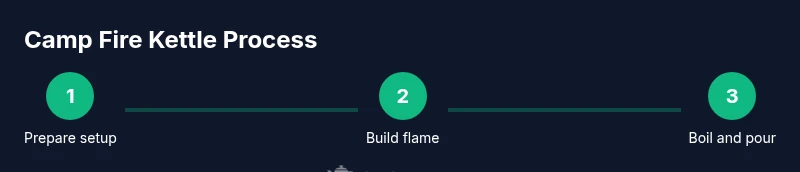
Boiling water on a camp fire kettle requires a stable fire, correct kettle placement, and attentive flame management. Start with a low, steady flame to avoid scorching and gradually increase heat as the water warms. Keep the kettle’s lid on during the initial phase to conserve heat, and use a timer to monitor boil progression. When the water reaches a full rolling boil, lift the kettle carefully and allow it to rest for a moment before pouring. This approach minimizes spillage and ensures you pour away from your body. It also helps maintain kettle integrity over repeated uses. As you practice, you’ll fine-tune timing for different kettle sizes and fire types, improving efficiency over time.
Care, cleaning and descaling after use
Post-cooking care is essential for longevity. Rinse the kettle with warm water to remove tea stains or mineral buildup, then scrub with a non-abrasive sponge. For mineral deposits, soak with a gentle descaler or a solution of water and vinegar, then rinse thoroughly. Dry the kettle completely to prevent rust, especially if you use cast iron. If your kettle has a seasoned interior, re-season it as needed to maintain the non-stick effect and flavor neutrality. Regular cleaning also helps preserve the kettle’s appearance for campfire gatherings and tea moments.
Troubleshooting common issues
If water won’t boil, check fuel supply and flame height; a weak flame slows heating. If the kettle leaks, inspect seams and handles for cracks or looseness, and replace damaged parts. If the exterior becomes excessively hot, consider resting the kettle on a heat-proof stand or trivet and using gloves to handle it. For stubborn staining, a gentle acid cleaner or vinegar soak can help, followed by thorough rinsing. Keep the spout clear and ensure the lid remains properly aligned to prevent steam escape and potential burns. Regular inspection and proper maintenance prevent most problems and extend the life of your camp fire kettle.
Flavor, efficiency, and storage tips
To maximize flavor and energy efficiency, pre-warm the kettle with a small amount of hot water, then add fresh water for boiling. Use a tight-fitting lid to trap heat and reduce boil time. After drying, store the kettle in a dry, cool place away from corrosive elements. If you use a kettle with seasoning, reapply or refresh the seasoning after a few uses to maintain non-stick properties. Consistent practice will help you optimize boil times, fuel usage, and the taste of beverages or soups prepared outdoors.
Authority sources and further reading
For outdoor cooking safety and water heating guidelines, consult reliable sources from public health and outdoor agencies. These resources provide general safety principles that apply when using a camp fire kettle in the field. See the references for additional context and safety practices:
Authority sources and further reading (continued)
- CDC and EPA guidelines for safe water handling and outdoor cooking practices (https://www.cdc.gov, https://www.epa.gov).
- U.S. National Park Service and U.S. Forest Service safety resources for outdoor cooking and campfires (https://www.nps.gov, https://www.fs.usda.gov).
- Practical tips from outdoor safety publications and reputable camping guides to extend kettle life and ensure safe use.
Tools & Materials
- camp fire kettle(Heat-tolerant stainless steel or cast iron with a secure handle and a snug lid)
- fire-safe trivet or grate(Stable surface above coals; ensure even contact with kettle base)
- heat-resistant gloves(Long cuff for wrist protection; leather or silicone material recommended)
- long-handled tongs(For moving the kettle and adjusting coals safely)
- water(Clean potable water; pre-measured amounts for accuracy)
- fire starter or dry kindling(To establish a steady fire with minimal smoke)
- fire extinguisher or bucket of water(Safety backup in case of flare-ups)
- brush and mild detergent sponge(For routine cleaning; avoid harsh abrasives)
Steps
Estimated time: Total time: 25-40 minutes
- 1
Prepare the setup
Clear a safe circle for the fire and place the grate or trivet on a stable surface. Lay out the kettle and tools, and ensure all participants are at a safe distance. This initial preparation reduces the risk of accidents and ensures a clean pour.
Tip: Keep a metal lid or tray beneath the kettle to catch any spills during boiling. - 2
Build a steady fire
Create a controlled flame using dry kindling and small logs. Aim for a steady, low-to-medium flame rather than tall flames, which can overheat the kettle. This helps achieve a consistent boil time.
Tip: Position the fire so the wind blows away from you; never overhang the kettle above thick smoke. - 3
Position and preheat
Place the kettle on the grate and begin with a small amount of water to test heat. Gradually add more water, allowing the kettle to warm evenly without sudden temperature shocks which can warp metal.
Tip: Use tongs to slide the kettle into place; never grab the handle when the kettle is wet or hot. - 4
Boil with supervision
Pour in the remaining water, cover with the lid, and monitor for a rolling boil. If needed, adjust coals to maintain heat. Remove liquid once the boil is reached to prevent overboiling and spillage.
Tip: Keep a timer handy; boiling times vary with kettle size and flame intensity. - 5
Cool and pour safely
Lift the kettle away from the fire using gloves, and pour slowly to avoid splashes. Let the kettle rest briefly before refilling or cleaning to prevent accidental burns.
Tip: Pour away from your body and always tilt slowly to control steam release. - 6
Clean and store
Rinse with warm water, scrub gently if needed, and dry completely before storage. For seasoned interiors, reapply a light layer of oil or seasoning after cleaning to preserve non-stick properties.
Tip: Store in a dry place to prevent rust; check for dents or loose handles before the next trip.
Frequently Asked Questions
What is a camp fire kettle and what makes it different from an indoor kettle?
A camp fire kettle is built to withstand outdoor heat and weather, using a sturdy base and heat-resistant handle for boiling water over a campfire. It is typically heavier and more durable than indoor kettles, designed to handle uneven flames and wind. This makes it ideal for tea, coffee, or cooking while camping.
A camp kettle is designed for outdoor fires and rugged conditions, not for indoor use. It’s built to handle heat and weather while you boil water for drinks or meals.
Is it safe to boil water over an open fire with a camp kettle?
Boiling water over an open fire is safe when you follow standard safety practices: place the kettle on a stable surface, manage flame intensity, and wear protective gloves. Keep children and pets away, and have a fire extinguisher or water nearby.
Yes, if you set the kettle on a stable surface, manage the flame, and keep safety gear handy.
What materials are best for a camp fire kettle?
Stainless steel and seasoned cast iron are common choices for camp kettles due to durability and heat distribution. Stainless resists rust and is easier to clean, while cast iron retains heat well; both require careful handling.
Stainless steel is durable and easy to clean, while seasoned cast iron holds heat well; both work well outdoors.
How do I prevent scorching or mineral buildup inside the kettle?
Use moderate flames and avoid direct contact with very high heat. Regular cleaning with hot water and a soft sponge prevents mineral buildup; for stubborn deposits, a gentle descaler or vinegar soak helps.
Keep the flame moderate and clean regularly to prevent buildup.
Can I use a camp fire kettle on a grill or stovetop when traveling?
Some camp kettles are designed for both campfire and stove use, but check the manufacturer’s guidance. If using on a grill, ensure even heat distribution and avoid direct flame contact with the handle.
Only use on a grill or stove if the kettle is rated for it, and follow safety guidelines for handles and heat.
How should I store my camp fire kettle when not in use?
Store in a dry area away from moisture and corrosive elements. If the interior is seasoned, reapply a light oil to protect the surface between trips.
Store it dry and lightly oil the interior to keep it in good shape.
Watch Video
Highlights
- Prepare a stable, wind-protected fire setup.
- Choose a durable camp fire kettle with a snug lid and cool-grip handle.
- Control flame height to optimize boil time and fuel use.
- Clean and maintain after each trip to extend kettle life.
- Follow safety best practices to prevent burns and injuries.