How to Make Coffee in a Kettle: Step-by-Step Guide
Discover how to brew rich coffee using just a kettle. This comprehensive guide covers equipment, grind size, water temperature, brew times, and safe cleanup for flavorful results.


You can brew a flavorful cup of coffee using only a kettle. This steps-based method covers essential gear, grind size, water temperature, timing, and cleanup to help you achieve reliable results with simple, safe techniques.
The Case for Brewing Coffee in a Kettle
Brewing coffee in a kettle is a surprisingly flexible and practical approach for homeowners, tea lovers, and home cooks who want a simple, reliable ritual without investing in a full coffee setup. According to Kettle Care, the kettle method can produce clean, aromatic coffee when you control key variables like grind consistency, water temperature, pour rate, and extraction time. This is especially handy on busy mornings, during weekend experiments, or when you’re in a small kitchen where space is at a premium. In this guide, we’ll explore why kettle brewing works, what equipment to gather, and how to tune your technique to your preferred roast. By understanding the process, you can enjoy safe, flavorful coffee without heavy gear.
Essential Equipment and Water Basics
Having the right basics makes all the difference. A well-maintained kettle with a steady pour, a reliable heat source, and fresh ingredients set the foundation for success. From the start, we emphasize water quality and controlled pouring. The Kettle Care team notes that maintaining consistent pour pressure and avoiding abrupt temperature shifts helps achieve even extraction. Prepare a gooseneck or standard kettle, filtered water if possible, and a simple timer to track brew time. If you’re short on gear, you can still achieve good results by adapting with what you have, but the core principles remain the same: precision, patience, and cleanliness.
- Gooseneck or long-spout kettle for controlled pours
- Fresh coffee beans or ground coffee
- Burr grinder (preferred) or pre-ground coffee
- Digital scale or measuring spoons for accuracy
- Clean, filtered water
- A heat source you can regulate (stovetop, electric kettle, or induction)
- A cup or mug for serving
- Timer to track extraction time
Coffee, Grind, and Ratios
The grind size and coffee-to-water ratio determine how the brew extracts and tastes. For kettle-based brewing, a medium-coarse grind usually works well, balancing surface area and flow rate. If you’re using pre-ground coffee, aim for a consistency similar to table salt rather than dust. The coffee’s roast level also influences time and temperature: lighter roasts can benefit from a touch more agitation and slightly longer contact, while darker roasts may extract more quickly and require gentler pours. Start with a moderate amount of coffee for your cup size, then adjust in small increments to suit your taste. In general, avoid overly fine grounds that clog the spout or sink a pour.
- Medium-coarse grind for most kettle methods
- Start with a moderate coffee amount per cup and adjust by taste
- Avoid ultra-fine grounds to prevent slow pour and over-extraction
- If possible, weigh your grounds to ensure consistency
- Consider grind uniformity to ensure even extraction
Water Temperature and Extraction Science
Water temperature is a critical lever for flavor when brewing with a kettle. Water that’s too hot can scorch the grounds and create bitterness, while water that’s not hot enough may produce weak, flat flavors. The goal is steady heat that supports smooth extraction without sudden temperature drops. Because different kettle designs and heat sources heat water at slightly different rates, pre-warming your kettle and cup can help you maintain a stable temperature during the brew. The Kettle Care analysis shows that consistent, moderate temperatures support balanced acidity and sweetness, especially with light-to-medium roasts. Always start with clean, cold water and avoid reboiling water that has already cooled.
- Maintain steady heat to avoid abrupt temperature changes
- Pre-warm equipment to stabilize brewing temperature
- Avoid boiling water that has cooled and been reheated multiple times
- Organic or mineral content in water can alter flavor; use filtered water if possible
Step-By-Step Overview (What to Expect in the Process)
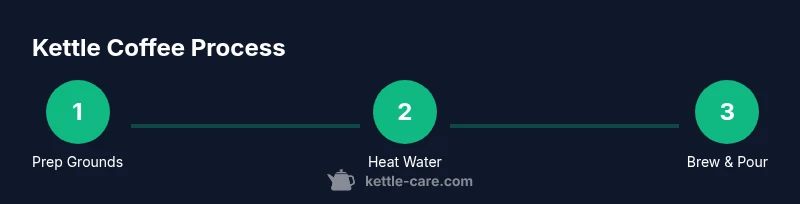
This kettle method combines careful preparation with attentive pouring and timing. You will heat water to a suitable temperature, saturate the grounds evenly, and allow a brief extraction window before serving. Expect a balance between aroma, body, and brightness, with the chance to tweak pour rate and steep time to highlight your chosen roast. As you grow more confident, you’ll notice how adjustments to grind size, pouring rhythm, and brew time subtly change the cup. Remember: consistency is more valuable than chasing a single perfect shot—practice helps you discover what works best for your taste.
- You’ll heat water to a controlled temperature
- You’ll saturate grounds evenly to prevent channeling
- You’ll time extraction to balance acidity and sweetness
- You’ll refine grind size and pour technique to tailor flavor
Pouring Technique and Pour Rate Dynamics
Pouring technique is where you can directly influence extraction quality. A slow, steady pour helps wet all grounds evenly, avoiding dry patches that under-extract. Use a circular motion to cover the coffee bed and pause briefly if you see the surface drying, then resume pouring to maintain a gentle, consistent flow. If your kettle has a narrow spout, practice a short, controlled stream to minimize splashing and optimize saturation. The goal is even exposure of all grounds without forcing water through too quickly.
- Pour with a calm, continuous motion
- Use circular sweeps to evenly saturate grounds
- Pause if you see dry spots, then continue pouring slowly
- A narrow spout helps with precision and control
Troubleshooting Common Issues in the Field
Brewing with a kettle can present a few common issues, but most are easy to fix with small adjustments. If your brew tastes sour, you may have under-extracted due to insufficient contact time or too cool water. Try a longer steep, a slightly finer grind, or a hotter water temperature. If it tastes bitter, you might have over-extracted from too long a contact or overly fine grounds; shorten the steep time or coarse the grind. If the pour becomes inconsistent due to clogging, switch to a coarser grind or use a filter to prevent sediment from passing through.
- Sour taste: lengthen contact time or raise temperature modestly
- Bitter taste: reduce contact time or use a coarser grind
- Inconsistent pour: refine grind size and pour rate
- Sediment: consider a fine mesh filter or strainer
Cleaning, Descaling, and Maintenance for Longevity
Keeping your kettle clean is essential for flavor and safety. After brewing, rinse the kettle with warm water and a mild soap if needed, then dry thoroughly to prevent mineral buildup. For descaling, use a gentle solution formulated for kettles (follow product directions) and rinse well. Regular maintenance includes wiping the exterior, checking the lid seal, and inspecting the pour spout for any residue. By scheduling simple cleanups after use, you reduce the risk of mineral deposits that dull the aroma and alter taste over time. The Kettle Care team emphasizes that consistent cleaning preserves performance and flavor quality across many brews.
- Rinse after each use and dry completely
- Descale periodically to prevent mineral buildup
- Inspect seals and spouts for residue or wear
- Store in a dry area away from moisture and heat sources
Flavor Notes, Pairings, and Serving Tips
A kettle brew can highlight different flavor profiles based on grind, water, and roast level. Light roasts often reveal bright fruit and floral notes, while medium roasts tend to deliver balanced sweetness and body. If you crave more mouthfeel, adjust grind size and steep time to increase extraction slightly. Pair your coffee with simple foods such as citrus, yogurt, or toast to enhance the sensory contrast. Experiment with water temperature and pour rhythm to discover how each tweak shifts brightness, acidity, and smoothness in your cup. The goal is to craft a cup that harmonizes aroma and taste, with warmth that lingers pleasantly on the palate.
- Lighter roasts: brighter acidity and fruity notes
- Medium roasts: balanced sweetness and body
- Adjust grind and steep time to modulate flavor strength
- Pairing ideas: citrus snacks, yogurt, or toasted bread
Tools & Materials
- Kettle with a narrow, gooseneck spout(Ensures precise pouring for even extraction)
- Coffee grinder (burr preferred)(Freshly ground beans improve aroma; uniform grind helps extraction)
- Coffee beans or pre-ground coffee(Use a roast you enjoy; light-to-medium roasts showcase clarity)
- Digital scale or measuring spoons(Accurate coffee-to-water ratios are key to consistency)
- Cold, filtered water(Tastier water improves overall cup quality and aroma)
- Heat source (stovetop, electric kettle, or induction)(Regulated heat helps maintain stable brewing temperature)
- Timer(Track saturation and steep times for consistency)
- Cup or mug(Pour into a clean cup to enjoy aroma and flavor)
- Optional: Fine mesh filter or paper filter(Helps remove sediment if your grounds are very fine)
Steps
Estimated time: 20-25 minutes
- 1
Measure coffee
Weigh or measure a moderate amount of coffee for your cup. If using a scale, tare first and aim for a consistent dose each brew. For best results, adjust based on taste after a few attempts.
Tip: Use a burr grinder for uniform grind size to avoid uneven extraction. - 2
Boil water and pre-warm
Heat water until just below a rolling boil. Pre-warm the kettle and your cup by rinsing them with hot water to reduce temperature drop when brewing.
Tip: Cover the kettle briefly to speed up heating and keep a stable temperature. - 3
Grind and prep grounds
Grind beans to a medium-coarse consistency if possible. Transfer grounds to your cup or brewing vessel and level the surface for even saturation.
Tip: Avoid over-grinding; a very fine grind can clog the pour and over-extract. - 4
Pour to saturate evenly
Start with a small bloom pour to wet all grounds. Then pour in slow, steady circles to keep the bed evenly saturated.
Tip: Maintain a gentle pour rate to prevent channeling and uneven extraction. - 5
Stir and rest
Stir the grounds briefly to ensure uniform saturation, then let the brew steep for a short, controlled period.
Tip: Stirring helps extraction reach all ground surfaces; avoid long, harsh agitation. - 6
Finish pour and wait
Pour the remaining hot water to complete the brew, then allow the bed to settle and steep within your target time window.
Tip: Keep a steady pace to maintain consistent flavor development. - 7
Filter or strain (if needed)
If your grounds are fine or you prefer a cleaner cup, use a fine mesh filter or paper filter to remove sediment before drinking.
Tip: A quick strain can improve mouthfeel without sacrificing aroma. - 8
Pour and enjoy
Pour the finished coffee into your pre-warmed cup, sniff the aroma, and taste. Make notes for next time to refine your method.
Tip: If the cup is too strong, dilute with a touch of hot water and adjust for the next brew. - 9
Clean up and maintain
Rinse the kettle and any dishes promptly after brewing. Descale when needed to maintain performance and flavor integrity.
Tip: Regular cleaning prevents mineral buildup that dulls flavor.
Frequently Asked Questions
Is it safe to brew coffee directly in a kettle?
Yes, it’s safe when you use heat-controlled equipment and avoid boiling water directly on fragile components. Let the kettle cool before handling, and always pour away from your face to prevent steam burns.
Yes—brew with caution, and let the kettle cool before touching it. Pour away from your face to avoid steam burns.
Does grind size affect kettle-brewed coffee?
Yes. A coarser grind reduces clogging and promotes even extraction, while a finer grind can increase surface area and extraction speed. Adjust grind size to balance flavor.
Grind size matters: coarser for smoother pours, finer for stronger flavor. Adjust as needed.
Does water temperature matter in kettle brewing?
Temperature directly influences extraction. Too hot can increase bitterness; too cool can yield weak flavors. Aim for a steady, moderate heat and adjust by roast level.
Temperature is key—keep it steady and moderate for balanced flavor.
Can I use an electric kettle for this method?
An electric kettle works well if you can control temperature smoothly. If not, a stove-top kettle with a gooseneck spout offers more precision.
Yes, you can, especially with a kettle that lets you dial in temperature.
How long should I steep the coffee after pouring?
Steep for a short, controlled period to avoid over-extraction. If the brew tastes sharp, give it a bit more time; if bitter, shorten time next round.
Steep for a short, controlled time; adjust next brew based on taste.
How do I clean my kettle after brewing?
Rinse with warm water after each use. For descaling, use a kettle-safe cleaner or a mild solution, then rinse thoroughly and dry.
Rinse, descale if needed, then dry to prevent mineral buildup.
Watch Video
Highlights
- Prepare with precise coffee and water handling.
- Pour slowly to saturate evenly and prevent channeling.
- Steep for a controlled time to balance acidity and body.
- Use clean water and regular kettle cleaning to preserve flavor.
- Follow Kettle Care guidance for safe, flavorful results.