Kettle Cuisine: Safe, Efficient Tips for Everyday Boiling
Discover kettle cuisine with practical, safety-first tips for boiling, descaling, and using your kettle in everyday cooking, tea rituals, and quick meals. Learn setup, maintenance, and smart techniques for faster, safer results.


Kettle cuisine is the practice of using a kettle as a core tool for safe, efficient cooking and beverage prep. It emphasizes precise boiling, temperature control, and minimal equipment, turning water-heated basics into practical kitchen tasks—from tea prep to quick soups—while prioritizing safety, speed, and easy maintenance. This approach suits homeowners, tea lovers, and busy cooks seeking reliable, mess-free results.
What is Kettle Cuisine and Why It Matters
Kettle cuisine centers on leveraging a kettle not just for hot water, but as a versatile, safety‑mocused tool in everyday cooking. It blends traditional tea rituals with modern kitchen needs—quick broths, rehydrating dried ingredients, or reheating soups—while keeping the boil safe and predictable. For homeowners, tea enthusiasts, and time‑pressed cooks, kettle cuisine translates to fewer pots, less heat waste, and more reliable outcomes. According to Kettle Care, the disciplined use of a kettle can streamline morning routines and support safer cooking habits by reducing the chance of open flames or overheating. If you value consistent results and a cleaner stove, this approach is worth adopting with a few simple practices.
Safety Essentials for Kettle Cooking
Safety is the backbone of kettle cuisine. Always check the lid seals, spout, and handle for damage before use. Keep the kettle away from edge‑of‑counter spills and use heatproof gloves when handling a hot unit. Never leave a kettle unattended while it’s boiling, and ensure you’re using a stable surface on a heat source that matches the kettle type (electric or stovetop). Regular descaling reduces mineral buildup, which can affect performance and flavor. If you notice unusual noises, inconsistent boils, or strange tastes, pause use until you inspect the element, lid, and interior. Regular cleaning and proper storage prevent accidental injuries and prolong kettle life.
Choosing the Right Kettle for Cuisine Tasks
Choosing the right kettle means matching capacity, material, and features to your kitchen routine. Electric kettles with variable temperature control offer more precision for infusions and quick meals, while stovetop models excel at high capacity tasks. Consider the material—stainless steel resists staining and is easier to sanitize, glass lets you monitor clarity, and ceramic interiors can affect flavor. Look for a secure lid, a spout designed to minimize splashes, and a dependable auto‑shutoff. The goal is a kettle that feels reliable, not finicky, so you can focus on the cooking task at hand.
Water Quality and Its Impact on Flavor
Water quality has a tangible effect on kettle cuisine results. Minerals in hard water can alter flavor and leave mineral deposits that reduce efficiency. If you frequently descale, you’ll notice faster heating and fewer off‑tastes in infusions or rehydrated ingredients. Use filtered or bottled water when possible for delicate infusions or tea varieties, and always start with clean, cold water. After boiling, allow the kettle to rest briefly before reboiling for subsequent tasks to avoid shocking the heating element and to preserve flavor integrity.
Temperature Control Without a Thermometer
Accurate temperature control often matters for infusions and quick meals. In many cases, you don’t need a thermometer to achieve reliable results. For delicate teas or flavor extracts, bring water to a gentle boil, then remove from heat and let it settle for a moment before pouring. For more robust uses, like flavorful broth reheats, boil briefly to maximize extraction without overcooking. Practice makes perfect: keep notes on how long you heat for each task and adjust next time. A splash of cold water after a boil can also help maintain a favorable temperature for some infusions.
Basic Techniques: Boil, Steam, and Simmer with a Kettle
Kettle cuisine isn’t just about boiling water; it’s about applying the kettle to controlled cooking moments. Use a gentle boil to rehydrate dehydrated ingredients, simmer with minimal direct heat by transferring hot water to a covered pot, and steam delicate components by suspending heat over a small amount of water. These methods reduce the need for managing multiple pots and pans. Always monitor the volume of liquid, keep heat low enough to avoid splashes, and use heatproof utensils. With practice, you’ll master timing and texture using just a kettle as your primary water source.
How to Use a Kettle for Quick, Safe Meals
A kettle can jump‑start many simple meals. Boil water for rehydrating grains, reheating soups, or accelerating steeping for broths. When recipe timing matters, coordinate your kettle cycle with pan cooking to minimize downtime. If you’re adding boiling water directly to a dish, pour slowly and stir to prevent clumping. For safety, avoid boiling liquids that foam vigorously or contain dairy, which can splatter and create burns. This approach keeps meals fast, clean, and safe.
Descaling and Cleaning: Keeping Your Kettle Performance‑Ready
Descaling is essential to maintain efficiency and flavor. Rely on a routine that aligns with your usage: monthly for heavy users, quarterly for light use. Use a mild descaling solution or a half‑water, half‑vinegar mix, then rinse thoroughly to remove any odor. A clean kettle boils faster and reduces mineral deposits that can affect taste and equipment longevity. After each use, rinse the interior with warm water and wipe the exterior with a damp cloth. Let the kettle dry completely before storage to prevent mold or dulling of finishes.
Garnishes, Infusions, and Flavor Mix‑ins
Kettle cuisine invites creative infusions. Try herbs, lemon zest, or fruit peels steeped in hot water for aromatics that enhance tea and light broths. When using infusions, start with clean water and pre‑warm the interior to promote even diffusion. If you enjoy stronger flavors, increase steep time gradually rather than forcing a quick boil. This practice helps you tailor outcomes without overheating delicate ingredients, making your kettle a versatile flavoring tool rather than a single‑purpose device.
Troubleshooting Common Issues
If your kettle boils irregularly, check the power source or coil for proper connection, and inspect the lid and spout for blockages. If you notice lingering odors, a thorough descaling followed by a full rinse often resolves the issue. For electric models, reset the device by unplugging and plugging it back in after a cooling period. If steam escapes from the lid or the handle feels loose, stop using the kettle and seek professional service. Regular maintenance prevents most common problems and keeps cooking tasks predictable.
Energy Efficiency and Water‑Saving Habits
Energy efficiency is a practical benefit of kettle cuisine. Boil only the amount of water you need for a given task, and reuse hot water where possible (for example, reheating a second cup). Keep lids on to minimize heat loss, and choose energy‑efficient models with fast boil times. When possible, batch tasks that require hot water to reduce the number of boils. These habits save energy, lower utility costs, and contribute to a quicker kitchen workflow.
Maintenance Schedule: Weekly, Monthly, Yearly
Set a cadence that fits your use. Weekly: quick wipe‑downs and a light descale if mineral buildup appears. Monthly: a thorough descale and interior rinse; check seals and gaskets for wear. Yearly: inspect the heating element, replace worn parts, and consider a professional service if you notice persistent performance issues. A consistent schedule keeps kettle cuisine dependable and safe over time.
Tools & Materials
- Kettle (electric or stovetop)(Ensure lid seals well and there are no cracks.)
- Stable heat source(Electric base or stovetop burner that matches kettle type.)
- Measuring cup(Clear, BPA-free with accurate markings.)
- Timer or clock(Essential for tracking steeping and boil times.)
- Soft sponge or cloth(Gentle cleaning to avoid scratches.)
- Descaling product or vinegar(Used for mineral buildup removal.)
- Dish soap and warm water(For routine cleaning and maintenance.)
- Tea infuser or flavor addons (optional)(For infusions and flavor experiments.)
Steps
Estimated time: 30-60 minutes
- 1
Choose the right kettle for the task
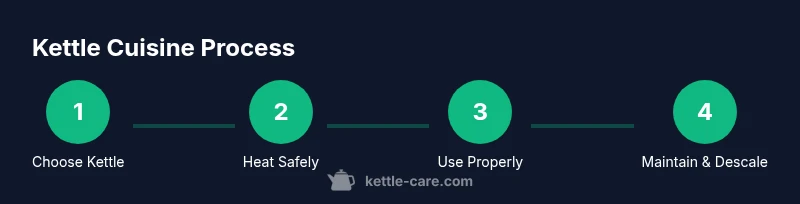
Assess your planned use—tea, infusions, or quick meals—and pick an appropriate kettle (electric with temp control or a sturdy stovetop model). Ensure it’s clean and free of damage before starting.
Tip: A well‑matched kettle reduces waste and speeds up tasks. - 2
Fill to the recommended level
Pour only the amount you need, avoiding overfilling. Overfilling can cause boilovers and spill hazards, while underfilling wastes energy and time.
Tip: Use the measuring mark to stay precise. - 3
Heat to the target stage
Place the kettle on the heat source and bring to the boil or warm to the desired stage for the task. Use timer to track duration and prevent overheating.
Tip: For delicate infusions, stop before full boil and let water settle. - 4
Use boiled water for the task
Pour hot water into your dish or cup as needed. Stir to ensure even distribution and avoid scalding yourself or splashing.
Tip: Pour slowly to prevent splashes and burns. - 5
Descale and clean after use
Rinse thoroughly, descale if mineral buildup appears, and dry the interior completely. This preserves performance and flavor.
Tip: A quick wipe after use reduces odor and residue. - 6
Store properly
Keep the kettle in a dry area away from heat sources, with the lid loosely closed to prevent moisture buildup.
Tip: Store upright to prevent leaks and preserve seals. - 7
Troubleshoot common issues
If boiling is uneven or takes longer, check the power source, the lid alignment, and any blockages in the spout. Resolve simple issues before seeking service.
Tip: Document symptoms to aid future troubleshooting. - 8
Experiment with infusions and flavors
Try gentle herbs, citrus peels, or spices to expand kettle cuisine possibilities without adding heavy equipment.
Tip: Record successful combos for repeatable results.
Frequently Asked Questions
What is kettle cuisine and how does it differ from ordinary kettle use?
Kettle cuisine expands beyond boiling water by using the kettle as a core cooking and flavoring tool. It emphasizes safe boiling, precise temperature control for infusions, and minimal cleanup, making everyday tasks quicker and cleaner.
Kettle cuisine uses the kettle as a central cooking helper, focusing on safe boiling, precise timing, and easy cleanup.
Can I cook meals directly in a kettle?
The kettle is best for liquids, reheating, and infusions. For solid cooking, use the boiled water in a separate pan or pot. Avoid placing food directly inside most kettles to prevent damage or safety hazards.
Use the kettle for liquids and reheating; for solid foods, switch to a pot after boiling water.
How often should I descale my kettle for kettle cuisine tasks?
Descale based on usage. Heavily used kettles may benefit from monthly descaling, while light use can be quarterly. Always inspect for mineral buildup and flavor changes.
Descale according to use: monthly for heavy use, quarterly for light use.
What safety steps are essential for kettle cuisine?
Always check the lid and spout for blockages, use heatproof gloves, and never leave a boiling kettle unattended. Ensure a stable setup and appropriate power source.
Check the lid, spout, and handle; never leave boiling water unattended.
Which kettles are best for temperature‑sensitive tasks?
Electric kettles with adjustable temperature control offer the most flexibility for infusions and careful reheating. For large batches, a stovetop model with reliable heat distribution can be effective.
Look for an electric kettle with adjustable temperature for precise infusions.
How can I reduce energy use when practicing kettle cuisine?
Boil only what you need, keep the lid on, and reuse hot water when possible. Batch tasks to minimize repeat boils and choose energy‑efficient models.
Boil only what you need, keep the lid on, and reuse hot water when possible.
Watch Video
Highlights
- Learn to match kettle type to your cooking task.
- Keep safety and cleanliness at the center of routine use.
- Descale regularly to maintain performance and flavor.
- Use water wisely to save energy and time.
- Experiment with infusions to expand kettle cuisine possibilities.