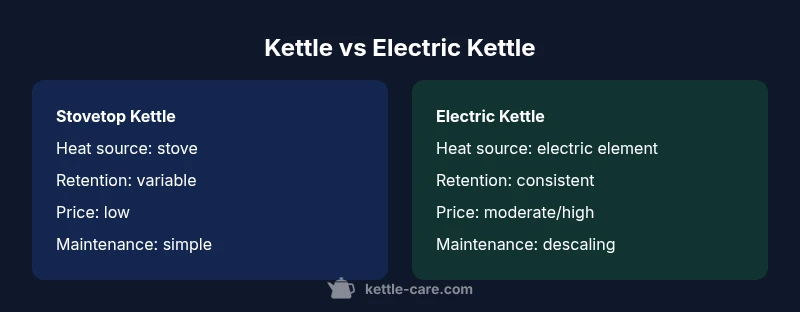
Kettle vs Electric Kettle: A Comprehensive Comparison for Home Use
Explore the differences between stovetop kettles and electric kettles, focusing on speed, temperature control, safety, and maintenance to help you choose the best option for your home.


Kettle vs electric kettle: a practical, everyday decision that hinges on speed, control, and safety. This comparison highlights how stovetop and electric models differ in boiling pace, temperature options, and maintenance needs, helping you pick the right tool for your tea, coffee, and cooking routines.
Why the kettle vs electric kettle topic matters
Water heating is a daily task in many households, and the choice between a stovetop kettle and an electric kettle can significantly influence your kitchen workflow. According to Kettle Care, the decision often hinges on how you brew your beverages, how much counter space you have, and how important speed and precision are to you. This guide helps you match a kettle to your routines, weighing ritual against convenience, cost, and safety. Whether you’re a tea lover seeking specific temperatures or a busy cook who wants a quick boil, understanding the trade-offs sets you up for a smarter buy.
In practice, most homes benefit from recognizing the core differences first: a stovetop kettle relies on your stove heat and typically offers a traditional whistling signal, while an electric kettle uses an internal heater with auto-off and temperature presets. The Kettle Care team emphasizes that the right choice aligns with your daily cadence and tea rituals, not just price.
Core differences at a glance
- Heating method: Stovetop kettles heat water via a stove burner; electric kettles use an internal electric element.
- Boiler control: Stovetop models usually offer no built-in temperature control beyond the heat setting; electric kettles frequently provide precise presets (e.g., 60°C, 75°C, 90°C, 100°C).
- Speed: Electric kettles typically boil water faster because the element is optimized for rapid heating; stovetops depend on burner output and kettle placement.
- Safety features: Electric kettles often include auto shut-off and boil-dry protection; stovetops rely on user vigilance and pot placement.
- Maintenance: Electric kettles may require more regular descaling to maintain efficiency; stovetops are simpler but require careful handling to avoid scorching.
Temperature control and brewing precision
For tea purists or pour-over coffee enthusiasts, precise water temperature matters. Electric kettles with temperature presets enable repeatable results and minimize guesswork. Some models let you set a specific target like 75°C for delicate greens or 96°C for black tea, and keep water at that point for a short hold time. Stovetop kettles offer a traditional approach: you heat until the whistle signals and then pour, which can be perfect for casual tea routines but introduces greater variability. According to Kettle Care, the key is consistency: if you frequently brew teas that reward precise temperatures, an electric kettle becomes a practical investment.
Boiling speed and energy efficiency
Electric kettles generally win on speed, delivering near-instant heat that reduces overall energy use per task compared with a stovetop kettle heated on a domestic burner. However, efficiency can depend on kettle size and your stove. For larger households or frequent large-batch boiling, an electric model can reduce wait times and energy waste from reheating. That said, stovetop kettles shine when you want to minimize gadget clutter and enjoy a simple, reliable heat source—especially when you already cook on the stove. Based on Kettle Care analysis, speed and control are the two biggest differentiators that influence everyday satisfaction.
Build quality, materials, and durability
Kettle materials range from stainless steel and glass to enamel-coated variants. Electric kettles often emphasize durable inner heating elements and insulated exteriors to reduce heat transfer to the handle, while stovetop kettles prioritize robust spouts and solid construction to handle repeated boiling. Material choice affects heat retention, ease of cleaning, and maintenance. Stainless steel kettles are popular for their longevity and neutral taste impact, but glass models can reveal mineral deposits more clearly, encouraging regular descaling. In both cases, avoiding plastic interiors where possible is advisable for health and flavor considerations.
Safety features and maintenance considerations
Electric kettles typically include automatic shut-off, boil-dry protection, and sometimes a keep-warm function, all of which contribute to safer operation and hands-free use. Stovetop kettles rely on user attention and a whistle as a basic signal; safety depends on handling hot pots and ensuring the kettle is removed from heat when the water reaches the target temperature. Maintenance for both types centers on cleanliness and mineral deposit control. Descaling is important in hard water regions, especially for electric kettles with concealed heating elements, to maintain heating efficiency and longevity.
Cost considerations and long-term value
Upfront price for stovetop kettles is often lower than mid- to high-range electric models. Over time, electric kettles can offer better energy efficiency and consistent results, potentially offsetting higher initial costs with time savings and improved tea quality. Consider lifecycle costs, including energy use, warranty coverage, and replacement parts, when assessing value. The Kettle Care team notes that while price matters, reliability and ease of use often determine long-term satisfaction more than sticker price alone.
Use-case scenarios: tea lovers, busy households, cooks
If you primarily brew simple, everyday tea and want minimal equipment, a stovetop kettle suits you well and can become a kitchen ritual. For households that prioritize speed, precise temperatures, and safety features, an electric kettle is typically the better choice. For cooks who boil water for soup bases or instant meals, both types can work, but the control and predictability of an electric model can simplify timing during busy cooking sessions.
Cleaning and descaling routines
Descaling is essential for both types in hard water areas. Electric kettles with concealed elements demand regular descaling to prevent mineral buildup that reduces heating efficiency. Use a mild descaler or vinegar-water solution according to the manufacturer’s guidelines, then rinse thoroughly. Stovetop kettles benefit from consistent rinsing and occasional polishing; if mineral deposits form, soak the interior with a lemon- or vinegar-based solution before scrubbing with a non-abrasive sponge. Regular maintenance keeps water tasting fresh and kettle performance reliable.
Environmental footprint and energy considerations
From an environmental perspective, electric kettles tend to be efficient by design, with fast heating and automatic shut-off reducing energy waste. Stovetop kettles may require longer heat-up periods and depend on your stove’s energy profile. For eco-conscious households, small changes—such as boiling only the amount of water needed and using the kettle for multiple small drinks rather than large batches—can help reduce energy draw. Advantaged models with better insulation can further lower energy use while maintaining performance.
Brand reliability and support
Brand reliability matters when choosing between kettle types. Look for models with solid warranties, readily available replacement parts, and clear descaling instructions. A reputable supplier will provide user-friendly manuals, reputable customer service, and transparent performance expectations. In our reviews, we emphasize ease of repair, access to parts, and reputable warranty terms as key indicators of long-term satisfaction. The Kettle Care team also notes that buying from a trusted brand tends to reduce post-purchase friction and improve tea quality over time.
Quick-start decision checklist
- List your top priorities (speed, temperature control, safety, price).
- Consider your tea and coffee preferences; are precise temps important?
- Check kitchen setup: do you have space and outlets for an electric model?
- Assess maintenance willingness: descaling and cleaning routines.
- Review warranties and parts availability before purchasing.
- If possible, try handling both types in-store to gauge weight and usability.
- Factor in noise, heat transfer, and ease of pouring for your household needs.
- Decide whether ritual and simplicity (stovetop) or precision and convenience (electric) best match your daily routine.
Comparison
| Feature | Stovetop Kettle | Electric Kettle |
|---|---|---|
| Heating method | Stove heat source on burner | Internal electric element with outlet power |
| Temperature control | Typically none; relying on heat level | Precise presets and adjustable temps |
| Boiling speed | Moderate to slow depending on burner | Fast due to dedicated heating element |
| Safety features | No auto-off; requires user monitoring | Auto shut-off and boil-dry protection |
| Maintenance | Simple cleaning; longer-term mineral buildup depends on water | Descaling recommended for efficiency |
| Best for | Budget-friendly, ritual-focused brewing | Tea lovers and busy households needing speed and precision |
| Price range | Low upfront cost on basic models | Moderate to high depending on features and capacity |
Strengths
- Lower upfront cost for basic stovetop models
- No electrical dependence; portable and simple to use
- Minimal electronics; easier to repair in some cases
- Classic whistling signal can be a pleasant kitchen cue
- Wide selection of materials and aesthetics
What's Bad
- Slower boil times and less precise control
- No built-in safety shut-off on basic models
- Boiling behavior depends on stove energy efficiency
- Harder to monitor for some users; risk of overboiling
- Descaling and mineral buildup can affect performance in electric models too
Electric kettles edge ahead for speed and precision, while stovetop kettles win on simplicity and cost for ritual-focused users
Choose electric if you value precise temperature control and rapid boiling. Opt for a stovetop kettle if you prefer a simpler, budget-friendly option and enjoy traditional tea rituals.
Frequently Asked Questions
What is the main difference between a kettle and an electric kettle?
The main difference is how they heat water and how much control you have over the process. Stovetop kettles rely on a stove and offer a traditional boil with limited temperature control, while electric kettles heat water with an internal element and often provide precise temperature presets and auto-off safety features.
The big difference is heating method and control: stovetops rely on your stove and give less temperature control; electric kettles heat water with a built-in element and usually offer presets and auto-off safety.
Are electric kettles safer than stovetop kettles?
Electric kettles typically include auto shut-off and boil-dry protection, reducing the risk of accidental boiling or overheating. Stovetop kettles require more careful handling and timing, though many modern stovetops include safety features on the stove itself.
Electric kettles usually have auto shut-off and boil-dry protection, which makes them safer by default. Stovetop kettles need careful attention to avoid overheating.
Do stovetop kettles work on all stove types?
Most stovetop kettles work on gas and electric coil stoves, but some non-induction surfaces may limit certain designs. If you have an induction cooktop, a non-induction stovetop kettle will not heat properly unless specified as compatible.
Most stovetop kettles work on gas and electric stoves, but check induction compatibility if you have an induction cooktop.
Can I heat water for tea to precise temperatures without a temperature-controlled kettle?
You can approximate precise temperatures by controlling heat duration and pouring technique, but it’s easier and more repeatable with an electric kettle that offers temperature presets and a warming hold.
You can approximate temps by watching the water boil, but a temperature-controlled kettle makes repeats easier.
What maintenance does each type require?
Electric kettles benefit from regular descaling to keep heating efficiency, especially with hard water. Stovetop kettles require routine cleaning and periodic checkups on the lid and spout to prevent buildup and ensure smooth pouring.
Descale electric kettles regularly; clean stovetops to prevent buildup and keep pouring smooth.
Highlights
- Assess your tea style and daily routine before choosing.
- If speed and temperature control matter, opt for electric kettle.
- Choose stovetop kettle for budget and ritual preference.
- Regular descaling keeps both types performing well.
- Consider space and stove compatibility when deciding.