Water Heater for Tea: Safe Heating for Better Brews
Learn how to pick, use, and maintain a water heater for tea with safety and flavor in mind. Tips on temperature control, descaling, and care from Kettle Care.


By the end of this guide, you will confidently choose and use a water heater for tea that matches your kettle basics, brew style, and safety needs. You’ll learn how to select a device with proper temperature control, how to maintain clean water, and how to descale to prevent mineral buildup. According to Kettle Care, safe operation matters as much as fast heating.
What is a water heater for tea, and why it matters
A water heater for tea is a device designed to heat water to specific temperatures that optimize the flavor and aroma of different tea types. From brisk greens to robust blacks, the right temperature prevents under-extraction or scorching leaves. For tea lovers, consistent heat translates to repeatable brews, whether you prefer a delicate jasmine or a bold Assam. The Kettle Care team notes that temperature accuracy, safety features, and ease of use are the three pillars of a well-chosen kettle. In practice, a good water heater for tea integrates quick heating with precise presets, a clean spout for pour control, and a durable interior that resists mineral buildup. When you shop, think about how often you brew, the size of your cups, and where the device will live in your kitchen. A well-chosen heater improves daily ritual, reduces waste, and helps you explore tea styles with confidence.
Key features to look for in a tea-friendly water heater
When selecting a water heater for tea, prioritize features that support accuracy and safety. Temperature control should offer presets or adjustable ranges close to 70–100°C, with clear readouts. Look for a fast heat element, an automatic shutoff to prevent dry-boil, and a wide spout for easy pouring into different cup shapes. Material matters: stainless steel interiors resist scaling, while BPA-free plastics reduce flavor interference. A keep-warm function is helpful if you linger over cups. Consider the form factor: compact models fit under cabinets, while higher-capacity kettles suit families. Anti-drip lids prevent mess, and a robust lid lock protects hands during operation. Finally, reliable maintenance features—removable lime-scale filters, accessible descaling indicators, and simple cleaning access—make a big difference in long-term performance.
Water quality and mineral buildup: how descaling extends kettle life
Water quality directly affects the flavor of tea and the longevity of your kettle. Hard water leaves mineral deposits that slow heating and can impart dull flavors. Descaling removes scale, restores heating efficiency, and prolongs interior life. Use citric acid or a trusted descaling solution according to the manufacturer’s directions, then rinse thoroughly. After descaling, wipe the exterior and allow the appliance to air-dry before storing. If your area has very hard water, consider a simple pre-filter or mineral-reducing cartridge for the kettle reservoir. Regular checks help you spot scale early before it affects performance or taste, keeping your tea tasting vibrant and your kettle lasting longer.
Temperature control for different teas: green, oolong, black
Different teas demand different water temperatures for optimal extraction. Green tea typically benefits from roughly 70–85°C, while white teas sit near 75–85°C. Oolong hits about 85–95°C; black tea often requires 95–100°C. A water heater with accurate presets or a digital thermometer readout makes it easy to dial in these temps. If your device lacks precise temps, preheat water to the closest setting and use a separate thermometer to fine-tune. For sensitive greens, removing water just before it reaches a full boil reduces bitterness and preserves delicate aromas. Using the right temperature improves mouthfeel and aroma, turning ordinary brews into signature experiences.
Safe operation and everyday safety tips
Always place the kettle on a stable, heat-resistant surface away from the edge of counters. Keep cords clear of water and avoid touching hot surfaces with bare hands. Use oven mitts when handling hot kettles and never leave a kettle unattended while it's heating. Unplug after use, and never immerse the base in water. If the kettle has a lime-scale filter, clean it monthly to maintain safe water flow. Regular maintenance reduces accident risk and ensures consistent performance across daily tea routines.
Maintenance routines: cleaning, descaling, and storage
Develop a simple routine to keep your water heater for tea performing at its best. Wipe the exterior with a damp cloth after each use to prevent fingerprints and mineral dust buildup. Descale every 1–3 months depending on water hardness and usage; follow the product’s instructions for mixing solutions, rinsing until the water runs clear, and ensuring no residue remains. Rinse and air-dry interior components before placing the device back into service. When not in use, store the kettle upright on a dry surface, with the lid closed to protect the interior from dust.
Choosing between electric kettles, stovetop kettles, and built-in hot water dispensers
Electric kettles provide speed, safety features, and precise temperature control ideal for tea enthusiasts. Stovetop kettles are simple, affordable, and widely compatible with various heat sources, but often lack exact temperature control. Built-in hot water dispensers offer convenience and integrated design, but installation requires space and plumbing considerations. Your choice depends on kitchen layout, how many cups you brew daily, and how important precise temps are to your brewing style. For most tea lovers, a dedicated electric kettle with adjustable temps is a reliable, long-term companion.
Tools & Materials
- Electric kettle or dedicated water heater(Choose one with accurate temp control and auto shutoff)
- Food-safe thermometer(Digital preferred for precise readings)
- Descaling solution (citric acid) or white vinegar(Follow label instructions; avoid mixing with bleach)
- Soft cloth or sponge(For exterior cleaning and wipe-downs)
- Clean water filter (optional)(Optional for mineral reduction if your device supports it)
- User manual(Keep handy for temp presets and safety guidelines)
Steps
Estimated time: 30-60 minutes
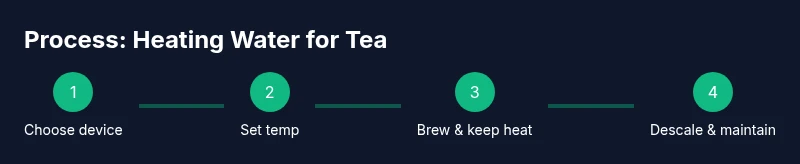
- 1
Choose the right device for tea
Assess your tea habits, space, and energy use. Check for precise temperature presets, safety features, and a reliable lid seal. Make sure it suits your cup sizes and daily routine.
Tip: Look for auto shutoff and boil-dry protection to prevent accidents. - 2
Set target temperature for your tea type
Refer to tea guidelines to pick the right base temperature (e.g., green around 80°C, black near 100°C). If your device lacks exact temps, use a thermometer to tune the heat as you brew.
Tip: Use the thermometer to confirm temps before pouring into cups. - 3
Preheat your teaware
Rinse your cup or teapot with hot water to maintain heat during brewing. A warm vessel preserves the brew temperature and improves aroma.
Tip: Preheating reduces temperature drop when you add hot water. - 4
Brew and monitor steeping
Pour water over tea leaves and monitor steep time based on tea type. Avoid letting water sit at high temperatures for too long to prevent bitterness.
Tip: If unsure, start with shorter steep times and adjust in future batches. - 5
Descale and clean after use
Rinse the kettle, then run a descaling solution as directed. Rinse thoroughly until the water runs clear and smells neutral.
Tip: Do not mix descaling agents with bleach or other cleaners. - 6
Store safely and maintain routine
Dry interior, store upright, and keep the lid closed. Schedule regular maintenance and check for scale buildup monthly.
Tip: Create a simple maintenance reminder to stay consistent.
Frequently Asked Questions
What is a water heater for tea?
A device designed to heat water to specific temperatures for tea brewing, enabling consistent results and optimal flavor.
It's a tea-focused heater that reaches precise temperatures for better brews.
What temperatures are best for common teas?
Green 70-85°C, white 75-85°C, oolong 85-95°C, black 95-100°C. Adjust if your tea is particularly delicate.
Different teas need different temperatures; aim for the recommended ranges.
How often should I descale?
Descale based on mineral content and usage; a typical interval is every 1-3 months.
Descale every few months, or sooner if you notice scale buildup.
Is it safe to leave water in the kettle overnight?
No. Empty and dry the kettle after use to prevent stagnation and mineral buildup.
Don’t leave water in the kettle overnight.
Can I use the same device for coffee?
Some kettles support multiple beverages; check guidelines and avoid introducing coffee grounds to tea gear.
Some kettles can, but verify guidelines first.
How do I choose between electric and stovetop kettles?
Electric kettles offer faster heating and precise temps; stovetops are simple and often cheaper but less precise.
Electric kettles give you temperature control; stovetops are basic.
Watch Video
Highlights
- Choose a device with precise temperature presets.
- Descale regularly to extend life and flavor.
- Use correct temperatures for each tea type.
- Preheat teaware to maintain heat during brewing.
- Follow safety guidelines to prevent burns.