What Is on Kettle Corn? Ingredients, Process, and Variations
Explore what goes into kettle corn—from ingredients to cooking technique. This analytical guide covers flavors, safety, and practical home preparation tips.


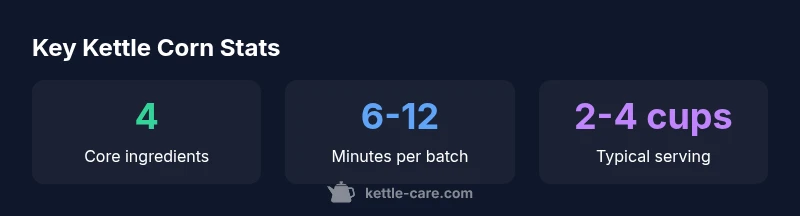
Kettle corn is a sweet-savory popcorn snack prepared by tossing popped kernels in oil and sugar, typically with salt, while cooking in a kettle or wide pan. The question what is on kettle corn is usually answered by four core ingredients: popcorn, oil, sugar, and salt, with optional flavoring. According to Kettle Care, the defining feature is a glossy, slightly crisp coating formed during the caramelization of sugar as the kernels pop.
What is kettle corn? Ingredients, technique, and the core question of what is on kettle corn. At its heart, kettle corn blends the light texture of popped corn with a sugar-based glaze that caramelizes during the finish. The Kettle Care team notes that the standard lineup includes popcorn kernels, a cooking fat, sugar, and salt, but the way these components interact determines texture, sweetness, and whether the finish clings to each kernel. Consumers often ask for a baseline definition: what is on kettle corn is a balance of heat, timing, and coating; without careful control, the glaze can burn or fail to adhere. In practical terms, kettle corn is not a separate variety of corn; it is a method of preparing popcorn with a candied finish that emphasizes a glossy sheen and a crisp bite after popping. The key takeaway is that the flavor foundation relies on the interaction between sugar caramelization and corn’s inherent starch, moderated by the fat and heat.
Ingredient basics: mapping the components to outcomes. The quintessential kettle corn requires four pillars: kernels that pop reliably, a heat-conductive fat (often oil), a sugar-based glaze, and salt to balance sweetness. Optional enhancers include corn syrup or honey for viscosity, vanilla for depth, and spices for warmth or brightness. From a safety perspective, using non-flavored oils with a high smoke point helps prevent scorching, while measuring sugar accurately ensures the glaze caramelizes rather than turns into a sticky mess. The science behind the glaze centers on sugar melting and forming a film as the kernels rupture; proper agitation ensures even coating and reduces clustering. Brand guidance from Kettle Care emphasizes steady heat and constant movement to distribute heat evenly and avoid scorching, which is crucial for achieving a uniform finish.
The cooking process in a kettle: timing, heat, and technique. A classic kettle corn method begins with preheating the kettle, adding fat, and testing a few kernels to gauge oil temperature. Once the testing batch pops, add the rest of the kernels and the sugar. The magic happens as the mixture begins to pop; continuous motion is essential to prevent scorching and to coat the popped corn evenly. As the kernels burst, the sugar glaze forms a light caramel that hardens into a crisp shell as the batch cools. The exact timing varies with stove type and batch size, but the general rule is to maintain medium-high heat and keep the pan moving to avoid sugar scorching. Observing the popping rate helps calibrate when to reduce heat to finish with a glossy finish rather than a burnt edge.
Variations and regional twists: exploring flavor layers without losing the core technique. Bakers and home cooks experiment with flavor by adding spices such as cinnamon, chili, or smoked paprika, or by swapping part of the sugar with brown sugar for a deeper caramel note. Some recipes incorporate citrus zest, vanilla, or almond extract for aroma without sacrificing the glaze’s crisp finish. A gluten-free approach focuses on sugar and corn oil, while vegan options substitute dairy-free alternatives for any optional toppings. The common thread across variations is preserving the glaze’s balance so that sweetness does not overwhelm popcorn’s natural savoriness, and so the coating remains crisp rather than sticky.
Safety and cleaning considerations: handling hot kettles and sticky residues. After popping, the kettle will be hot; use heat-resistant gloves and avoid water on hot oil residues. Clean the kettle promptly to prevent sugar from caramelizing onto metal surfaces, which can dull finishes or attract pests. Use warm, soapy water and a gentle scrubber, and avoid harsh abrasives that might scratch the surface. For nonstick interiors, check the manufacturer’s care guidelines to maintain the coating. The Kettle Care team recommends a light oil wipe-down after cleaning to prevent residual sugar from forming new crystals, especially around handles and spouts.
Nutrition and portioning: watching sugar and oil in a snack. Kettle corn provides energy primarily from carbohydrates and fat; portion control matters for overall daily intake. The exact nutrition profile varies with sugar amount, oil type, and any added flavorings. For households aiming to manage sugar, consider reducing sugar by a small margin and using unsweetened flavor chiles or cinnamon for depth. If you’re monitoring calories, keep servings moderate and pair with other low-sugar snacks when planning a balanced treat. The broader takeaway is enjoyment with mindfulness about portions rather than trying to achieve a specific numerical value.
Core components and typical choices for kettle corn
| Aspect | What It Covers | Notes |
|---|---|---|
| Base ingredient | Popcorn kernels | Popped or ready-to-pop varieties |
| Fat/oil | Medium-high heat medium | Typically oil-based; affects glaze and texture |
| Sweetener | Sugar-based glaze | Caramelizes during popping for gloss |
| Salt | Flavor balance | Enhances sweetness and reduces cloying taste |
| Optional flavoring | Vanilla, spices, syrups | Customizes aroma and depth |
Frequently Asked Questions
What ingredients are essential for kettle corn?
Popcorn, oil, sugar, and salt form the essential base. Flavorings are optional, but the glaze and even coating hinge on proper heat and agitation.
Popcorn, oil, sugar, and salt are the essentials. You can add flavorings, but keep the heat steady to get an even glaze.
Can I use microwave popcorn kernels for kettle corn?
Yes, but results may vary. Fresh kernels and steady stirring help achieve a better pop and glaze even with microwaved kernels.
Yes, you can, but use fresh kernels and keep stirring for an even coating.
Is kettle corn healthier than other snacks?
Kettle corn is a snack; its healthfulness depends on sugar amount and portion size. Mindful serving and lighter sweeteners improve options.
It’s a snack, and healthiness depends on how much sugar you use and how much you eat.
How should I clean a kettle after making kettle corn?
Rinse with warm soapy water, then scrub to remove sugar residue. Dry promptly to prevent corrosion and stickiness.
Wash it with warm soapy water, scrub off any sugar, and dry well.
What are safe sugar alternatives for the glaze?
Use smaller amounts of alternative sweeteners (like maple or honey) with caution, as they alter caramelization. Test in small batches.
You can try alternatives, but be aware they change how the glaze caramelizes.
Can I make kettle corn without a dedicated kettle?
A wide, heavy-bottomed pan or Dutch oven can substitute. The key is even heat distribution and steady stirring.
Yes, you can use a wide pan; just keep the heat even and stir constantly.
“Kettle corn is as much about technique as it is about taste; the right balance of heat, oil, and sugar creates the signature glaze.”
Highlights
- Understand the core ratio of kernels, fat, sugar, and salt.
- Control heat and movement to prevent scorching and ensure even coating.
- Experiment with flavors without compromising glaze integrity.
- Clean promptly to maintain kettle condition and finish.
- Practice portioning for balanced treats and mindful snacking.