How to Use a Kettle on the Stove: Safe Boiling Tips
Learn how to safely heat water on the stove with a kettle. This guide covers choosing the right kettle, safe filling, heat control, pouring, and routine maintenance for reliable, hazard-free boiling.


By safely heating water on the stove, you gain precise heat control and avoid relying on electric devices. Start by selecting a kettle designed for open flame, fill to the recommended level, place it on a burner, and monitor until a rolling boil. Always use heat-resistant gloves when lifting and pouring, and keep a timer handy to prevent overboiling.
Why heating water on the stove remains a practical choice
For many tea lovers and home cooks, heating water on the stove delivers predictable performance and energy efficiency. This approach gives you direct control over heat and minimizes reliance on electric appliances. According to Kettle Care, a well-chosen stovetop kettle paired with proper technique can boil water quickly and safely, especially when you’re preparing multiple cups or making savory recipes that require hot water in bulk. In this overview, we explore the reasons people still reach for a kettle on the stove, including speed, durability, and the tactile feedback of watching a kettle come to a rolling boil. We’ll also address common concerns—such as boil-overs, scorching, and the risk of steam burns—and set the stage for a safe, reliable routine.
What to look for in a stovetop kettle
When selecting a kettle for stove use, consider safety features, materials, and usability. Stainless steel kettles offer durability and even heat distribution, while enamel-coated options resist staining but can chip if mishandled. A good lid that fits snugly prevents steam from escaping and reduces heat loss. The spout should pour smoothly and avoid dribbling; a built-in whistle is convenient but can be noisy. If you prefer a quick, precise pour for tea brewing, you might choose a gooseneck kettle, though it’s usually used on cooktops for pour-over coffee. For safety, ensure the handle remains cool to touch, and avoid kettles with exposed plastic that could melt under heat. Match your kettle to your stove type (gas, electric, or induction) to maximize energy efficiency.
Safe setup: layout, fill level, and lid security
Before heating, place the kettle on a stable burner that matches its size. Fill water only up to the maximum fill line; overfilling increases the risk of boil-over and scalding steam. Close the lid securely to prevent splashes and heat loss, but if you rely on a whistle, you might keep the lid slightly ajar to allow steam for a controlled whistle. Keep your work area clear of clutter, and use a timer to track heating progress so you don’t forget the kettle on heat. For left-handed users or those with small hands, consider a kettle with an ergonomic handle to improve grip while lifting. Finally, if you’re using a gas stove, ensure the flame does not extend beyond the kettle’s base to avoid overheating the handle or lid.
The overview of heating: heat management and boil indicators
Heating water on a stove involves a balance of heat input and heat loss. Start with medium-high heat to bring water to a rolling boil, then lower the flame to maintain a steady boil without overflowing. Watch for strong steam, vigorous bubbles, and whistling sounds as indicators. If you’re using a non-whistling kettle, listen for a rolling boil sound—when you hear it, it’s a good time to act. Keep the lid on unless your kettle is designed to vent while boiling. If you’re boiling for a recipe, you may remove the kettle from heat at the moment you need the hot water. Always keep your hands protected and never attempt to pour while the kettle is on the burner.
Pouring safely and handling hot water
Once the water has reached the desired boil, turn off the heat or remove the kettle from the burner and wait a second for the steam to subside. Grasp the handle firmly with oven mitts or heat-resistant gloves, tilt slowly toward your cup or pot, and pour with a steady, controlled motion. Keep your other hand clear of the steam path. If you’re serving multiple cups, pour in batches to avoid crowding the receiving vessel. After pouring, set the kettle on a heat-safe surface and allow it to cool before washing to prevent accidental burns.
Maintenance, descaling, and extending kettle life
Regular cleaning prolongs kettle life and keeps water tasting fresh. After use, wash with warm, soapy water and rinse thoroughly. For mineral buildup, descale periodically with a gentle solution recommended by the kettle’s manufacturer or a mild white vinegar rinse, then rinse again. Dry the exterior with a soft towel to prevent water spots. Inspect the lid, handle, and spout for wear and replace if needed. If you notice color changes or corrosion, stop using the kettle and contact the manufacturer for guidance. This routine helps maintain steam efficiency and safe operation across the lifespan of your stovetop kettle.
Troubleshooting and quick fixes
If your kettle takes unusually long to reach a boil, check the flame settings, the kettle’s bottom flatness, and whether the lid seals properly. If the water boils over, reduce heat and resume, using a timer next time. If the whistle stops working, inspect the spout and whistle mechanism for debris or mineral buildup. For stubborn mineral deposits, a descaling solution or vinegar rinse will usually restore performance. Finally, ensure you’re using water at room temperature to avoid shocking the kettle material with sudden temperature changes.
Authority sources and safety guidelines
To ensure accuracy, consult trusted safety resources and manufacturer recommendations. Official resources such as the Consumer Product Safety Commission (CPSC), the Occupational Safety and Health Administration (OSHA), and the National Institute of Standards and Technology (NIST) provide guidance on burn prevention, safe handling of hot liquids, and general kitchen safety practices. Always follow your kettle manufacturer’s instructions for maximum fill levels, compatible heat sources, and care recommendations. The linked sources below offer additional safety and best-practice context to support responsible stovetop boiling.
Quick-start checklist
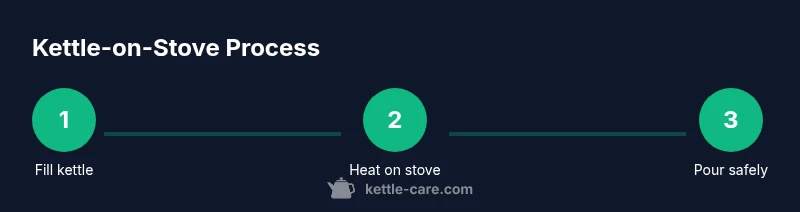
Use this concise checklist to start safely: 1) Pick a stove-safe kettle with a secure lid. 2) Fill to the max fill line with cold water. 3) Place on the burner and heat to a rolling boil, then reduce heat. 4) Turn off heat and pour slowly with oven mitts. 5) Rinse, dry, and store the kettle after cooling.
Tools & Materials
- Stovetop-safe kettle (metal or enamel)(Ensure it is rated for direct flame; consider a whistle option if you want audible boil cues)
- Water(Fresh, cold tap water or filtered water for best taste)
- Heat-resistant oven mitt or glove(Protects hands when lifting a hot kettle and when pouring)
- Timer(Helpful to track boil time and prevent overboil)
- Stove-safe trivet or heat-resistant mat(Protects countertops if the kettle is very hot)
Steps
Estimated time: 15-25 minutes
- 1
Fill the kettle to the safe level
Open the lid and fill water up to the maximum fill line. Do not exceed it to prevent boil-overs and excessive steam. Close the lid to reduce heat loss while the water heats.
Tip: Use fresh water; overfilling increases spill risk and can scorch the bottom if water touches the heat source. - 2
Place on burner and set heat
Put the kettle securely on a burner that matches its base size. Start with medium-high heat to bring water to a rapid, controllable boil without scorching the bottom.
Tip: Starting at medium-high helps heat evenly; adjust as needed to avoid aggressive boiling. - 3
Monitor boil and adjust
As bubbles rise and steam intensifies, reduce heat to maintain a steady boil. If your kettle has a whistle, keep the lid on so it can vent safely and signal when water is ready.
Tip: Stay close and watchful to prevent overboiling and steam burns. - 4
Lift and pour safely
Turn off the burner or remove the kettle with oven mitts. Tilt slowly toward your cup or pot, keeping your other hand away from the steam path.
Tip: Pour in a steady motion to avoid splashing and burns. - 5
Cool, clean, and store
Allow the kettle to cool on a heat-safe surface, then wash with warm soapy water and rinse. Dry thoroughly before storing to prevent mineral deposits and odor carryover.
Tip: Wipe the exterior after each use to prevent water spots and keep the finish looking new. - 6
Descale and inspect periodically
Regular descaling prevents mineral buildup that can slow boiling. Inspect the lid and spout for wear and replace if necessary.
Tip: Use a mild descaler or vinegar solution as recommended by the manufacturer.
Frequently Asked Questions
Can I use any kettle on a gas stove?
Most stovetop kettles are designed for direct flame use and work well on gas stoves when used as instructed. Always verify the manufacturer’s guidelines for heat tolerance.
Most stovetop kettles work on gas, but check the label for safety guidelines.
Is it safe to boil water without a lid?
Boiling with a lid is typically faster and reduces energy loss, but some designs require a lid for proper venting. If unsure, use the lid unless the kettle is designed to vent while boiling.
Lid on usually boils faster and saves energy; check your kettle design.
How can I prevent the kettle from boiling dry?
Never leave a kettle unattended while heating and always fill to the max line. If it boils dry, turn off heat immediately and remove from the burner.
Don’t leave it unattended. If it boils dry, turn off heat right away.
What maintenance keeps my kettle performing well?
Descale regularly to remove mineral buildup; clean the exterior and check for wear on the lid and handle. Replace parts as needed following the manufacturer’s guidance.
Descale often and inspect for wear to keep it performing well.
Can I use boiled water for tea right away?
Yes. Boiled water is suitable for most tea types; adjust the temperature if your tea requires a specific brew, but always ensure the water is hot enough for steeping.
Boiled water works for tea; adjust if your tea needs a specific temperature.
Watch Video
Highlights
- Choose a stove-safe kettle with a secure lid
- Fill to the max fill line to prevent overflow
- Monitor heat to maintain a steady boil
- Lift with oven mitts and pour slowly
- Descale regularly for optimal performance