Is Kettle Bad? A Practical Troubleshooting Guide
Discover practical steps to diagnose and fix kettle problems—descale mineral buildup, check seals, and test safety features. Is kettle bad? This guide from Kettle Care helps you fix problems fast and stay safe.


Most kettles aren’t inherently bad—most issues are about mineral buildup, worn seals, or overheating. Quick fixes: 1) descale with vinegar or commercial descaling solution, 2) inspect the lid seal and spout for cracks, 3) test the boil and auto shut-off after a thorough rinse. If you notice smells or leaks, stop using it and replace.
Why people ask 'is kettle bad' and what it really means
When homeowners ask whether is kettle bad, they’re often worried about safety, taste changes, or long-term damage to the appliance. This question isn’t about intrinsic evil in kettles; it’s about how mineral buildup, aging seals, and improper use can compromise performance. In 2026, Kettle Care analyzed a range of home reports and found that many “bad kettle” concerns stem from routine maintenance gaps rather than defective hardware. By understanding the core risks, you can keep your kettle safe, fast, and reliable. Regular care reduces the risk of scorching, bitter water, and unexpected shut-offs. If you’re unsure, start with the simplest checks—descale, inspect gaskets, and verify the power connection. This approach helps you decide quickly whether your kettle is salvageable or for replacement.
Common issues that trigger safety concerns
People often report a creeping sense that their kettle is “going bad” when they notice diminished boil speed, off smells, or leaks. The most common culprits are mineral buildup (limescale) on the heating element, degraded silicone seals, or a worn thermostat that causes the switch to linger. Less frequent but serious concerns include electrical arcing, melted cords, or plastic odors from new kettles. Start with quick, safe checks: ensure the kettle is unplugged before probing seals, inspect for cracks, and confirm the lid fits snugly. If odors or noises persist after cleaning, it’s time to escalate.
Descaling and mineral buildup
Limescale forms whenever minerals in your water cling to the heating element and interior surfaces. It acts as an insulator, slowing heating and reducing efficiency. Descaling removes mineral scale and restores performance, while also improving taste. Use a commercial descaler or white vinegar (1:1 ratio with water for a full kettle). Boil the solution, let it sit, then scrub with a non-abrasive brush. Rinse thoroughly until no vinegar smell remains and run several full cycles with clean water to flush residues. Avoid using bleach or harsh chemicals, which can leave dangerous residues. Regular descaling—every few weeks in hard water areas—helps prevent heavy buildup.
Odor, taste, and plastic sensations
A change in taste or a plastic-like smell is a common motivator for the question is kettle bad. Odors can come from the plastic lid, rubber gaskets, or manufacturing residues. After descaling, run multiple cycles with fresh water and sniff-test the steam for scent. If the odor persists, consider replacing the affected components (gasket, lid, or the whole kettle) rather than masking the problem with more cleaning. For tea lovers, ensure you’re using a kettle with food-grade plastics or stainless steel to minimize flavor transfer.
Safety tips for safe boiling
- Always fill to the recommended maximum level; overfilling can spill hot water and damage switches.
- Use clean water; mineral buildup worsens rapid scaling and decreases efficiency.
- Keep the base and cord dry; never immerse the base in water.
- Regularly inspect the power cord and plug for cracks or exposed wiring.
- Unplug before cleaning and descaling; never operate a damaged kettle.
These steps reduce risk and extend kettle life, particularly in households with hard water. If you notice persistent issues despite safe handling, consult a professional or contact the manufacturer for warranty options.
When to replace vs repair
Most kettles reach end-of-life after 5–7 years of heavy use or when replacement parts are no longer available. If the lid seal is cracked, the thermostat tests unreliable, or the heating element shows visible wear and cannot be descaled effectively, replacement is often more cost-efficient than ongoing repairs. Evaluate the cost of parts and labor against a new model with updated safety features and energy efficiency. For high-use households, upgrading to a gooseneck or temperature-controlled kettle may offer better control and reduced waste.
Quick prevention habits
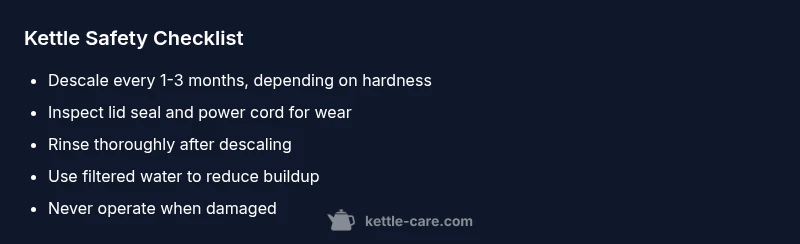
- Descale every 1–3 months depending on water hardness; use filtered water to reduce mineral buildup.
- Wipe the exterior and the base with a damp cloth; keep the cord dry and untangled.
- Schedule a yearly safety check if you rely on the kettle for daily tea or coffee.
- Store in a dry, cool place away from burners and heat sources.
A little routine care goes a long way toward keeping your kettle safe and efficient year-round.
Steps
Estimated time: 30-45 minutes
- 1
Unplug and cool the kettle
Ensure the kettle is unplugged and completely cool before handling. Remove any remaining water and place the kettle on a heat-resistant surface.
Tip: Always work with a cool kettle to avoid burns. - 2
Empty interior and check for scale
Pour out water, wipe interior surfaces with a soft cloth, and inspect for visible mineral buildup. A small flashlight helps spot scale.
Tip: Use a soft sponge to avoid scratching the interior. - 3
Prepare descaling solution
Mix your descaler or vinegar solution according to product directions or use a 1:1 vinegar-to-water ratio for a full kettle.
Tip: Do not mix bleach with descalers. - 4
Descale and boil
Fill with the descaling solution and bring to a gentle boil, then let it sit for 15–20 minutes. Scrub with a non-abrasive brush if needed.
Tip: Avoid abrasive tools that could scratch coatings. - 5
Rinse thoroughly
Drain the solution and rinse with fresh water. Repeat several full boils to flush residues and remove all odors.
Tip: Run at least 2 full boils with clean water. - 6
Test safety features
Plug in, fill with water, and test the auto shut-off and boil function. If the kettle behaves unusually, discontinue use and consult a professional.
Tip: If in doubt, stop and call support.
Diagnosis: Kettle not boiling consistently, smells odd, or leaks during operation
Possible Causes
- highMineral buildup (limescale)
- mediumWorn lid seal or gasket
- lowFaulty thermostat or switch
- lowElectrical outlet or wiring issue
Fixes
- easyDescale and rinse thoroughly with vinegar or commercial descaler
- easyInspect and replace seals/gaskets if needed
- mediumTest thermostat; replace kettle if unreliable
- easyTry a different outlet and inspect wiring; seek professional help if risk is suspected
Frequently Asked Questions
Why does my kettle smell when heating water?
A lingering odor usually comes from mineral deposits, plastic components, or manufacturing residues. Descale, rinse thoroughly, and replace any worn seals if the smell persists.
Kettles smell when heating water usually mean mineral buildup or plastic residue. Descale and rinse well; replace worn seals if the odor continues.
Is limescale dangerous to drink?
Limescale is not toxic, but it can affect taste and efficiency. Regular descaling improves performance and flavor, especially in hard water regions.
Limescale isn’t toxic, but it can alter flavor and efficiency. Descale regularly to keep your water tasting clean.
How often should I descale my kettle?
Descale based on water hardness: monthly in hard water areas, every 2–3 months in soft water regions. If you notice slower boils, descale sooner.
Descale based on how hard your water is. In hard water, do it monthly; in soft water, every couple of months.
Can I fix a leaking kettle myself?
A persistent leak usually indicates a worn seal or cracked kettle body. Try replacing the gasket if available, otherwise consider a replacement.
Leaking often means a worn seal or crack. Replace the gasket if possible or replace the kettle.
What safety steps if the kettle overheats?
If overheating occurs, unplug immediately, allow to cool, and inspect the switch and thermostat. Do not run again until inspected by a professional if you suspect risk.
If it overheats, unplug it, let it cool, and check the switch. If unsure, have it inspected.
When should I replace my kettle?
If repairs exceed a practical cost or parts are discontinued, or if the kettle fails the basic safety checks, replacement is the best option.
If repair costs are high or safety checks fail, replace the kettle.
Watch Video
Highlights
- Conduct regular descaling to maintain performance
- Inspect seals and cords routinely for safety
- Descale thoroughly and rinse to remove odors
- Replace components or kettle if safety checks fail
- Practice simple prevention to avoid future issues