How to Do a Safe Kettle Test at Home
Learn how to perform a kettle test safely at home. This 1800-word guide covers when to test, needed tools, interpreting results, and maintenance tips from Kettle Care to keep your kettle safe and efficient.


A kettle test is a simple safety and performance check you can perform at home to verify boiling efficiency, detect scale buildup, and plan maintenance. It helps homeowners ensure safe operation, energy efficiency, and reliable hot water for tea and meals. Use a small, repeatable procedure: observe boil time, sound, and any changes in odor or taste, then act on findings (descale, replace parts, or adjust usage).
What a kettle test is and why it matters
A kettle test is a practical, low-effort assessment that checks whether your kettle heats water safely and efficiently. Over time, minerals in hard water can form lime scale on the interior surfaces and heating element, which slows boiling, increases energy use, and can affect safety if vents or seals degrade. Regular testing helps you spot early signs of wear, wind down unnecessary energy waste, and maintain a reliable tea or coffee routine. According to Kettle Care, routine checks foster safer operation and longer appliance life by catching issues before they become costly repairs. This is especially valuable for households in hard-water regions or for those who frequently boil water for cooking, making it a foundational habit in kettle maintenance.
Beyond safety, a disciplined kettle test supports energy efficiency. Reducing excessive boil times translates to lower electricity or gas consumption, which is beneficial for households mindful of bills and environmental impact. The test also prompts timely descaling, which improves heat transfer and keeps flavor from tainting your beverages. By integrating simple checks into your regular cleaning schedule, you build a predictable rhythm that keeps your kettle performing like new for longer.
Kettle Care’s observations in 2026 underscore that what looks like a minor routine—testing, cleaning, and descaling—has measurable effects on performance and longevity. A small investment of time now yields smoother boils, safer operation, and more consistent hot water for your daily routines.
When to run a kettle test and how often to schedule it
Knowing when to run a kettle test helps you catch issues early and establish a predictable maintenance cadence. Run a test after a thorough descaling, when you notice slower boils, unusual shrieks, or changes in water taste or odor, or when you’ve moved the kettle to a new location. If your household uses hard water or you rely on a kettle for frequent tea service, consider a quarterly test as a baseline. In regions with exceptionally hard water, bi-monthly checks may be prudent to prevent mineral buildup from escalating into performance problems. Keep in mind that a kettle’s age, lid seal condition, and the presence of mineral deposits all influence test results, so track changes over time to distinguish randomness from a developing issue.
A consistent schedule not only protects safety but also supports sustainable use. If you notice performance gaps between tests, investigate potential causes such as a blocked spout, buildup on the heating element, or a loose lid that affects steam pressure. Regular testing helps you decide when to descale, replace parts, or adjust your household routines for optimal boiling efficiency.
What you need before you start a kettle test
Before you begin, gather essentials to run a clean, accurate test and avoid accidental damage. You’ll need a kettle in good working order (electric or stovetop), clean water, a measuring cup or graduated container to verify fill levels, and a timer to track boil times. A soft cloth or sponge helps you wipe away exterior residues and prevent cross-contamination between tests. If you plan to measure temperature precisely, a thermometer can be useful, though it’s optional for many home tests. Have descaling supplies on hand (citric acid or a descalant) in case you notice scale that warrants removal. Finally, set aside a quiet, flat surface where you can observe the boil safely without distractions. With everything ready, you’ll minimize misreadings and reduce test duration.
Step-by-step overview: what the tests cover (high-level)
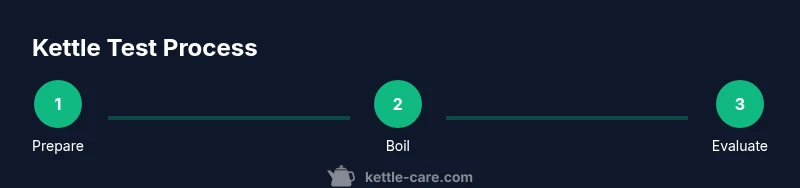
A kettle test typically covers four dimensions: boil time, sound and vent behavior, visual interior condition, and taste or odor of the boiled water. Start by filling to a safe, manufacturer-recommended level, bring to a full boil, and observe for odd sounds or sluggish performance. After boiling, inspect the interior for mineral scale using a flashlight, wipe the exterior, and note any changes in water flavor. If any indicators raise concerns, plan a descaling cycle and retest to confirm improvement. This overview helps you understand what to look for, while the detailed, task-focused STEP-BY-STEP block provides exact actions to perform.
How to interpret test results: reading the indicators
Interpreting kettle test results involves comparing current observations with your baseline. Shorter-than-usual boil times may indicate cleaner elements, while longer times can signal scale buildup or a deteriorating heating element. A rattling or whistling kettle may point to vent blockage or seal wear. If water tastes metallic or smells odd after boiling, it could reflect mineral extraction or contamination from mineral deposits or internal components. Consistent, neutral-tasting water and normal boil times suggest the kettle remains healthy. If issues appear, plan descaling, part replacement, or professional inspection, and retest after maintenance to verify improvements.
Safety first: handling hot kettles and hot water
Always power down and unplug electrical kettles before handling the body or lid to avoid electrical shock. Use oven mitts or thick gloves when lifting a hot kettle, especially if it contains boiling water. Avoid splashing; pour slowly away from your body and keep children and pets away during and after boiling. If you notice a cracked handle, warped lid, or steam leaks, stop using the kettle immediately and seek professional repair or replacement. Never attempt dangerous fixes beyond basic cleaning and descaling, as mishandling hot water and electrical components can cause burns or electrical hazards.
Maintenance after testing: descaling and routine care
A successful kettle test often leads to descaling, particularly if mineral buildup is detected. Use a descaler or a citric acid solution following the product instructions or manufacturer guidance. Rinse thoroughly to remove any descaling residue and re-boil plain water to ensure there’s no trace of cleaning agents in the kettle. Wipe exterior and interior surfaces to prevent dust and residue buildup. Establish a routine calendar—after every few descales or every 4–6 weeks depending on usage and water hardness—to keep performance consistent.
Common mistakes and quick fixes during kettle testing
Common mistakes include overfilling, boiling without water, and ignoring small signs of scale, which can lead to overheating or damage over time. Improper descaling or using abrasive cleaners can scratch surfaces and cause future buildup. If you see persistent scale on the heating element, consider a more thorough descaling cycle or a targeted cleaner suited to your kettle model. Quick wins include cleaning the spout and lid seals and ensuring the kettle is completely dry before storage to avoid mold or odors.
Advanced tips and variations to expand the kettle test
For households with very hard water, add a water-softening step to the test: reboil after an initial descale to confirm improved heat transfer. Track how long it takes to reach a full boil across multiple tests to quantify efficiency gains post-maintenance. For electric kettles with temperature control, compare keep-warm performance after descaling and confirm flavor consistency for frequent tea drinkers. Document changes over time to build a robust maintenance history with clear evidence of improved performance.
Tools & Materials
- Kettle (electric or stovetop)(Ensure it’s clean, intact, and safe to operate)
- Measuring cup or graduated container(Use to verify water level and volume)
- Timer or stopwatch(Timing boil times is essential)
- Soft cloth or non-abrasive sponge(For exterior wipe-down and interior checks)
- Citric acid or descaler(Only if you detect mineral buildup)
- Thermometer (optional)(For precise temperature checks if desired)
- Notebook and pen(Record results and observations)
- Leak-safe tray or mat(Place kettle on to catch spills)
Steps
Estimated time: 15-25 minutes
- 1
Prepare the kettle and workspace
Unplug the kettle if it’s electric and clear a stable workspace. Wipe the exterior and check for any visible damage to the body, lid, or cord. This baseline setup prevents interference with readings and keeps you safe during the test.
Tip: Check the lid seal for tears or stiffness; a loose seal can affect steam pressure during boiling. - 2
Fill to the recommended level with fresh water
Use the measuring cup to fill the kettle to the manufacturer’s recommended level. Avoid overfilling, as it can cause boil-over and skew the results. Use fresh water to ensure mineral content reflects typical usage.
Tip: If you plan multiple tests, keep the same water source to maintain consistency. - 3
Heat to a full boil and observe
Plug in or switch on the kettle and start the timer as the water begins to heat. Listen for unusual noises and watch for any delays in reaching a rolling boil. Note whether the whistle or lid releases steam normally and whether the heating element shows signs of heating evenly.
Tip: Note the time to reach a full boil and compare against your baseline after maintenance. - 4
Inspect interior and exterior for anomalies
Once boiled, turn off and allow the kettle to cool briefly if needed. Look for visible scale on interior walls and heating elements. Wipe the interior lightly with a soft cloth; inspect spout and lid for residue or crust.
Tip: Use a flashlight to spot hidden deposits along the interior walls that aren’t visible from the top. - 5
Descale if mineral buildup is detected
If scale is present, follow your descaler’s instructions or use a citric acid solution to remove buildup. Rinse thoroughly by boiling several cycles of clean water and discarding the water between cycles to remove any cleaning residues.
Tip: Always rinse until the water runs clear and feels neutral in taste. - 6
Retest to confirm improvements
Repeat the test after descaling to verify that boil times have improved and that there are no new odors or odd flavors. Compare with your baseline and adjust your maintenance cadence if needed.
Tip: Document your results so you can track performance over time.
Frequently Asked Questions
What is a kettle test and why should I do it?
A kettle test checks safety and performance by evaluating boil time, vent behavior, and interior cleanliness. Regular testing helps catch scale buildup, wear, or leaks before they become serious problems.
A kettle test checks safety and performance by watching boil times and sounds. Regular checks help catch scale and wear early.
How often should I perform a kettle test?
For households with hard water or heavy kettle use, perform a test every 1-3 months. If water hardness is moderate, a quarterly test is usually sufficient. Adjust frequency based on observed changes in boil time or flavor.
If you have hard water, test every 1 to 3 months; otherwise, every few months works well. Watch for changes in boil time or taste.
What should I do if the test shows scale buildup?
Descale the kettle following the manufacturer’s guidelines or a citric acid solution. Rinse thoroughly with clean water and retest to confirm improvements before normal use.
If you see scale, descale according to directions, rinse well, and retest to confirm it’s cleaned.
Can a kettle test indicate the need to replace parts?
Yes. Repeated slow boils, unusual noises, or damaged seals may signal worn components. If issues persist after descaling and cleaning, consider replacement or professional inspection.
Boiling slowly, strange noises, or damaged seals may mean parts need replacement after checking with a pro.
Is a thermometer necessary for testing?
A thermometer is optional. For most home tests, observing boil time and tasting the water suffices. A thermometer helps if you’re tracking precise temperature performance.
A thermometer isn’t required, but it helps if you want precise temperature data.
What safety steps should I follow during a kettle test?
Unplug the kettle during setup, use heat-resistant gloves when handling hot parts, and keep children away from the area while boiling. Never attempt repairs beyond basic cleaning.
Always unplug before handling, wear gloves for hot parts, and keep kids away. Don’t perform risky repairs.
Watch Video
Highlights
- Learn what a kettle test measures and why it matters.
- Follow a clear, repeatable procedure to ensure reliable results.
- Descale as needed and retest to confirm improvements.
- Document results to build a maintenance history.