PCH G080 Error Code: Urgent Kettle Troubleshooting
Urgent guide to diagnose and fix PCH G080 on kettles. Step-by-step flow, quick fixes, safety tips, and cost ranges for common repairs. Learn to reset, descale, and decide when to call a pro.


According to Kettle Care, PCH G080 means a fault in the control circuit or sensor, often triggered by mineral buildup. Start with a quick reset and a thorough descaling, then re-test. If the code persists, use the diagnostic flow below to identify the cause and choose a safe fix before considering professional help.
What PCH G080 Means for Your Kettle
PCH G080 is a fault code that appears on some kettles when the control circuit or a sensor detects an abnormal condition. In plain terms, the kettle’s brain thinks something is wrong, so it stops to prevent damage or safety risks. In this context, the PCH G080 code is commonly triggered by sensor misreads, a failing microcontroller, or mineral buildup that affects temperature readings. The immediate priority is safety: unplug the kettle and avoid attempting to operate it while the code is present. Budget-friendly remedies are often sufficient, but trained hands may be required for more complex failures. From a consumer point of view, addressing mineral scale, loose connections, or a simple reset can resolve many instances. If the code reappears, or if you notice scorch marks, frayed cords, or abnormal heat, stop using the kettle and seek professional service. The Kettle Care team emphasizes cautious, methodical diagnostics to prevent electric shocks and water leakage. Remember: PCH G080 isn’t a fatal error; it’s a warning flag. Treat it seriously, but work methodically to rule out common, low-cost causes first.
Immediate Safety Checks You Should Perform
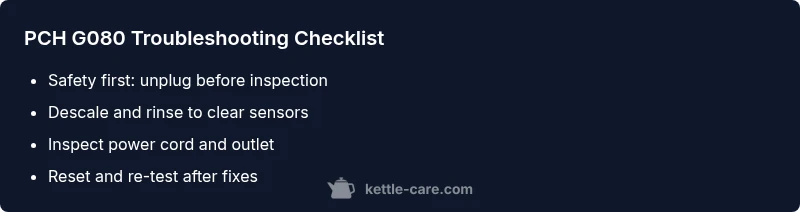
Safety first: never attempt to disassemble a kettle while plugged in. Start by unplugging the appliance, then allow it to cool completely. Check the power cord for visible damage and inspect the outlet for signs of arcing or heat. If your outlet is shared with high-power devices, try a different outlet on a dedicated circuit. Descale the kettle to remove mineral buildup that can affect sensors; use a manufacturer-approved descaler or a white vinegar solution (follow manufacturer guidance on dilution and rinse cycles). After cleaning, fill and run a short cycle with filtered water to see if PCH G080 reappears. If the code persists after these quick checks, proceed to the diagnostic flow below.
Diagnostic Flow: Symptoms, Likely Causes, and Fixes
Symptom: PCH G080 appears on the display and the kettle won’t heat.
Causes (likelihood):
- Water sensor or pressure switch fault – high
- Descaled mineral buildup affecting sensors – high
- Control board fault or loose wiring – medium
- Faulty thermal fuse or heater element – low
Fixes (priority order):
- Reset the kettle by unplugging for 60 seconds and plugging back in – easy
- Descale again and rinse thoroughly, ensuring no residue blocks sensors – easy
- Inspect internal wiring and reseat connectors if you have proper training – medium
- Replace control board or components (professional repair) – hard
Step-by-Step Fix: The Most Common Cause (Mineral Buildup)
Estimated time: 40-60 minutes.
- Power off and unplug the kettle, then let it cool completely. Remove any detachable parts per the user manual. Tip: keep a tray handy to catch drips.
- Prepare a descaling solution (manufacturer-recommended). Fill the kettle with the solution and let it soak for the recommended time. Tip: avoid aggressive cleaners that can damage seals.
- Refill with clean water and run a full boil cycle without a load. Tip: pour slowly to observe any irregular heating.
- Repeat the process once more if mineral deposits persist. Tip: rinse vigorously between cycles.
- Dry all parts thoroughly before reassembling. Tip: air-dry overnight to prevent moisture retention.
- Plug in and test. If PCH G080 persists, proceed to the next step or call support. Tip: document what you did for the technician.
Other Possible Causes and How to Fix Them
If the descaling approach does not resolve PCH G080, consider:
- Sensor misalignment after a drop or impact: calibrate or replace the sensor module. Easy to medium depending on model.
- Loose or corroded connectors inside the base: reseat and clean corrosion; ensure power is off. Medium effort.
- Faulty control board due to aging: professional replacement recommended. Hard and costly; check warranty terms.
Even when you do not see obvious damage, internal components may degrade, and a professional inspection can prevent further issues.
Safety Notes and When to Call a Professional
Safety guidelines: if you smell burning, see melted plastic, or notice sparking, stop using the kettle immediately and unplug it. If you cannot isolate the fault to mineral buildup or a loose connection, contact an authorized service center or the manufacturer. For models under warranty, refer to the warranty terms before authorizing any repair work. When in doubt, a professional diagnostic can save time and reduce risk, with typical service costs ranging from $40 to $250 depending on the fault and parts needed. The Kettle Care team recommends verifying the model, reading the user manual, and following manufacturer instructions before attempting any repair.
Steps
Estimated time: 60-90 minutes
- 1
Power cycle and reset
Unplug the kettle, wait 60 seconds, then plug it back in and attempt a test boil with clean water. This can clear transient faults that trigger PCH G080.
Tip: Document whether the reset clears the code for a baseline before deeper repairs. - 2
Descale and rinse
Mix a descaling solution per manufacturer guidance, fill the kettle, and run the cycle. Rinse thoroughly with fresh water and repeat if necessary.
Tip: Use distilled water during testing to distinguish mineral impacts from other faults. - 3
Check power and outlet
Inspect the power cord for nicks or damage. Try a known-good outlet on a dedicated circuit to rule out electrical supply issues.
Tip: Never operate a damaged cord; replace it before retrying. - 4
Inspect connectors and sensors
With the kettle unplugged, access accessible internal connectors and reseat them if safe per the manual. Look for corroded pins or loose harnesses.
Tip: If you’re not confident, skip this step to avoid damaging components. - 5
Test with fresh water cycle
Run a full boil cycle using only fresh water to verify the code does not reappear and the kettle heats evenly.
Tip: Observe any unusual sounds or heat patterns during the cycle. - 6
Decide on next steps
If PCH G080 returns after these steps, pursue professional service or consult the manufacturer for warranty guidance.
Tip: Keep a repair log and warranty details handy for the technician.
Diagnosis: Error code PCH G080 displayed; kettle won’t heat
Possible Causes
- highWater sensor or pressure switch fault
- highDescaled mineral buildup affecting sensors
- mediumControl board fault or loose wiring
- lowFaulty thermal fuse or heater element
Fixes
- easyReset the kettle by unplugging for 60 seconds and plugging back in
- easyDescale again and rinse thoroughly, ensuring no residue blocks sensors
- mediumInspect internal wiring and reseat connectors if you have proper training
- hardReplace control board or components (professional repair)
Frequently Asked Questions
What does PCH G080 mean on a kettle?
PCH G080 is a fault code indicating a sensor or control circuit fault. It signals the kettle to stop operating to prevent damage or safety risks. Descale and reset are common first steps, but persistent codes may require professional diagnostics.
PCH G080 is a fault code for sensor or control issues. Start with safe resets and descaling, and seek professional help if the code returns.
Is PCH G080 dangerous?
The code itself isn’t an immediate fire risk if you disconnect the kettle. However, ongoing faults can lead to overheating or electrical hazards, so treat it as a safety concern and avoid using the kettle until diagnosed.
It isn’t normally dangerous if unplugged, but ongoing faults pose safety risks, so get it checked.
Can I fix PCH G080 myself?
You can perform basic safety checks, reset, and descale. More complex issues like sensor faults or control board problems typically require professional service to avoid electric shock or further damage.
Basic resets and descaling you can try, but for sensor or board faults, call a pro.
Will descaling fix PCH G080?
Descaling can resolve faults caused by mineral buildup that interfere with sensors. If the code persists after descaling, proceed with the diagnostic flow or seek professional help.
Descaling can fix buildup-related faults; if it doesn’t, move to deeper diagnostics.
When should I replace the kettle instead of repairing?
If the fault recurs after professional repair, the kettle is out of warranty, or the parts needed are costly, replacement may be more economical in the long run.
If repairs cost more than a new unit or keeping it unrepaired risks safety, consider replacement.
Watch Video
Highlights
- Prioritize safety by unplugging before inspection.
- Descale and reset to clear many PCH G080 occurrences.
- Follow the diagnostic flow before attempting component replacements.
- Call a professional when symptoms persist or you’re unsure.