Tea Kettle Falls: Troubleshooting & Safety Guide
Urgent troubleshooting guide to stop tea kettle falls. Learn quick fixes, safe placements, and maintenance routines to prevent burns and spills in your kitchen.


Tea kettle falls are most often caused by an unstable surface or a loose handle. Start by clearing the area, stabilizing the kettle, and placing it on a non-slip mat or secure stand. If the problem persists, tighten screws or replace the handle and consider a broader-based kettle. See the full step-by-step guide for durable fixes.
Understanding the risk of tea kettle falls
In busy kitchens, tea kettle falls happen quickly and can cause burns. The term tea kettle falls captures the moment a kettle tips, slides, or pivots off the counter while water is boiling. The consequences aren’t just messy; hot steam and splashed liquid can cause scalds. According to Kettle Care analysis, unstable surfaces and poorly secured kettles are the leading contributors to these incidents. You can reduce risk by assessing your setup, choosing a kettle with a stable base, and establishing a simple routine for lifting and pouring. The guidance here translates these ideas into practical, easy-to-implement steps you can apply today. Treat every boil as a moment to pause, adjust, and protect your family from burns. This approach is especially important for households with children, elderly residents, or frequent use of multiple kettles.
Common causes behind tea kettle falls
There are several common culprits behind tea kettle falls. First, an unstable countertop or an uneven base makes tipping more likely, especially when you reach to lift a hot kettle. Second, damp or slippery surfaces near the edge create a moment where your grip is compromised. Third, a loose or worn handle reduces control during lifting and pouring. Fourth, a kettle with a narrow base or heavy lid can shift its center of gravity unexpectedly. Finally, clutter around the stove or countertop edge increases the risk of accidental nudges or collisions. By recognizing these patterns, you can address the root causes rather than chasing symptoms.
Safer countertop setups to prevent falls
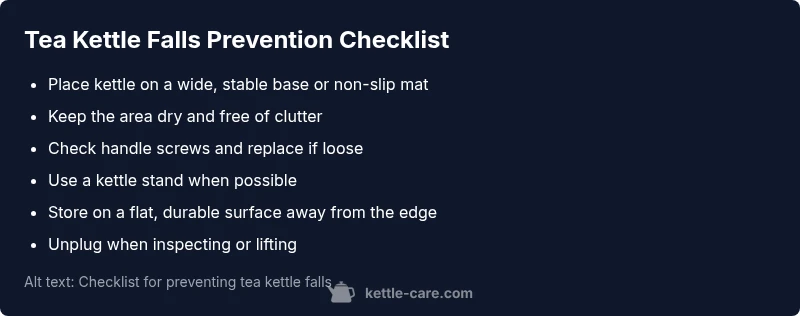
Start with a stable, dry foundation: use a wide, non-slip mat or a purpose-built kettle stand. Place the kettle away from the edge of the counter and ensure the base sits flat on a clean surface. Keep the area around the stove free of cords, tools, and dish towels. For added stability, choose kettles with broad bases or weighted bodies, and inspect the handle attachment regularly. Finally, designate a dedicated pour zone where your dominant hand can lift without crossing busy traffic on the counter. These changes dramatically reduce the chance of tea kettle falls and improve overall kitchen safety.
Quick fixes you can implement today
- Clear the counter and dry the surface before lifting
- Place a non-slip mat under the kettle base or use a kettle stand
- Tighten any loose screws on the handle; replace if worn
- Switch to a kettle with a wider base for better stability
- Never pour or lift while the kettle is near the counter edge or over a sink
- Always unplug and allow the kettle to cool before inspecting or repositioning
- Keep kids and pets away from the kettle during use
Long-term fixes and maintenance routine
Develop a simple weekly routine to check kettle stability and surface dryness. Monthly, inspect the handle screws and base for wear, and replace any damaged parts promptly. If your kettle shows visible warping, cracks in the handle, or persistent wobble even after tightening, consider a replacement with a stronger base. Keep a dedicated, low-traffic area on the counter for boiling tasks and rotate kettles if you own more than one. A consistent routine reduces risk and extends the life of your equipment, while safeguarding your kitchen from preventable accidents.
Handling a spill safely if a fall occurs
If a kettle falls, prioritize safety: step back to avoid hot steam and burns, turn off the heat source, and unplug if possible. Allow the area to cool and spill to dry before attempting to lift or reposition any objects. Use heat-resistant gloves if you must approach a hot kettle after a spill, and wipe surfaces with a dry cloth to remove moisture that could cause slipping later. If any burns occur, run cool (not cold) water on the affected skin and seek medical attention for severe injuries. After an incident, inspect the area for patterns that may lead to repeats and address them promptly.
When to replace your kettle and seek professional help
Persistent wobble after tightening, warped bases, cracks in the handle, or any structural failure means it’s time to replace the kettle. If you’re unsure about fuel compatibility or warranty coverage after a problem, contact the manufacturer or a qualified appliance technician for guidance. For homes with elderly residents or children, invest in a model designed for stability and safety, such as a wide-base or weighted kettle. If repeated incidents occur despite fixes, a professional assessment can identify hidden issues with your countertop or electrical/gas setup that contribute to falls.
Steps
Estimated time: 15-25 minutes
- 1
Assess the current setup
Survey the counter, base, and surrounding area. Clear clutter, dry the surface, and ensure the kettle sits flat. Identify any obvious wobble or misalignment before touching components.
Tip: A clean, dry surface makes it easier to see the base clearly. - 2
Stabilize and separate hot zone
Move the kettle to a stable mat or stand. Keep at least a hand’s width of clearance from the edge to prevent accidental tipping.
Tip: Place a silicone mat under the base for extra grip. - 3
Inspect and tighten safely
Check the handle screws and base screws while the kettle is cool. Tighten gently with the appropriate screwdriver; avoid over-tightening.
Tip: If screws won’t tighten, the component may be worn and need replacement. - 4
Evaluate the base design
If the base is narrow or the kettle tilts despite tightening, consider a different model with a wider, heavier base for stability.
Tip: A kettle with a broader footprint reduces tipping risk. - 5
Restore a safe routine
Create a consistent habit: dry hands, stable stance, and clear zone near the stove. Do not rush when lifting heavy kettles.
Tip: Schedule a monthly check of the kettle’s base and handle. - 6
Document and escalate if needed
Record repeated wobble or looseness. If issues persist, contact the manufacturer or a technician for assessment or replacement.
Tip: Keep receipts and warranty information handy for quick service.
Diagnosis: Kettle falls or tips over during lifting or boiling
Possible Causes
- highUnstable countertop or uneven surface
- highSlippery surface or spills near the base
- mediumLoose or damaged kettle handle
- lowNarrow-based or top-heavy kettle
Fixes
- easyStabilize the area and dry surfaces; move kettle away from edge
- easyPlace on a non-slip mat or dedicated kettle stand
- mediumTighten screws on the handle or replace the handle if worn
- mediumReplace kettle with a broader, heavier base model if wobble persists
Frequently Asked Questions
What are the most common causes of tea kettle falls?
The most common causes are unstable countertops, damp or slick surfaces, and loose handles. An uneven base or top-heavy kettle also increases tipping risk. Regular checks help catch these issues early.
Common causes include unstable surfaces, damp counters, and loose handles. Check your kettle's base and keep the area dry.
How can I prevent tea kettles from falling on my counter?
Use a non-slip mat or kettle stand, place the kettle away from the edge, and ensure the base is flat. Keep the area dry and free from clutter so your grip remains secure.
Prevent by using a non-slip stand, keeping it away from the edge, and keeping the area dry.
Is it safe to tighten kettle handle screws myself?
Yes, if you have the right tools and the kettle is cool. Do not force screws; if threads are worn, replace the handle or contact the manufacturer for guidance.
Yes, with the right tools and when it's cool. If in doubt, replace the handle.
What should I do if a kettle falls and spills hot water?
Step back to avoid steam, turn off the heat, and unplug if possible. Allow to cool, then clean the area and inspect for damage. Seek medical help if skin contact occurs.
Move away from the spill, turn off heat, and cool the skin if burned. Seek care for serious injuries.
When is it time to replace my kettle due to safety concerns?
If the base is warped, the handle is loose with no fix, or the kettle wobbles even after tightening, replacement is recommended. Persisting issues mean a safety risk.
If wobble persists or the base is warped, replace the kettle.
Watch Video
Highlights
- Secure the base and keep the area dry.
- Use non-slip mats or stands to prevent slips.
- Inspect handles and bases regularly and replace when needed.
- Proceed with a step-by-step fix before replacing your kettle.