Weber Kettle Temperature Control: Step-by-Step Guide
Master Weber kettle temperature control with airflow, vent management, and fuel pacing. A practical guide from Kettle Care on two-zone setups, water pans, and troubleshooting for consistent grilling.


Master Weber kettle temperature control by balancing airflow, fuel pacing, and lid position. Use vent adjustments to hold steady heat, add small amounts of fuel as needed, and consider a water pan for stabilization. See our full step-by-step guide for details.
Why Temperature Control Matters
Temperature control is essential for Weber kettle cooking because it directly influences smoke penetration, moisture retention, and even doneness. For home cooks, a stable kettle temperature translates to consistent results across cooks and seasons. According to Kettle Care, consistent airflow and measured fuel pacing are the backbone of reproducible results. The Kettle Care team found that cooks who prioritize vent management and lid-on cooking achieve better bark, juiciness, and overall heat delivery accuracy. In this section, we’ll explain why stable temps matter, and how to set expectations for different cooking styles—from low-and-slow smoking to high-heat searing.
- content-creation-
Understanding Weber Kettle Temperature Zones
Weber kettles leverage airflow through the lid vents to create distinct temperature zones, which you can tailor to your cooking style. In practice, most cooks aim for a low heat zone for long, slow cooks, a medium zone for multi-hour roasts with steady airflow, and a high heat zone for searing and finishing. The balance between the bottom vent (fuel intake) and the top vent (exhaust) controls the rate at which air moves through the kettle. Based on Kettle Care analysis, building and maintaining these zones is the foundation of predictable results under varying wind and weather conditions. Keep the lid on whenever possible to trap heat and ensure even cooking; lift only as needed to rotate or check progress.
- content-creation-
Preparing for Consistent Cooking
Preparation is the silent driver of temperature stability. Start with a clean grill, dry charcoal, and a thermometer you trust. Calibrate your lid thermometer if needed, so readings reflect actual heat. Plan your two-zone setup before lighting: hot zone on one side for cooking and a cooler zone on the other for rest or indirect heating. Clear the ash from the bottom, position the vents for your target zone, and have a timer ready. A little planning minimizes fluctuations once you start cooking.
- content-creation-
Techniques for Temperature Control
Temperature control on a Weber kettle hinges on deliberate ventilation, thoughtful fuel pacing, and occasional helper tools. Use the lower vents to feed fuel gradually and adjust the upper vent to fine-tune heat. A water pan on the cool side acts as a heat sink and moisture reservoir, helping to dampen temperature swings in windy conditions. For long cooks, plan to add fuel in small increments rather than dumping a full load at once. If you notice rapid swings, reassess the vent positions and wind exposure, and adapt your setup accordingly.
- content-creation-
Using Water Pan and Heat Management
A water pan can be a strategic ally for temperature stability and moisture during longer cooks. Placing the pan on the cooler side of the grill creates a thermal buffer that reduces extreme swings when you’re running near the upper limit of your heat range. It also helps maintain humidity around the food, contributing to more even texture and better bark formation. If you skip the water pan, rely more on careful vent control and incremental fuel additions to keep temps steady.
- content-creation-
Troubleshooting Common Temperature Fluctuations
If temps drift high, verify that the vents are not over-opened and that wind isn’t funneling under the lid. If temps drop, add a small amount of fuel and gently open the vents to re-establish airflow. Always check for ash buildup in the vent openings, which can choke air and cause unpredictable behavior. In windy conditions, consider shielding the grill with a windbreak or relocating to a calmer spot. Regular thermometer checks and vent-cleaning are key to quick, accurate corrections.
- content-creation-
Putting it All Together: A Sample Cook Plan
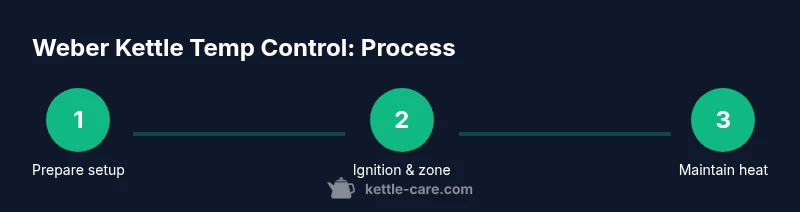
A practical cook plan combines the above principles into a repeatable routine. Start with a two-zone setup, preheat with the lid closed, and stabilize the target zone before placing food on the grill. Monitor temperatures every 5–10 minutes, adjusting vents and adding fuel in small increments as needed. With patience and practice, you’ll develop a sense for how your kettle responds to changing conditions, allowing you to reproduce consistent results across cooks.
- content-creation-
Tools & Materials
- Weber kettle grill (18-22 inch)(Original round kettle; ensure a stable surface and functioning vents.)
- Charcoal briquettes or lump charcoal(Your choice affects heat and airflow; lump generally lights quickly and stacks well.)
- Chimney starter(Efficient lighting without chemicals; yields uniform ignition.)
- Long-handled tongs(Safe handling of hot coals.)
- Digital lid thermometer(Checks grill temperature; if your lid lacks a thermometer, use an external one.)
- Instant-read meat thermometer(For accurate internal temps of food.)
- Water pan (steel or aluminum)(Optional for temperature stabilization and moisture.)
- Heat-resistant gloves(Protection when handling hot components.)
- Spray bottle with water(Control flare-ups and moisture as needed.)
- Grill brush and ash removal tool(Keep vents and grates clean for consistent airflow.)
Steps
Estimated time: 60-90 minutes
- 1
Prepare your kettle and fuel
Place the kettle on a stable surface. Remove loose ash and ensure vents are accessible. Gather your tools and fuel so you’re not scrambling mid-cook. This upfront setup reduces heat surprises and helps you maintain consistent airflow.
Tip: Lay out tools nearby before lighting to avoid delays. - 2
Light the charcoal with a chimney starter
Fill the chimney starter and ignite it away from the grill. Let the coals burn until they are glowing and covered with a light gray ash, which signals ready-for-use heat. This produces a more even burn than loose lighting.
Tip: Wait for an even gray ash coat for uniform ignition. - 3
Create a two-zone setup
Push hot coals to one side to form a high-heat zone, leaving the other side cooler for indirect heating. Place the grate in place and ensure food will sit over the cooler zone if needed. This two-zone setup is essential for controlled cooking.
Tip: Two-zone layouts give you flexibility to sear and finish with indirect heat. - 4
Place a water pan (optional)
Set a water pan on the cool side to act as a heat sink and moisture source. Fill the pan with water or broth for added humidity. This helps dampen temperature spikes during long cooks.
Tip: A preheated water pan reduces lag in heat response. - 5
Establish initial vents to set the target zone
Adjust the bottom vent to feed the fire and the top vent to exhaust. Start with a moderate opening and tighten gradually to reach your target zone. Close the lid, then wait a few minutes for readings to settle.
Tip: Small vent adjustments produce the smoothest temperature changes. - 6
Monitor the temperature with the grill thermometer
Read the lid thermometer after a 5–10 minute settle. If readings diverge from target, revise vent positions in small increments. Keep lid closed as much as possible to preserve heat.
Tip: Trust readings after the system has stabilized. - 7
Add fuel in small increments to stabilize
If the temperature drifts down, add a few more charcoal pieces rather than a full fuel dump. Recheck the temperature after 5–8 minutes to ensure stability and avoid spikes.
Tip: Avoid large fuel dumps which cause temp spikes. - 8
Maintain airflow with lid management
Keep the lid on during cooking whenever possible; lift only briefly for checks. Use the vents to fine-tune heat without losing too much heat. This reduces swings and improves consistency.
Tip: Minimal lid lifts preserve stable temps. - 9
Finish and shut down safely
When the cook ends, close the vents to starve the fire, keep the lid on to let residual heat finish cooking, and allow the grill to cool completely before cleaning. Dispose of ashes safely.
Tip: Always cool completely before storage.
Frequently Asked Questions
What is the best way to start a Weber kettle for temperature control?
Begin with a clean kettle, clear vents, set up a two-zone fire, and light charcoal using a chimney starter for even ignition. Verify the thermometer reads accurately before you cook.
Start with a clean kettle, clear vents, set up two-zone fire, and light with a chimney starter for even heat.
Can I use a water pan to stabilize temps on all cooks?
A water pan helps stabilize temps during longer cooks and adds moisture. It’s optional for quick grilling but valuable in longer sessions or windy days.
A water pan helps stabilize temps during long cooks and adds moisture.
How do I know if my thermometer is accurate?
Compare your grill lid thermometer to a trusted instant-read thermometer or reference chart. Calibrate if needed and check readings before each cook.
Test it against a trusted thermometer and recalibrate when needed.
What are common temperature mistakes to avoid?
Avoid overloading fuel, lifting the lid too often, and ignoring wind, which can all cause temperature swings.
Don’t overload fuel, don’t keep the lid up, and shield from wind.
Is it safe to open the lid during cooking for checks?
Open briefly only when needed; each lift lets heat escape and shifts temps. Plan checks to minimize openings.
Only open briefly; every lift causes heat loss.
How should I clean and maintain the Weber kettle for temperature control?
Regularly remove ash, inspect vents for obstructions, and perform light cleaning after cooks. Cover the grill when not in use to protect it from weather.
Keep it clean and vent-free to maintain stable temps.
Watch Video
Highlights
- Master airflow for steady temperatures
- Use a water pan to stabilize heat
- Pace fuel additions to avoid spikes
- Calibrate thermometers regularly
- Practice vent control under varying conditions