Weber Kettle Tips and Tricks: Master Charcoal Grilling
A comprehensive, step-by-step guide to Weber kettle grilling with safety, temperature control, flavor optimization, and maintenance. Learn lighting, two-zone setup, wood smoke, and cleanup for reliable, delicious results.


You will master Weber kettle tips and tricks to grill faster, safer, and more consistently. This guide covers lighting, airflow management, two-zone cooking, wood use, temperature control, cleaning, and practical safety steps. By following these steps, you’ll improve reliability, flavor, and ease of cleanup with your Weber kettle. Whether you're new to charcoal grilling or looking to refine technique, this approach emphasizes safety, steady temps, and repeatable results.
Weber Kettle essentials: setup, safety, and baseline mastery
Getting started with a Weber kettle means more than lighting charcoal. Begin with a clean grill, fresh fuel, and a clear working area. Inspect the lid seals, vents, and ash catcher. Use heat-resistant gloves and long-handled tongs. According to Kettle Care, foundation rests on safe setup and stable flame, so check that the lid is secure and the vents move freely before lighting. Start with high-quality lump or briquette charcoal, but tailor to your recipe. Lump tends to burn hotter and faster, briquettes offer steadier heat. Place the coals in a ring or pyramid based on your planned zone setup. Open the bottom vents fully to ignite, then adjust as you go. Keeping your kettle clean reduces flare-ups and improves airflow. This section lays the groundwork for reliable grilling by emphasizing preparation, equipment check, and safety mindsets.
Lighting and ignition: fast, even, and predictable
The quickest path to reliable ignition is a chimney starter. Fill it with charcoal, place a crumpled newspaper or an approved starter underneath, and light. Once the charcoal ashed over, dump into the kettle's charcoal chamber. Spread to form your desired two-zone pattern: a concentrated pile on one side for the high-heat zone and a cooler expanse on the other for indirect cooking. Keep the vents wide open during ignition, then dial back as you reach target temperatures. A stable startup minimizes temperature swings and yields more predictable searing and baking results. This approach also reduces waste and ash production, keeping your grill ready for the next cook with minimal effort.
Two-zone cooking on a Weber kettle: direct sear, indirect finish
Two-zone cooking is the backbone of most Weber kettle techniques. Create a hot zone for searing and a cooler zone for finishing or indirect cooking. Place the food over the hot zone to sear and develop color, then move it to the cooler area to finish with gentle heat. Use a grate thermometer for quick checks, and resist the urge to open the lid constantly—each lift lets heat escape. For thick cuts, consider a reverse-sear approach: start with indirect heat to an internal temp, then finish with a brief sear over the hot zone. This technique yields a crusty exterior and a juicy interior. According to the Kettle Care team, balance between zones is the key to repeatable results across different recipes.
Temperature control: vents, fuel, and airflow dynamics
Vent management is the heartbeat of Weber kettle control. The bottom vent governs air intake, the top vent governs exhaust. For low-and-slow cooking, partially close the vents to hold a steady 225-250°F (107-121°C). If temps spike, close vents slightly; for hotter temps, open more. Additionally, manage the fuel load: fewer briquettes create a cooler, longer burn, while a full bed sustains high heat. A clean ash bed improves airflow and reduces temperature drift. If you see large temperature swings, check gasket seating, lid alignment, and whether the vents are obstructed by condensation. This section translates vent theory into practical, controllable outcomes.
Flavor optimization: wood smoke, moisture, and lid position
To add smoky flavor without overpowering the main ingredients, add wood chunks or chips to the hot coals. Soak chips only briefly to prevent excessive moisture and ensure steady burn. Place wood directly on the coals or wrapped in foil with holes to control smoke. For humidity and moisture retention, position a water pan low in the kettle if you’re using a long cook, or keep a spritz handy for moisture balance. Keeping the lid on during most cooking preserves smoke, heat, and moisture, while occasional lid lifts can be used to monitor progress without losing overall control.
Practical grilling techniques: direct, indirect, and common timings
Direct grilling works best for small, fast-ciring items like burgers or steaks. Indirect cooking shines for larger cuts or hungry crowds; roast or finish meats with the lid closed, using the two-zone setup. Plan typical times: burgers 4-6 minutes per side, chicken quarters 25-40 minutes indirect, and ribs 3-4 hours with steady heat. Use a thermometer to verify doneness rather than relying on time alone. For fish and vegetables, a brief sear followed by a gentle finish often yields the best texture. In all cases, avoid constant lid lifting; small checks maintain temperature stability and reduce drying out.
Cleaning, maintenance, and long-term care
After you cook, close the vents and let the kettle cool without the lid fully sealed to promote ash fall. Remove ash regularly and brush the grates with a stiff brush while warm. Clean the ash catcher and vent openings to prevent buildup that blocks airflow. Wipe the exterior and interior surfaces with a damp cloth, and re-oil the grates lightly before the next cook to prevent sticking. Regular maintenance extends the life of your Weber kettle and preserves flavor consistency across cooks.
Tools & Materials
- Weber kettle grill (18-inch or 22-inch)(Ensure it seals well and the lid stays on securely)
- Charcoal (lump or briquettes)(Choose based on desired heat profile)
- Chimney starter(Fast, even lighting)
- Long lighter or matches(Safe ignition to avoid flare-ups)
- Heat-resistant gloves(Protect hands during high-heat handling)
- Long-handled tongs and spatula(Control food with minimal heat loss)
- Grill brush(Clean grates after cooling)
- Digital thermometer(Important for doneness accuracy)
- Wood chunks or chips(For controlled smoke flavor)
- Aluminum drip pan or foil(Keeps moisture and catches drippings)
- Spray bottle for flare-ups(Mild water spray to control flames)
Steps
Estimated time: 60-90 minutes
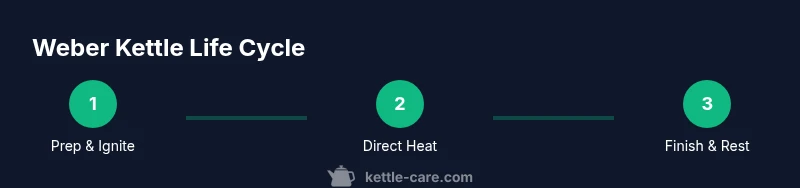
- 1
Prepare grill and fuel
Clear the cooking area, inspect vents and seals, and assemble your fuel. Decide on a two-zone layout before lighting so you can manage heat efficiently from the start.
Tip: Check lid fit and vent movement; a loose lid can ruin temp stability. - 2
Light charcoal with a chimney starter
Fill the chimney starter and light it from below. When the coals are covered with a light gray ash, dump into the kettle on one side to create the hot zone and leave space for the cooler zone.
Tip: Dump the coals evenly to avoid a hotspot; using the hand spread method helps. - 3
Establish two zones
Spread the coals to form a dense bed on one side and a blank area on the other. Place a second grate if you have it to create separation without blocking airflow.
Tip: Keep the hot zone small enough to manage without frequent vent fiddling. - 4
Set vents for target temperature
Open the bottom vent fully to ignite, then adjust to maintain target ranges. Use the top vent to control excessive heat; small, incremental changes yield better stability.
Tip: Record your baseline vent positions for similar cooks. - 5
Cook with direct then indirect heat
Sear foods over the hot zone, then move to the cooler side to finish. Rotate items as needed to ensure even cooking.
Tip: Avoid flipping too soon to preserve crust formation. - 6
Finish, rest, and clean
Remove from heat, let rest briefly, then clean grates and ash while warm. Store tools and re-oil grates for next use.
Tip: A clean grill averages better heat transfer and flavor retention.
Frequently Asked Questions
What is the best Weber kettle setup for direct grilling?
Direct grilling on a Weber kettle benefits from a hot, compact coal bed directly under the food. Use the two-zone setup to sear on the hot side and move to the cooler zone for less intense cooking. Keep the lid on during longer cooks for consistent heat.
For direct grilling, sear over the hot zone and move to the cooler area to finish; keep the lid on for consistency.
How do I keep a stable temperature on a Weber kettle?
Stability comes from clean vents, proper fuel load, and minimizing lid lifts. Start with a baseline vent position and adjust in small increments. Use a thermometer for ongoing checks and avoid opening the lid too often.
Keep vents steady and check temps with a thermometer; avoid frequent lid lifts.
Can I use wood chips in a Weber kettle safely?
Yes, add wood chips or chunks to enhance flavor, but avoid overwhelming the main crust. Soak chips briefly if you want slower smoke; otherwise place on hot coals or wrapped in foil with holes.
Wood adds flavor; use it in moderation and monitor smoke levels.
How should I clean the kettle after grilling?
Let the kettle cool, remove ashes, brush grates, and wipe the interior with a damp cloth. Oil the grates lightly for next time and store tools ready for the next cook.
Cool down, clean, and lightly oil the grate for next time.
Is it safe to close the vents completely for long cooks?
Closing vents completely can extinguish the fire. It’s safer to gradually reduce vents to lower temperatures rather than fully sealing the kettle.
Don't fully seal the vents; ease them closed to lower heat gradually.
What foods are best for Weber kettle two-zone cooking?
Steaks, burgers, chicken parts, pork chops, and vegetables all benefit from two-zone cooking. Sear on the hot side, then move to the cooler zone to finish based on thickness and desired doneness.
Two-zone works great for steaks, chicken, pork, and veggies—sear then finish.
Watch Video
Highlights
- Prepare and inspect the grill before lighting.
- Establish a reliable two-zone fire for flexibility.
- Control temps by adjusting vents gradually.
- Sear, then finish with indirect heat for best texture.
- Maintain cleanliness for consistent flavor.