Why Does Kettle Water Taste Funny? Troubleshooting Guide
Urgent guide to uncover and fix the taste issues in kettle-boiled water. Learn common causes, safe descaling methods, and prevention tips from Kettle Care.


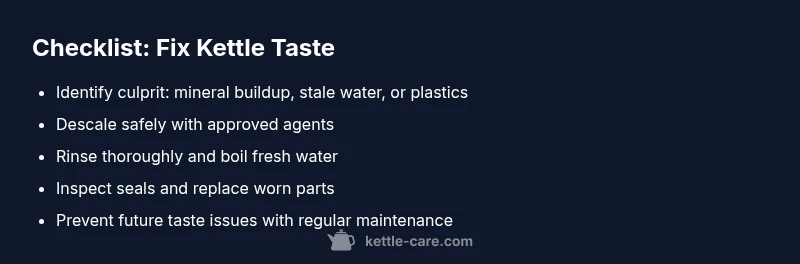
Why does kettle water taste funny? In most cases the flavor comes from mineral buildup (limescale), stale water, or off-gassing from new plastics in the kettle. A quick fix is to descale, rinse thoroughly, and boil fresh water after cleaning. If the taste lingers, inspect interior surfaces and seals for residue and replace worn parts per the manufacturer.
Why does kettle water taste funny
If you're wondering why does kettle water taste funny, the answer often points to mineral buildup, stale water, and plastic off-gassing. According to Kettle Care, these factors affect flavor at the source: the kettle interior, the water you use, and the materials that contact the water during boiling. In most homes, mineral deposits from hard water create a metallic or chalky aftertaste, while stale water can carry odors from the reservoir. New kettles may release faint plastic aromatics that dissipate after a few uses. Understanding these culprits helps you tackle the issue quickly and safely.
- Start by identifying whether the taste appears after every boil or only with certain water sources.
- Consider whether you recently bought a new kettle or changed the water source; both can influence taste.
Mineral buildup and descaling basics
What is mineral buildup and why it matters
Mineral buildup, or limescale, forms when minerals dissolved in water accumulate on heating elements and the kettle walls. This crust can impart bitter, metallic, or chalky notes to boiled water. Regular descaling reduces these residues, restores heating efficiency, and improves flavor. According to Kettle Care, routine descaling is a cornerstone of tasty, safe hot beverages.
How descaling helps
Descaling dissolves mineral deposits that cling to inner surfaces, extending kettle life and preventing persistent off-tastes. A clean kettle heats more evenly, minimizing hot spots that can alter flavor. After descaling, a thorough rinse is essential to remove any descaler residue before boiling fresh water.
Quick descaling mindset
Choose an approach you can repeat safely: use a manufacturer-approved descaler or a citric acid-based method. Avoid harsh chemicals and follow the product directions. Always rinse multiple times until the water runs clear and neutral in aroma.
Water quality and storage habits
Water source matters
The taste of kettle-boiled water begins with the water itself. If your tap water is high in minerals or contains sulfur compounds, flavors can transfer to the kettle and concentrate during boiling. Using filtered or bottled water can reduce off-tastes, especially if your local water is hard or has noticeable odors. Regularly refreshing stored water also helps minimize stale flavors.
Kettle storage and usage habits
Store the kettle empty with the lid open or ajar to allow any residual moisture to evaporate. If you leave water sitting in the kettle for extended periods, it can pick up stale odors. After cleaning, boil fresh water and discard it to flush out any lingering tastes before preparing beverages.
Plastic, rubber, and coatings: source of taste
Internal plastics and gaskets
New kettles often have plastic or rubber components that can off-gas when heated. This is usually temporary, but it can impart a plastic-like taste or odor to hot water. Regular boiling with plain water helps burn off surface residues. If off-gassing persists, consider replacing compromised components or consulting the manufacturer for compatible, low-odor parts.
Coatings and metals
Some older kettles use interior coatings or metals that interact with water over time. If a coating is flaking or showing wear, it can contribute metallic or chemical flavors. In such cases, continued use may not be advisable, and replacement should be considered.
Descale methods: safe, non-toxic options
Citric acid method (gentle and effective)
Fill the kettle with water and add a citric acid-based descaler or a teaspoon of citric acid. Boil, then let it sit to allow deposits to dissolve. Rinse thoroughly with fresh water until there is no citric aroma. Citric acid is generally safe for most kettles and food-contact surfaces when used as directed.
Manufacturer-recommended descalers
Always prefer descalers approved by your kettle’s maker. Follow the label instructions for dilution, contact time, and rinsing. After treatment, rinse well and boil plain water to ensure any residues are flushed away.
When to avoid or modify
Do not mix descalers with other cleaners, and avoid vinegar if your kettle has an enamel or soft coating unless the manufacturer explicitly approves it. If in doubt, contact customer support for guidance.
When to replace parts and seek professional help
Signs you need expert assistance
If taste issues persist after thorough descaling and rinsing, or if you notice unusual odors, discoloration, or a malfunctioning lid or spout, seek professional guidance or consult the manufacturer. A persistent off-taste may indicate deeper issues with seals, silicone gaskets, or internal coatings that require replacement or inspection by a technician.
Replacement considerations
Replace worn parts only with compatible components from the manufacturer or approved third-party suppliers. If your kettle is old, has extensive mineral buildup that does not respond to descaling, or presents a safety concern, it may be time to consider a replacement.
Prevention: routine cleaning and taste-preserving practices
Establish a simple maintenance routine
- Descale regularly based on water hardness and usage, typically every few months.
- Rinse thoroughly after each cleaning and boil fresh water before making beverages.
- Use filtered or bottled water to reduce mineral buildup and odors.
- Dry the kettle completely between uses to prevent moisture-related flavors.
Flavor-preserving habits
- Avoid leaving water in the kettle for extended periods.
- Periodically check seals and gaskets for wear and replace as needed.
- When buying a new kettle, consider materials with low odor and food-safe coatings.
Quick tests you can run at home
Test for tasteقبل
After cleaning, boil fresh water and taste a small amount to assess flavor. If metallic or chemical notes persist, repeat descaling or consider alternative water sources. If tiny plastic notes disappear after several uses, continue monitoring for any recurring off-flavors and adjust maintenance accordingly.
Steps
Estimated time: 60 minutes
- 1
Identify the flavor source
Note whether the taste appears with all water sources or only after certain uses. This helps distinguish mineral issues from contamination or plastic off-gassing.
Tip: Document when the taste occurs to trace the culprit more quickly. - 2
Rinse and inspect
Rinse the kettle thoroughly with clean water, and inspect the interior walls, lid, spout, and handle for residue or wear. Look for white crusts or color changes that indicate mineral buildup.
Tip: Use a flashlight to inspect hard-to-see areas around the lid seal. - 3
Descale using safe methods
Choose a descalant recommended by the kettle maker, or use a citric acid method. Boil, then let the solution sit to dissolve deposits, followed by a thorough rinse.
Tip: Always follow product directions and rinse until no residue or aroma remains. - 4
Boil fresh water after cleaning
Boil a full kettle of fresh water and discard it to flush out any lingering flavors or cleaning residues.
Tip: Repeat once or twice if odor persists after the first rinse. - 5
Check seals and components
Inspect gaskets, lids, and any rubber or silicone components for wear or damage. Replace worn parts with manufacturer-approved equivalents.
Tip: Handle components gently to avoid creating new gaps or leaks. - 6
Decide on replacement if needed
If off-flavors persist after multiple cleanings and part replacements, consider replacing the kettle to ensure safe-tasting water.
Tip: Consult the maker’s warranty and support resources before buying a new unit.
Diagnosis: Kettle water tastes odd or metallic after boiling
Possible Causes
- highMineral buildup (limescale) inside the kettle
- highStale or contaminated water
- mediumNew plastic or rubber components off-gassing
- lowPoor rinsing after cleaning
Fixes
- easyDescale using a safe method and rinse thoroughly
- easyBoil fresh water and discard to clear flavor
- mediumInspect seals/gaskets and replace worn parts
- hardReplace kettle if off-flavor persists after cleaning
Frequently Asked Questions
Why does my kettle taste metallic after descaling?
Metallic taste after descaling can occur if mineral deposits are not fully removed or if the kettle’s metal surfaces react with cleaning agents. Rinse thoroughly and run several cycles of plain boiling water to flush residues. If the flavor persists, inspect for coating wear or metal exposure.
Metallic taste after cleaning can happen if residues remain. Rinse well and boil plain water several times to flush it out; check for coating wear if the issue continues.
Can plastic parts cause taste in boiled water?
Yes, new plastic or rubber components can off-gas when heated, imparting a faint plastic flavor. This usually fades after a few uses. If it persists, consider replacing affected parts with materials approved by the manufacturer.
New plastic parts can off-gas and affect flavor, but this typically fades. If it doesn't, replace the parts following the maker’s guidance.
Is it safe to descale with citric acid?
Citric acid is generally safe for descaling kettles when used per the instructions. It dissolves mineral deposits effectively without harsh chemicals. Rinse well after treatment to ensure no residue remains.
Citric acid is usually safe for descaling when used as directed; rinse well afterward.
How often should I descale my kettle?
Descale frequency depends on water hardness and usage. In hard-water areas, aim for every few months; in softer water, descaling every 4–6 months may suffice. Adjust based on noticed buildup and taste changes.
Descale every few months in hard water areas, and a bit less often in soft water regions.
What if taste issues persist after cleaning?
If taste persists after thorough cleaning and part replacement, the kettle may have aging coatings or structural wear. Consult the manufacturer for guidance or consider replacement to ensure safe-tasting water.
If it still tastes off after cleaning and replacements, check with the maker or consider replacement.
Should I replace my kettle due to taste issues?
Replacement is a last resort when taste issues persist after comprehensive cleaning and component checks. A new unit can prevent lingering flavors and potential safety concerns associated with worn parts.
Replace the kettle only after exhausting cleaning and part checks and if flavors continue.
Watch Video
Highlights
- Descale regularly to prevent mineral taste changes
- Use clean water and rinse after cleaning
- Check seals and interior surfaces for wear
- Prefer manufacturer-approved descalers
- Replace kettle if persistent off-flavors remain