Why Does My Kettle Keep Boiling Over? A Troubleshooting Guide
Learn why your kettle keeps boiling over and how to fix it safely. This practical guide covers overfill, mineral scale, vent blockages, and prevention tips from Kettle Care.


Most boil-overs come from overfilling, mineral buildup, or blocked vents. Quick fixes: stop filling above the max line, descale if needed, and ensure the lid vent isn’t blocked. If it keeps boiling over, test a different kettle and check your water quality.
Why kettles boil over and how to prevent it
According to Kettle Care, boil-overs are most often caused by the common trio of overfilling, mineral buildup inside the kettle, and blocked venting through the lid or spout. When water heats, dissolved minerals such as calcium and magnesium can form foam that foams up faster than steam can escape. If you fill past the maximum line or if minerals have created a slick residue on the interior, foam becomes unstable and spills over the rim. The good news is that most overboil events are preventable with a few routine checks and simple maintenance steps. Start with the basics: keep water below the max line, and make sure the lid and venting work freely. Small changes now save spills later—and improve safety for you and your family.
Common Triggers in Daily Use
The most frequent triggers are easy to identify once you know what to look for. Overfilling remains the top culprit: a full kettle has less headspace for steam, so a vigorous boil can push boiling water out of the kettle. Mineral buildup (limescale) changes the surface tension of water, promoting foaming rather than smooth boiling. A blocked vent or a misaligned lid prevents steam from escaping efficiently, which can create extra pressure that pushes water out the spout. Finally, using hard water or repeatedly boiling and reboiling water without cleaning accelerates mineral deposits and foaming. By understanding these triggers, you can proactively avoid boil-overs with routine care and smarter usage patterns.
Diagnostic Checklist You Can Do Now
- Check the water level: Make sure you are not exceeding the max fill line. Use a measuring cup if you’re unsure. 2) Inspect the interior: Look for a white crust or tint—this is mineral buildup (limescale). If you see scale, descaling is needed. 3) Inspect the lid vent: Ensure the vent is clear and not blocked by debris or sealing gaskets. 4) Observe the boil: Use fresh water for a test boil and watch whether the kettle boils over even at a normal level. This quick audit helps identify whether the issue is fill level, scale, or venting. 5) Consider water quality: If you consistently see mineral buildup, your water may be hard; consider descaling more often or using filtered water for boiling.
Step-by-Step Troubleshooting for Overboiling
- Stop and unplug the kettle. Remove it from the base and take out any removable parts. 2) Empty water and wipe interior with a clean cloth to remove visible scale. 3) Descale using a vinegar-water solution or a commercial descaler; fill to just below the max line, boil, and then rinse thoroughly with clean water, repeating until all odors are gone. 4) Refill with fresh water and perform a test boil without adding anything else. 5) Inspect the vent and lid for obstructions and secure seating. 6) If the problem persists, try a different kettle or contact the manufacturer for warranty guidance.
Prevention and Maintenance to Stop It Happening
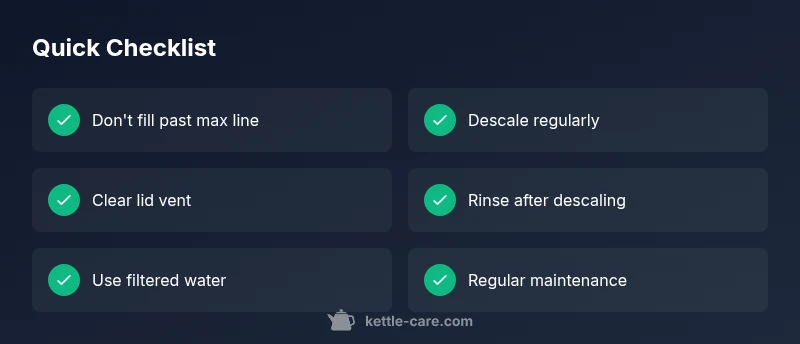
Develop a simple maintenance routine to keep boil-overs at bay. Descale every 1–3 months depending on water hardness, and after every few uses if you notice scale or foam. Clean interior surfaces with a non-abrasive sponge to remove mineral buildup. Always fill to the max line to leave adequate space for vigorous boils and ensure the lid vent remains clear for steady steam release. Consider using filtered water for boiling to reduce mineral content and foam formation. Regular maintenance not only prevents spills but extends the life of your kettle.
Safety and Quick Safety Checks
Always unplug the kettle before cleaning, and never attempt to open the lid while boiling. Use oven mitts if you need to handle a hot kettle. Keep children and pets away from the kettle when in use to avoid burns. If your kettle is damaged or you notice unusual smells, stop using it and seek professional help or consider replacement.
Steps
Estimated time: 15-25 minutes
- 1
Check water level against max line
Unplug the kettle, remove it from the base, and verify the water level sits below the max mark. If needed, drain a portion to reach the line. Refill carefully for a safer boil.
Tip: Use a measuring cup for precision and avoid guessing. - 2
Descale and clean interior
If you notice white or chalky deposits, prepare a descaling solution and gently scrub interior surfaces. Boil a short cycle with the solution, then rinse thoroughly with fresh water. Repeat if odor or residue persists.
Tip: Do not mix vinegar with other cleaners. - 3
Inspect lid vent and spout
Check that the vent is unobstructed and that the lid seats properly. Remove any debris that blocks steam escape. A blocked vent often causes extra pressure and spills.
Tip: Clear vent with a small brush or toothpick, never force tight seals. - 4
Test with fresh water
Boil a fresh batch of water and observe for a repeat boil-over. If it occurs even with proper fill and no scale, test with a different kettle to determine if the issue is device-specific.
Tip: Keep a log of test results to identify patterns.
Diagnosis: Kettle boils over frequently during normal use
Possible Causes
- highOverfilling past the max fill line
- mediumMineral buildup inside the kettle (limescale)
- lowVent or lid blockage preventing proper steam release
Fixes
- easyAlways fill water to the max line; avoid overfilling
- easyDescale the kettle using vinegar solution or a descaler, then rinse thoroughly
- easyClean or replace the lid vent; ensure it can vent freely
Frequently Asked Questions
Why does my kettle keep boiling over?
Boil-overs are usually caused by overfilling, mineral scale buildup, or vent blockages. Start by ensuring the water level stays below the max line, then descale, and finally check the venting. If it persists, test with a different kettle.
Kettle boil-overs are typically due to overfill, scale buildup, or vent issues. Try the max-fill check and descaling first, then inspect the vent.
Is it dangerous if a kettle boils over?
Boiling over can cause burns and spills, and wastes energy. It’s a warning sign to inspect fill level, scale, and venting. Always unplug and let the kettle cool before handling.
Boiling over can burn you and waste energy; unplug and wait for it to cool before touching.
How do I descale my kettle safely?
Fill with a vinegar-water mix or a commercial descaler, bring to a boil, and then rinse multiple times with fresh water until no odor remains. Regular descaling reduces foam and extends kettle life.
Descale with vinegar or descaler, boil, then rinse thoroughly until no odor remains.
Can minerals in water cause foaming?
Yes. Minerals like calcium can promote foaming and scale buildup. Descale to reduce foaming and use filtered water if your water is very hard.
Minerals can cause foaming; descaling and filtering helps reduce it.
When should I replace a kettle due to boil-overs?
If boil-overs persist after thorough cleaning and descaling, and the appliance shows signs of damage or ineffective performance, it may be time to replace it. Consider warranty options and safer models.
If problems persist after cleaning and descaling, replacement is sensible.
Watch Video
Highlights
- Fill to the max line every time.
- Descale regularly to prevent foaming and spills.
- Keep the lid vent clear for safe steaming.
- Test with fresh water after maintenance.
- If boil-overs persist, consider replacement.