Why is My Kettle Not Whistling? Quick Troubleshooting Guide
Struggling with a kettle that won't whistle? This practical guide from Kettle Care walks you through quick fixes, descaling, and safety steps to restore a proper whistle and fast boil.


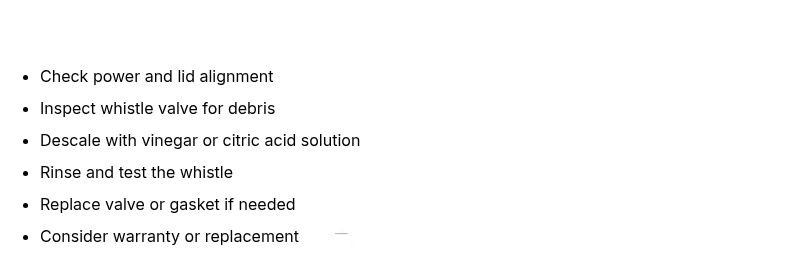
The most common reason your kettle isn’t whistling is mineral buildup on the whistle valve or a partially blocked spout. Start with a safety check, unplug the kettle, then descale and inspect the whistle cap. If the problem persists, replace the whistle valve or lid gasket. Also verify the water level is correct and the lid sits firmly in place before boiling.
Understanding the problem and why it happens
If you’re asking why is my kettle not whistling, you’re not alone. The whistle sound is a tiny vent that signals safe boiling, but it can fail for several reasons. Most kettles rely on a whistle valve that opens when water boils and pressure builds; when mineral scale or a misaligned cap blocks this path, the whistle stays silent or sounds weak. According to Kettle Care, mineral buildup remains the top culprit in many kitchens. For safety, unplug the kettle before inspecting any parts, then follow this guide to diagnose quickly and safely so you can restore the whistle and maintain efficient boiling.
Basic checks you should perform first
Before you take anything apart, run through the basics. Ensure the unit is unplugged and completely cool before touching hot surfaces. If you’re working with an electric kettle, confirm the base is dry and the power outlet is functioning. Make sure the lid is fully closed and aligned; a loose lid can suppress steam and diminish the whistle. Check the water level; too little water or boiling dry can affect whistle operation. Finally, inspect the spout for visible debris or mineral clumps that could block the exit. These quick checks catch most simple causes.
Inspect the whistle mechanism and lid assembly
Next, focus on the whistle valve and its cap. A blocked, corroded, or worn valve will often prevent the whistle from sounding even when water is boiling. Remove the lid if safe and examine the valve cap and gasket for cracks or wear. Look for white mineral crusts on the valve or around the cap—these indicate limescale buildup that can mute the whistle. If you see debris, rinse or wipe it away with warm water. If the valve feels loose or rattles, you may need to replace the cap or gasket to restore a proper seal. Kettle Care analysis confirms this is a frequent failure point.
Descale and clean safely
Descaling is usually the quickest fix for a non-whistling kettle. Use a safe solution such as a 1:1 water-to-vinegar mix, or a commercial descaler following the manufacturer’s directions. Bring the solution to a boil, then let it work for the recommended time before rinsing thoroughly with fresh water. If you prefer, you can use citric acid: dissolve 1–2 tablespoons in a liter of water, boil, and rinse. Repeat rinsing until there is no vinegar or acid taste. Avoid abrasive tools that could scratch the whistle mechanism, and never mix cleaners that could create harmful vapors.
When to replace parts or retire the kettle
If descaling and cleaning do not restore the whistle, you may be dealing with a worn valve, damaged gasket, or a malfunctioning lid switch. Inspect the whistle valve for corrosion or a cracked cap and replace if needed. Check the lid interlock and gasket—these wear with time and can silence the whistle or prevent safe venting. If the kettle is old or still under warranty, contact the manufacturer for a replacement part or service. In some cases, replacing the kettle is more cost-effective than ongoing repairs, especially if other performance issues persist (speed of boil, energy use, etc.).
Steps
Estimated time: 25-40 minutes
- 1
Unplug and cool the kettle
Unplug the kettle and let it cool completely. Remove any cord from the base and place on a heat-proof surface. Wipe the exterior to avoid accidental contact with hot metal while inspecting internals.
Tip: Always unplug before handling hot parts. - 2
Check the lid and water level
With clean hands, verify the lid sits flush and the water level is appropriate for safe boiling. A mis-seated lid or too little water can prevent proper steam build-up that triggers the whistle.
Tip: Ensure lid alignment before proceeding. - 3
Inspect whistle valve for debris
Open the kettle and visually inspect the whistle valve and cap for cracks or blockages. Remove any mineral deposits gently using a soft brush or cloth. Rinse and reassemble.
Tip: Use a flashlight to peer into the vent. - 4
Descale using a safe solution
Prepare a descaling solution (1:1 water and white vinegar or a citric acid mix). Boil with the solution, then let it sit and rinse thoroughly.
Tip: Do not mix cleaners or use abrasive tools. - 5
Rinse, dry, and test
Rinse the kettle multiple times with fresh water to remove any residue. Dry completely, plug back in, and run a full boil to test the whistle. Listen for a clean, audible whistle.
Tip: Test with a small amount of water first. - 6
Decide on replacement or professional help
If the whistle still won’t sound, evaluate the cost of replacement parts versus a new kettle and whether it’s covered by warranty. Contact support for guidance.
Tip: Keep receipts and check warranty terms.
Diagnosis: Kettle won't whistle or whistle is muted
Possible Causes
- highMineral buildup on the whistle valve or spout debris
- mediumLoose or damaged whistle cap or gasket
- lowWater level incorrect or not submerging valve region
- mediumDefective lid switch or safety interlock (electric kettle)
- lowBlocked power supply or overheated kettle (rare)
Fixes
- easyDescale the kettle and clean the whistle area; remove visible debris
- easyTighten, replace, or reseal the whistle cap and gasket; ensure a proper seal
- easyVerify water level and ensure the valve region is wet during boiling
- mediumTest and, if needed, replace the lid switch or valve assembly
- hardIf unresolved, contact a repair service or consider replacement under warranty
Frequently Asked Questions
Why is my kettle not whistling after descaling?
Descaling removes mineral buildup, but some kettles still won't whistle if the valve is damaged or the cap gasket is worn. Inspect the valve and gasket, and consider replacing parts if cleaning didn't help.
Descaling helps, but if it still won't whistle, check the valve and gasket.
Do mineral deposits affect kettles of different materials differently?
Limescale can form on metal kettles and some glass kettles too, but metal valves are more commonly affected. Regular descaling helps both, but signs may vary.
Limescale builds on all kettles, but metal lids show more wear; descaling helps.
Is it safe to descale with vinegar?
Vinegar is safe for most kettles when diluted and rinsed thoroughly, but avoid prolonged soaking and never mix with bleach.
Yes, vinegar works when diluted and rinsed well.
When should I replace the kettle instead of fixing it?
If the whistle mechanism is worn or the kettle has other major issues, replacing may be more cost-effective, especially if under warranty.
If the parts are worn, replacement might be better.
How often should I descale a kettle?
Descale based on mineral hardness and use. In hard water areas, every 1–3 months is common; in softer water, every 3–6 months.
In hard water, descale every 1–3 months; in soft water, every 3–6 months.
My kettle won't turn on but the whistle worked before—could they be related?
Usually unrelated; a safety fuse or power issue could affect turning on, while the whistle mechanism is a separate vent; if both fail, check the power cord or base.
Power problems could be separate from the whistle.
Watch Video
Highlights
- Descale regularly to keep the whistle responsive
- Inspect the whistle valve and lid assembly for wear
- Test with water and safe techniques before deciding on replacement
- Follow warranty guidance before buying parts