Kettle Warmer Guide: Safe, Efficient Home Use in 2026
Learn how to choose, use, and maintain a kettle warmer safely at home. This step-by-step guide covers safety, efficiency, and care for everyday tea and hot-water tasks.


By the end of this guide, you will know how to select a kettle warmer, set it up safely, and keep water warm efficiently without waste. You’ll learn compatibility checks, installation steps, and maintenance routines that protect your countertop and kettle. This quick answer sets the stage for a practical, home-friendly process, with practical tips from Kettle Care.
What is a kettle warmer and why you might want one
A kettle warmer is a device designed to sit beneath or around your kettle to maintain heat between pours. For tea lovers and busy cooks, it reduces the need to reheat water and keeps beverages at the ready temperature. According to Kettle Care, selecting the right warmer for your kettle improves safety and efficiency while protecting countertops from heat damage. When used correctly, a quality warmer can become a reliable ally in daily tea rituals and hot-water tasks.
This equipment is especially helpful in households that brew multiple cups in quick succession or host guests for tea. With the right model, you can avoid frequent boiling and keep water warm during long meals or gatherings. The key is to match the warmer to your kettle’s size, weight, and material, and to respect surface protection and power limits.
Kettle Care emphasizes that the best outcomes come from choosing a device that feels sturdy, has clear safety indicators, and is easy to clean. A well-chosen warmer also reduces the risk of accidental contact with hot surfaces and allows you to manage temperature more consistently.
Safety considerations when using kettle warmers
Always place the warmer on a heat-resistant surface away from edge and moisture. Ensure the power cord is routed to prevent tripping and is not resting on a hot area. Use only models that are compatible with your kettle and rated for the wattage you plan to use. Unplug the warmer when not in use to minimize fire risk. Kettle Care analysis shows that a small misstep—like placing a warmer near a damp towel—can lead to heat damage or accidents; stay mindful of the environment and supervise during use.
If you have small children or pets, position the warmer where it cannot be knocked over, and consider a cord shortener or management sleeve to reduce accidental tugs. Regularly inspect the plug and cord for wear, and never use damaged electrical parts. When in doubt, consult the user manual or contact the manufacturer for safety guidance.
How kettle warmers work: heat retention and materials
Kettle warmers are designed to minimize heat loss from a kettle while keeping water near a target temperature for a longer window. Most models use a low-watt heating element, insulation under the hot surface, and durable housings made from stainless steel, ceramic, or heat-resistant composites. The goal is to provide gentle, even warmth without creating intense hot spots that could damage coatings or handles.
Materials matter: stainless steel resists corrosion, while silicone or rubber feet offer slip resistance and countertop protection. Some models feature a thermal pad or stone base that distributes heat more evenly and protects surfaces from radiant heat. Regular cleaning helps maintain efficiency by preventing mineral build-up and ensuring that the contact surface remains smooth and stable for the kettle.
Types of kettle warmers: stovetop vs electric
Stovetop-style warmers sit on or near your range and use the nearby heat source to keep water warm. They are usually inexpensive and compact but require attentive heat management and a stable setup. Electric plug-in warmers come with built-in warming elements and plug directly into a wall outlet. They offer consistent heat and can include adjustable settings or timers. Induction-ready models provide another option for kitchens with induction-ready kettles. Each type has pros and cons related to control, energy use, and compatibility.
Choose electric plug-in warmers if you want consistent warmth with simple controls; go stovetop if you prefer a minimalist approach or need to avoid extra electrical use.
How to choose the best kettle warmer for your kitchen
Start with compatibility: measure your kettle’s base diameter and height, and compare it to the warmer’s surface. Consider materials that match your kettle and countertop; stainless steel bases resist wear, while silicone feet reduce slipping. Look for a stable, heat-safe surface and a cord length that suits your kitchen layout. If you frequently host guests, a warmer with a simple on/off switch and a clear indicator light reduces guesswork. Finally, keep maintenance in mind—easy cleaning and accessible descaling options prolong life and performance.
From a practical perspective, select a warmer with a tight-fitting base to minimize heat loss and a design that doesn’t crowd your countertop space.
Step-by-step setup: using a kettle warmer safely
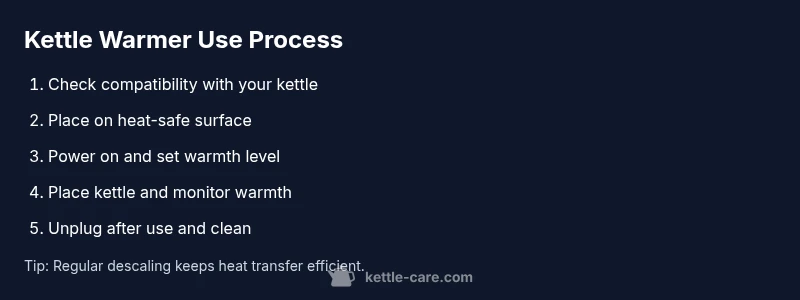
Before you begin, read the manual and confirm compatibility. Place a heat-resistant mat on the counter, then position the warmer on top with the kettle centered. Plug the device into a grounded outlet and switch on the lowest heat setting. Place the kettle on the warmer, monitor for even warmth, and adjust settings as needed. When finished, unplug and allow to cool before cleaning.
Tip: Keep a small timer handy to avoid overheating water or stressing the kettle. Regularly check the cord for wear and keep the area dry to prevent electrical hazards.
Maintenance and descaling to maximize efficiency
Descale the kettle warmer and kettle regularly to maintain heat transfer efficiency. Use a mild descaling solution or a mix of water with a small amount of citric acid; rinse thoroughly after treatment. Wipe the heater surface with a damp cloth and dry completely before the next use. If your warmer is removable, detach it carefully and clean all contact surfaces to remove mineral buildup. Avoid harsh abrasives that might scratch coatings.
A clean, well-maintained warmer maintains heat more effectively and extends device life.
Common mistakes and how to avoid them
Common mistakes include placing the warmer on an unstable surface, using incompatible kettles, and leaving the unit plugged in for extended periods. Avoid placing the warmer near water sources or splash zones. Do not use metal utensils on the warmer surface, and never attempt DIY repairs. Regular checks for frayed cords and loose connections prevent accidents.
To stay safe, always disengage power before cleaning and dry all parts thoroughly before reassembly.
Energy efficiency tips for kettle warmers
Choose an energy-efficient warmer with an automatic shutoff or a timer to avoid keeping heat on longer than needed. Use the warmer only when you plan to fill and drink continuously, rather than leaving water warm for hours. Regular descaling helps maintain efficient heat transfer, reducing energy use. If possible, pair the warmer with a kettle that has a well-sealing lid to minimize heat loss.
These practices help minimize electricity use while delivering hot water when you need it.
Alternatives to traditional kettle warmers
If you don’t want a dedicated warmer, consider a thermal carafe or insulated kettle sleeve that retains heat after boiling. A heat-retentive lid with a good seal can keep water warmer longer without a separate warming base. A carefully managed pour-over setup with a pre-warmed mug also reduces the need for re-boiling. These options offer flexibility while maintaining safety and efficiency.
Assess your kitchen workflow to decide whether a dedicated warmer or an alternative approach better fits your routine.
Troubleshooting common issues
If the warmer doesn’t heat, first check the outlet and the cord. Ensure the unit is fully plugged in and the switch is on. If the surface is unusually hot but nothing heats, the internal element may be faulty and require service. If you notice uneven warmth, re-position the kettle and check the contact surface for mineral build-up.
In persistent cases, contact the manufacturer or consult a professional technician.
Safety checklist before hosting tea time
Ensure the warmer is on a heat-resistant surface, cords are secured, and the kettle sits firmly. Check that the kettle lid seals properly and that the spout area is clear for pouring. Keep flammable items away and have a metal-safe tray or mat to catch drips. Finally, unplug the warmer after service and store it away from children or pets when not in use.
Tools & Materials
- Kettle warmer(Choose a model that fits your kettle diameter and height)
- Heat-resistant mat or trivet(Place under warmer to protect countertop)
- Stable, heat-safe surface(Avoid edges or drawers underneath)
- Power outlet or compatible power source(Check cord length and clearance)
- Kettle (prefer stainless steel or glass)(Ensure lid seal and handle safety)
- Thermometer (optional)(For precise temperature monitoring)
- Soft cloth for cleaning(Use mild cleaner and dry completely)
- User manual (manufacturer’s guide)(Refer for model-specific steps)
Steps
Estimated time: 30-45 minutes
- 1
Check compatibility
Measure the kettle base and compare with the warmer's surface. Verify wattage rating and weight limits to avoid overloading the warmer. Ensure the setup will be stable on the chosen surface.
Tip: If in doubt, contact support or consult the manual before purchase. - 2
Prepare the surroundings
Clear the counter, place a heat-resistant mat, and ensure there are no damp towels or liquids nearby. Position the kettle warmer away from edges and away from cabinets that could overheat.
Tip: Keep a small fire-safe tray handy for drips. - 3
Place the warmer and kettle
Set the warmer on the mat, then center the kettle on top. Confirm a stable, level position and no wobble before powering on.
Tip: Use a level surface to prevent tipping. - 4
Power on and select heat
Plug in the device and switch on the lowest heat setting. If your model offers temperature control, start with a conservative setting to avoid overheating.
Tip: Don’t exceed the recommended heat level for your kettle. - 5
Monitor and adjust
Watch for even warmth across the kettle and adjust position or setting as needed. Avoid leaving the kettle unattended for long periods.
Tip: Use a timer to track time at warmth level. - 6
Finish and unplug
When you’re done, switch off, unplug, and allow the warmer and kettle to cool before handling.
Tip: Always unplug before cleaning. - 7
Clean and inspect
Wipe the base and kettle contact areas with a damp cloth, then dry thoroughly. Check the cord for wear and inspect for mineral buildup on contact surfaces.
Tip: Do not use abrasive cleaners on the warmer surface.
Frequently Asked Questions
Is a kettle warmer safe to use on all countertop materials?
Most kettles and warmers are safe on heat-resistant countertops, but avoid placing them on unfinished wood or damp surfaces. Always use a heat-resistant mat and ensure good clearance from edges.
Most warmers are safe on heat-resistant counters, but avoid unfinished wood and damp spots; use a mat and keep away from edges.
Can I use a kettle warmer with any kettle?
Compatibility depends on the base size, weight, and lid design. Check the warmer’s manufacturer guidelines to confirm fit and avoid tipping or overheating.
Compatibility depends on base size and lid design; check the guidelines to confirm fit.
Does using a kettle warmer save energy?
Kettle warmers can reduce repeated heating by maintaining warmth, but true energy savings depend on how long you keep water warm and the device’s efficiency.
They can reduce reboiling, but savings depend on usage and efficiency.
How often should I descale and clean a kettle warmer?
Descale and clean the warmer and kettle regularly, especially in areas with hard water, to prevent mineral buildup that reduces performance.
Descale regularly, especially with hard water, to keep performance high.
What features should I look for in a kettle warmer?
Look for a stable base, heat-control options, safety shutoff, easy cleaning access, and compatibility with your kettle’s size and lid.
Stable base, heat control, safety shutoff, easy cleaning, and fit with your kettle.
Watch Video
Highlights
- Choose a compatible warmer that fits your kettle.
- Place on a heat-safe surface away from edges.
- Follow safety guidelines and unplug when not in use.
- Clean regularly to maintain performance.
- Consider energy-saving features and proper maintenance.