Difference Between Kettle and Regular Chips: A Guide
Explore the difference between kettle and regular chips, covering production methods, texture, flavor, and how to choose the right snack for your taste, budget, and occasion.


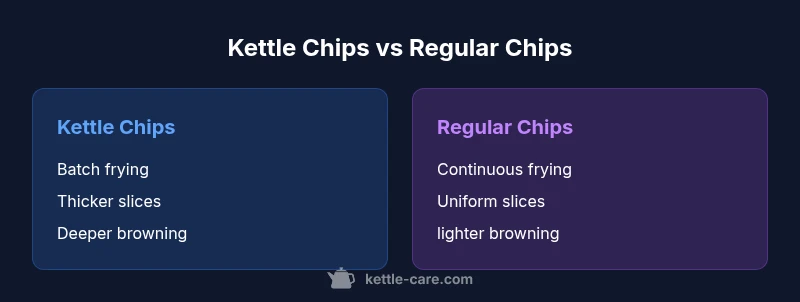
The difference between kettle and regular chips comes down to processing and texture: kettle chips are batch-fried in kettles, producing thicker, crunchier chips with a more pronounced bite; regular chips are typically continuous-fryer products, resulting in lighter, crisper chips with uniform thickness. For most snackers, kettle chips offer bolder flavor, while regular chips balance cost and consistency.
Difference Between Kettle and Regular Chips
Understanding the difference between kettle and regular chips helps readers decide which snack best fits their taste and health goals. While both originate from sliced potatoes, the production method and the way heat, moisture, and browning interact create distinct textures and flavors. This article, guided by the Kettle Care approach to practical kitchen knowledge, outlines the core contrasts, practical implications for dipping and pairing, and how to choose based on occasion and budget. The goal is not to label one superior but to clarify the trade-offs so homeowners and tea lovers can pick confidently.
What Defines Kettle Chips
Kettle chips are defined by a batch-processing method. Slices are dropped into a copper or steel kettle where oil is heated to a high, controlled temperature and batches are fried for a longer duration. The thick-cut slices spend more time in hot oil, which drives greater browning and Maillard reactions that deepen flavor. This batch approach also tends to create more irregular shapes and edges, contributing to a denser, crunchier mouthfeel. The visual and textural cues distinguish kettle chips from many standard, continuously fried varieties.
What Defines Regular Chips
Regular chips typically come from a continuous frying line where thin potato slices move through a high-temperature oil stream, producing chips in a steady, high-throughput process. The result is a uniform thickness and a light, crisper texture. Because the process emphasizes speed and consistency, regular chips often have a smoother bite and a milder browning pattern compared with kettle chips. Seasoning is applied after frying, and oil quality can influence flavor neutrality or purity depending on the brand.
Texture: Thickness and Crunch
Texture is the most immediate cue readers use to distinguish the two types. Kettle chips are thicker, often with a pronounced ridge or wave, contributing to a heavier bite and a slower, crunchier finish. Regular chips tend to be thinner, more uniform, and crisper from the first bite. For dipping, kettle chips can hold up to dense dips due to their sturdier structure, while regular chips offer a lighter, more forgiving texture that blends with smoother dips.
Flavor Development and Seasoning
Kettle chips often exhibit deeper browning and more intense caramelized notes because of longer fry times and batch-to-batch browning variation. This can translate to a bolder overall flavor profile per chip. Regular chips may deliver a cleaner, more uniform flavor that sits closer to the potato’s natural sweetness with less browning intensity. The perception of salt, oil, and seasoning distribution can differ because kettle chips present a sna—sustainably developed browning while regular chips rely on precise, even seasoning after a quick fry.
Oil Use, Health Considerations, and Cooking Methods
Oil choice and frying method influence both texture and health perceptions. Kettle chips, due to batch processing, can absorb more oil on some batches, contributing to a richer mouthfeel but also higher caloric density per chip. Regular chips often optimize oil uptake for a lighter finish, depending on the fryer’s efficiency and temperature control. Both types share common snack metrics—calorie density, sodium levels, and fat content—so consumer choices should focus on brand-specific information and serving sizes rather than broad generalizations.
Production Scale and Consistency
Batch production for kettle chips means more variability between batches, which can translate to slight differences in texture and flavor from bag to bag. Continuous fry lines used for regular chips emphasize consistency, which many buyers value when buying by brand or lot. If you crave the same crunch every time, regular chips may satisfy that need, but kettle chips reward those who enjoy a more robust, variable mini-cuisine experience with each bag.
Price, Availability, and Consumer Trade-offs
From a shopping perspective, kettle chips tend to cost more per bag due to batch processing, perceived premium texture, and less automation. Regular chips are more widely available, with a broader range of price points that suit budget-minded buyers. If you’re pairing chips with a tea time or social gathering where texture matters, kettle chips can be a compelling choice; for everyday snacking, regular chips often offer better value while still delivering satisfying crunch.
Texture and Dipping: Best Pairings
For dipping, consider the chip’s ability to hold sauce or dip without crumbling. Kettle chips, with their sturdy structure, pair well with thick, chunky dips like onion or bean dips. Regular chips shine with lighter, smoother dips like salsa or sour cream varieties where a delicate bite can be enjoyed without overpowering the dip’s texture. Taste and aroma also influence pairing; thicker chips can amplify smoky or peppery seasonings while thin chips harmonize with mild, dairy-based dips.
Home Cooking Tips: Achieving a Kettle-Style Texture at Home
Home cooks can experiment with kettle-style texture by using a heavy, deep pan and a controlled, moderate oil temperature. Slice potatoes uniformly, pat dry to reduce surface moisture, and fry in small batches to simulate batch cooking. Finishing in a short blast of higher heat can encourage browning without excessive oil uptake. If you cannot replicate exactly, you can still enjoy similar textures by choosing thicker-cut home-fried chips and adjusting toppings to enhance browning and crunch.
Packaging, Freshness, and Storage
Chips’ texture and crunch depend on packaging and storage. Airtight bags stored in a cool, dry place minimize moisture ingress, ensuring maximum crispness. Exposure to air accelerates staling due to fat oxidation and moisture migration. When you buy kettle chips, look for bags with robust seals and avoid bags that show signs of puffing, which may indicate improper storage. A quick tip is to reseal bags tightly after opening and consume within a reasonable window for peak flavor.
Debunking Myths About Kettle Chips
A common myth is that kettle chips are always healthier than other chips. In reality, oil type, salt content, and serving size drive healthfulness just as much as the fry method. Another misconception is that kettle chips are universally thicker and crunchier; while many batches are, there can be variability between brands and production runs. The best approach is to compare nutrition panels on a per-serving basis rather than relying on the kettle label alone.
How to Choose Between Kettle and Regular Chips
The choice hinges on texture preferences, dip compatibility, and budget. If you want a bold, robust bite and a more artisanal feel, kettle chips are a strong pick. If you value price, uniform crunch, and broad availability, regular chips are typically the safer everyday choice. Reading the nutrition label and tasting a few options helps readers calibrate expectations and develop a personal preference that aligns with their snacking goals.
Comparison
| Feature | Kettle Chips | Regular Chips |
|---|---|---|
| Production Method | Batch frying in kettles | Continuous frying lines |
| Texture | Thicker, denser, crunchier | Thin, light, crisper |
| Flavor Development | Deeper browning, bolder notes | Lighter browning, cleaner finish |
| Oil Absorption | Often higher due to batch processing | Typically optimized for lower oil uptake |
| Size Consistency | More irregular shapes | Very uniform thickness |
| Price Range | Higher per bag | Lower per bag |
| Best For | Flavor-first, textural experience | Value, consistency, ease of pairing |
Strengths
- Clear texture distinction helps readers choose by mouthfeel
- Useful for taste-first snackers and dipping enthusiasts
- Supports mindful snacking with focus on processing methods
- Helps retailers and cooks communicate product differences
- Encourages experimentation with texture and flavor profiles
What's Bad
- Brand-to-brand variability can blur the differences
- Nutritional differences are nuanced and not universal
- Overemphasis on texture can overshadow flavor subtleties
- Pricing differences may mislead on value without serving size context
Kettle chips excel in texture and bold flavor; regular chips win on consistency and cost.
If you value a robust bite and deeper browning, kettle chips are the better pick. If you prioritize price, uniformity, and everyday snacking, regular chips are the more practical choice. Use this guide to align your selection with taste and budget.
Frequently Asked Questions
What is the main difference between kettle chips and regular chips?
The main difference is production method: kettle chips are batch-fried, yielding thicker, crunchier chips with deeper browning, while regular chips are produced on continuous fry lines for uniform thickness and a lighter, crisper bite. This affects texture, flavor development, and how they pair with dips.
Kettle chips are batch-fried and thicker, giving a bold crunch, while regular chips are uniformly thin and crisper. For more detail, see the full comparison.
Are kettle chips healthier than regular chips?
Healthfulness varies by brand and recipe. Both types can be high in fat and salt. Kettle chips may have deeper browning which some perceive as richer flavor, but nutrition depends on oil type, serving size, and seasoning.
Health claims depend on the brand and serving size, not just the kettle label.
Do kettle chips have more oil content than regular chips?
Oil uptake varies by batch and brand. Kettle chips can absorb more oil due to longer fry times, but many brands optimize oil use to balance texture and crunch. Always check the nutrition panel for per-serving oil amounts.
Oil content varies by brand; kettle chips can be oilier in some batches, but this isn’t universal.
Which type is better for dipping?
Regular chips are usually more uniform and thinner, making them easier to dip evenly. Kettle chips can crack or break with heavy dips, but their sturdier texture works well with chunkier dips if you handle them gently.
If you want a smooth dipping experience, regular chips are often best; for thicker dips, kettle chips can still work.
How should I store chips for freshness?
Store in an airtight bag or container in a cool, dry place away from sunlight. Re-seal tightly after opening to minimize moisture ingress and preserve crunch.
Keep chips sealed and in a cool spot to stay crispy longer.
Can I recreate kettle-style chips at home?
Yes, you can approximate kettle-style texture with a heavy pan or air fryer by frying thicker potato slices in batches and finishing with a quick high-heat blast to brown, then seasoning after frying.
You can try a home version by frying thicker slices in batches and finishing with extra browning; seasoning after helps taste.
Highlights
- Choose kettle chips for bold texture and browning
- Prefer regular chips for value and consistent crunch
- Check serving size to compare true costs
- Consider dipping needs when selecting chips
- Brand variability can affect texture and flavor
- Store chips properly to maintain crispness