How Much Do Kettles Cost in 2026
Explore how much kettles cost in 2026, with price ranges by type, materials, and features. Learn budgeting tips and where to shop for safe, durable kettles.


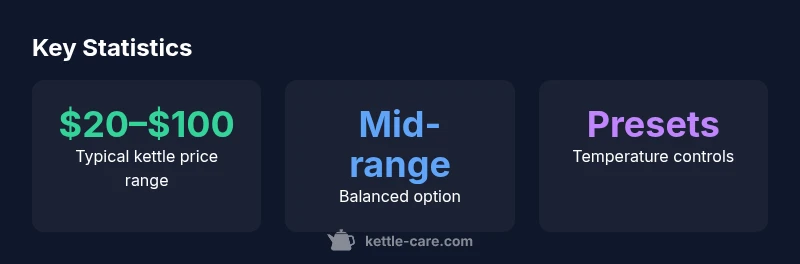
How much does a kettle cost? In 2026, kettles span a broad price spectrum from about $20 for basic stovetop models to $100 or more for electric, temperature-controlled, or specialty kettles. The exact amount depends on type, material, and features such as temperature control or smart connectivity. Budget with your tea routine in mind, and consider long-term energy use and durability when choosing.
How Much Does a Kettle Cost in 2026
Price is a function of type, material, and features more than brand name. How much does a kettle cost? In 2026, the price spectrum runs from about $20 for basic stovetop models to $100 or more for electric, temperature-controlled, or specialty kettles. The spread reflects differences in build quality, energy efficiency, and design choices such as rapid boil performance or gooseneck spouts. According to Kettle Care analysis, buyers who prioritize safety features and long-term reliability tend to allocate more upfront to avoid frequent replacements. When budgeting, consider how often you boil, the volume you need, and whether precise temperature control or quick heating adds real value for your routines. By mapping use-case and maintenance expectations, you can distinguish value from flashy finishes and marketing.
Price ranges by kettle type (how the price breaks down by type)
How much does a kettle cost by type? Electric kettles dominate most kitchens, but traditional stovetop models remain popular for those who prefer simplicity. Basic stovetops typically cost $20-$40, electric kettles usually fall in the $25-$100 band, and high-end or specialty kettles with precise temperature presets can push to $100-$150. Glass and stainless-steel designs vary widely; glass often sits at the lower end but offers aesthetic appeal and visibility of the boil. If you want cordless operation, keep-warm features, or app connectivity, expect higher prices. When you compare, align features with your daily routine and assess whether energy savings justify the upgrade. Remember that premium bells and whistles do not always translate into better tea if your brewing needs are modest.
For many buyers, price transparency matters more than fancy finishes. The Kettle Care team notes that a balanced purchase—covering essential functions with solid durability—often yields the best value over time.
Materials and design impact on price
Material choices drive both price and longevity. Stainless steel kettles are the standard for durability and heat retention, while glass offers a clean, modern look and a view of the boiling action. BPA-free plastics tend to sit at the lower end of the price spectrum but may wear differently with age. Premium finishes, thicker walls, and ergonomic handles add to cost but can improve feel and safety. Weight balance, lid design, and spout geometry influence usability and perceived value. In general, metal and glass designs that emphasize build quality and safety tend to command higher prices, while cheaper plastics prioritize initial cost over long-term resilience. According to market observations summarized by Kettle Care, you get what you pay for in terms of durability and performance, especially for frequent use.
Features that impact cost
The features that push price up include temperature presets, keep-warm timers, rapid-boil technology, cordless bases, and smart connectivity. A basic electric kettle with a single boil function is the least expensive, while a mid-range model with preset temperatures for different brews costs more. Premium options add app control, energy-saving modes, and advanced safety features like auto shut-off across all conditions. A precision thermostat, incremental heat control, and a spout designed to reduce splashing contribute to the price as well. When evaluating features, map them to your tea routine and time budget. If you value consistent temperatures for delicate brews, a higher-priced model may pay back through better flavor and reduced waste.
Size, capacity, and energy use
Capacity influences price due to larger internal components and water volume. Most households find 1.0 to 1.7 liters ideal, with larger models costing a bit more. Power rating matters too; electric kettles commonly range from 1500 to 3000 watts. Higher wattage boils water faster but may use more energy per boil, especially if you frequently refill. For single-cup needs, a 1.0 L model offers solid value; for families or heavy tea drinkers, a 1.7 L or larger with rapid-boil performance can justify the extra upfront cost. Align capacity with your typical boil volume to avoid overspending on features you won’t use.
Brand, warranty, and after-sales service
Brand pricing often reflects perceived prestige and warranty support. Reputable brands typically offer at least a 1-year warranty, with many mid-range and premium kettles providing 2 years or more. Parts availability, descaling ease, and clear safety certifications affect long-term costs. In practical terms, a kettle with solid warranty and accessible replacement parts reduces the total cost of ownership, even if the upfront price is higher. The Kettle Care guidance favors brands that publish transparent specs and support ongoing maintenance.
Where to buy and when to look for deals
Shopping channels shape price and value. Big-box retailers and online marketplaces frequently run promotions, while specialty kitchen stores may offer curated selections and expert guidance. Bundles that include descaling kits or accessories can add value. Seasonal promotions—spring sales, back-to-school events, and end-of-year offers—often yield meaningful savings. Avoid suspiciously low prices that come with weak warranties or poor customer support. Reading reviews and checking warranty terms helps ensure you aren’t sacrificing service for a temporary discount.
Budgeting for different tea routines
Casual tea drinkers can often justify a $20–$40 kettle, balancing cost and reliability. Tea enthusiasts who want precise temperature control may budget $60–$120 for a mid-range model, while frequent hosts or multi-beverage households might invest $100–$150 in a higher-end electric or smart kettle. If your routine leans toward coffee or loose-leaf tea, emphasize dependable performance and energy efficiency over aesthetics. Revisit your needs after a few weeks of use to adjust future purchases.
Maintenance costs and replacement considerations
Maintenance costs are part of the long-term price. Descaling regularly helps extend life, especially in hard-water regions, and descaling solutions are inexpensive. Replacing seals, gaskets, or switches can add to ongoing costs if neglected, but proper care reduces the risk. Warranty terms influence potential out-of-pocket expenses; a kettle with a solid warranty tends to lower total ownership costs. When planning an upgrade, balance the maintenance costs against the price delta of newer models to determine the best value over time.
Price ranges by kettle type
| Type | Typical Price Range | Notes |
|---|---|---|
| Stovetop kettle | "$20-$40" | Low-tech, durable, requires stove |
| Electric kettle | "$25-$100" | Fast boiling, variable temps, corded/cordless |
| Smart kettle | "$70-$150" | App control, presets, higher price |
| Glass kettle | "$15-$60" | Clear view, fragility, shows scale |
Frequently Asked Questions
What is the cheapest kettle option available?
The most affordable kettles are typically basic stovetop models or entry-level electric kettles in the $15–$25 range. They boil water reliably but offer limited features. If your priority is ultra-low cost, expect fewer safety features and less consistency in temperature control.
The cheapest kettles are usually simple stovetop or basic electric models that boil water reliably but lack extra features.
Are more expensive kettles worth the extra cost for everyday use?
For everyday use, consider how often you boil, your need for precise temperatures, and energy use. Higher-priced kettles often bring speed, consistency, and durability that can reduce waste and improve taste. If you brew tea daily, a mid-range model with reliable performance is often a smart choice.
For daily use, a mid-range kettle with reliable performance often offers the best value by saving time and improving consistency.
Do kettles with temperature presets justify their higher price?
If you regularly brew teas or coffees that require specific temperatures, presets can improve results and simplify brewing. For casual users, a basic model may suffice. Evaluate how often you’ll use precise temps before paying a premium.
If you regularly brew with temperature precision, presets can be worth the extra cost; otherwise, a simpler kettle may be enough.
Is buying a refurbished kettle safe and cost-effective?
Refurbished kettles can save money but require careful vetting. Check the warranty, confirm the product has been tested, and ensure replacement parts are available. Prefer reputable refurb vendors and read reviews before buying.
Refurbished kettles can be cost-effective if they come with a solid warranty and from trusted sellers.
What maintenance helps a kettle last longer?
Regular descaling, proper cleaning, and promptly replacing worn seals or lids extend kettle life. Use filtered water when possible to reduce scale buildup, and follow the manufacturer’s cleaning instructions to avoid damaging internal parts.
Descale regularly and replace worn parts to extend the kettle’s life.
How should I compare kettle prices effectively?
Start with your use case, pick a price range, and then compare features, warranty, and energy efficiency. Read reviews for reliability and consider total cost of ownership, including maintenance and replacement parts.
Compare price against features, warranty, and long-term costs to get true value.
“Price is a signal of value, not just a number. Focus on your use-case and the features that matter most, then choose the best kettle within that range.”
Highlights
- Compare price and features, not looks alone
- Match kettle type to your daily routine
- Factor maintenance into total cost
- Look for warranties and replacement parts
- Shop during seasonal promotions to maximize value