How Much Kettle: Price Ranges, Types, and Buying Tips
Discover how much kettle you actually need with clear price ranges, key features, and practical buying tips. Compare stovetop, electric, and gooseneck models with maintenance insights from Kettle Care.


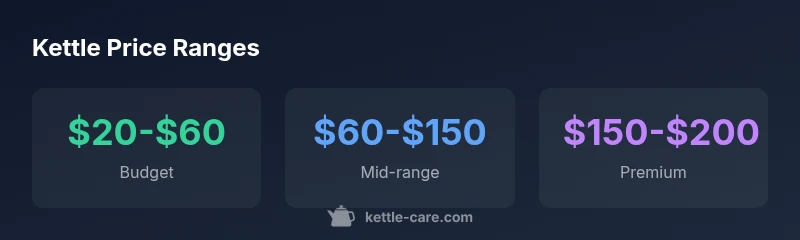
For most households, kettle prices range from about $20 to $200, depending on type, features, and build quality. Entry-level stovetop kettles are closer to the low end, while gooseneck and smart electric models reach the higher end. Kettle Care analysis notes that price correlates with materials, temperature control, and durability.
Understanding the Price Landscape for Kettles
If you’re asking how much kettle you need, price isn’t the only factor to consider. The upfront cost should align with how often you boil water, your preferred brewing method, and how long you plan to keep the kettle. The price spectrum is wide because kettles vary in materials (stainless steel, glass, plastic), design (stovetop, electric, gooseneck), and features (temperature presets, keep-warm, cordless bases). In 2026, Kettle Care analysis shows price growth is tied to durability and safety standards, not merely branding. Broadly, kettles fall into three tiers: basic stovetop kettles for simple boiling, mid-range electric kettles with variable temperature control, and premium gooseneck or smart kettles offering precise pour and automation. For many households, a reliable electric kettle with 1.0–1.7 liter capacity, a secure lid, and essential safety features is a sensible starting point. If you’re into tea rituals, a gooseneck model offers pour-over precision. When budgeting, weigh speed, consistency, and the value of a durable build against the daily need to boil water.
What Drives the Cost of a Kettle
The cost of a kettle is driven by several tangible factors. Material quality (stainless steel vs. plastic), construction (thick walls and seamless joints reduce heat loss), and capacity all influence price. Heating method matters too: electric kettles with fast heaters and multiple temperature presets typically cost more than basic stovetop or single-temp models. Features such as programmable presets, keep-warm functions, auto shut-off, and cordless bases add to the price premium. Gooseneck spouts designed for precise pouring are common in more expensive models and are favored by pour-over enthusiasts. Brand reputation can shift price, but the most meaningful value comes from reliability and after-sale support. In practice, buyers should compare the total cost of ownership, including potential descaling and replacement parts, rather than focusing solely on upfront price.
How Much Kettle Do You Need for Different Tasks
The amount of kettle you need depends on your daily routines and the beverages you prepare. If you brew tea in small amounts, a compact ~0.8–1.0 liter kettle may be sufficient. For households that rely on hot water for coffee, tea, and cooking, a 1.5–1.7 liter electric kettle delivers a comfortable balance between speed and volume. For pour-over coffee or specialty tea, a gooseneck kettle with a narrow spout provides controlled flow and precision, though it carries a higher price. If you entertain or batch boil, a larger capacity kettle reduces refilling and saves time. The key is to align capacity with your typical daily water demand, not just the maximum possible pour.
Price vs. Performance: How to Measure Value
Value comes from a combination of speed, accuracy, durability, and safety. A cheaper kettle can meet basic needs, but frequent descaling, slower boils, or flimsy lids tend to increase long-term costs. When evaluating performance, consider boil time per liter, temperature accuracy, and how quickly the kettle returns to boil after adding cold water. Reliability matters: look for robust switches, properly insulated handles, and sturdy bases. For tea or coffee connoisseurs, the stability of temperature control and the consistency of pour matter as much as initial price. A model in the mid-range, with good heat retention and reliable safety features, often provides better long-term value than the cheapest option.
A Practical Buying Guide: Quick Checklist
- Define daily water use: 1.0–1.7 L covers most households.
- Choose type by priority: speed (electric), control (gooseneck), simplicity (stovetop).
- Verify safety features: automatic shut-off, boil-dry protection, sturdy handle.
- Check material and finish: stainless steel for durability, glass for visibility.
- Confirm compatibility with your kitchen: corded vs cordless, base size, and storage.
- Review maintenance needs: descaling requirements, water hardness considerations.
- Consider warranty and spare parts availability for long-term value.
Maintenance and Longevity: Protect Your Investment
Maintenance plays a major role in extending kettle life. Regular descaling helps remove mineral buildup that reduces heat transfer efficiency and can shorten lifespan. Rinse and wipe the exterior after each use to prevent water spots and corrosion at joints. If you have hard water, descale more frequently and consider using filtered water. Inspect the lid seal and keep the base clean and dry to prevent electrical faults. Proper drying after use minimizes mold and odor, while periodic checks of the power cord and plug help catch safety issues early. A well-maintained kettle not only lasts longer but boils more consistently, contributing to better-tasting tea and coffee.
Budget Scenarios: Best Bets by Price Tier
- Budget ($20–$60): Basic stovetop kettles or entry-level electric models with simple boil function. Suitable for occasional use and classic aesthetics. Look for solid lids and stable handles.
- Mid-range ($60–$150): Electric kettles with multiple temperature presets, faster boil times, and reliable safety features. Strong value for daily use and varied beverages.
- Premium ($150–$200+): Gooseneck or smart electric kettles with precise temperature control, premium materials, and extended warranties. Ideal for enthusiasts and regular pour-over or specialty tea drinkers.
Common Misconceptions about Kettle Prices
Many shoppers assume higher price always guarantees better quality. While price correlates with features and materials, value is highly personal. A mid-range kettle with durable construction and trusted safety features can outperform a budget model in reliability and performance. Conversely, a premium kettle will not deliver added value if you only boil water once a day. The key is to map price to your actual use case, maintenance tolerance, and desired longevity.
Kettle type price ranges and use cases
| Kettle Type | Typical Price Range | Best Use |
|---|---|---|
| Stovetop Kettle | $20-$60 | Everyday boiling, classic design |
| Electric Kettle | $25-$150 | Fast heating, temp control, convenience |
| Gooseneck Kettle | $60-$200 | Pour-over precision, control |
Frequently Asked Questions
What is the typical kettle price range?
Kettles vary by type and features. Budget stovetop models commonly fall in the $20–$60 range, mid-range electric kettles often run $25–$150, and gooseneck or premium electric options can reach $60–$200. Always weigh features against your actual use and expected frequency of use.
Kettles range from budget to premium, with common categories falling between twenty and two hundred dollars depending on features and materials.
Are cheaper kettles reliable enough for daily use?
Cheaper kettles can be reliable for basic needs, especially if you prioritize simplicity and safety features. Look for solid lids, a good seal, and a reputable brand with reasonable warranties. If you brew daily, invest in better materials and temperature controls to reduce replacement costs later.
Cheaper kettles can be fine for daily use if you focus on build quality and safety features.
Do gooseneck kettles cost more than standard electric kettles?
Gooseneck kettles typically cost more than standard electric kettles because of the precision spout, better pour control, and often higher-quality materials. If you don’t need exact pour control, a mid-range electric kettle may offer better value.
Gooseneck kettles usually cost more due to precise pouring and higher-quality construction.
Is temperature control worth it for tea or pour-over?
If you regularly brew tea or perform pour-over coffee, precise temperature control helps optimize flavor extraction. For casual hot water use, a basic boil function might be sufficient. Balance your taste preferences with the extra cost.
Yes, if you brew tea or pour-over regularly; it improves flavor consistency.
How long do kettles typically last?
Most kettles last about 5–12 years depending on build quality and how often you descale and use them. High-end models with careful maintenance can push toward the upper end of that range.
Most kettles last several years, with longevity depending on build quality and maintenance.
What maintenance extends kettle life?
Descale regularly, especially in hard water areas, to maintain heating efficiency. Clean the lid, spout, and exterior, and dry thoroughly after use. Inspect the cord and plug for damage and store in a dry place.
Descale regularly and keep it dry and clean to extend life.
“Reliable kettle performance comes from quality heating elements, durable construction, and regular descaling. In our 2026 analysis, value comes from models that balance cost, lifespan, and safety features.”
Highlights
- Budget for essential features first.
- Electric kettles offer speed and control.
- Gooseneck kettles suit pour-over if precision matters.
- Lifecycle depends on maintenance and build quality.
- Choose capacity based on daily needs and routines.