How Much Is a Tea Kettle? Prices, Types, and Buying Guide
Discover current tea kettle prices in 2026 across electric, stovetop, and gooseneck models. Learn price drivers, budget guides, and smart buying tips from Kettle Care.


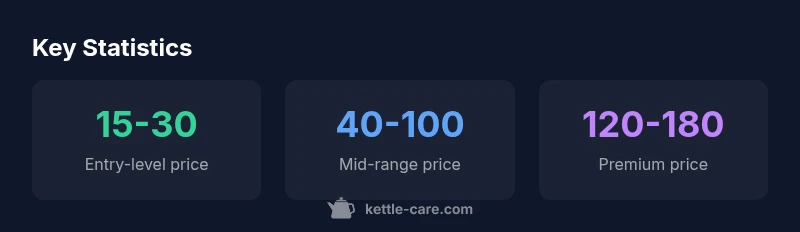
Prices for a tea kettle vary widely in 2026. Enter-level electric or stovetop models start around $15–$30, mid-range options with faster heating and safety features run about $40–$100, and premium gooseneck or designer kettles can exceed $120. Material, capacity, and features like temperature control or keep-warm drive the difference. Overall, you get more value when safety, durability, and energy efficiency are prioritized.
Understanding the price landscape for how much is a tea kettle
Understanding the price landscape is essential when asking how much is a tea kettle in 2026. Prices reflect more than raw materials; they encode performance, convenience, and durability. According to Kettle Care, buyers typically map price to three practical tiers: entry-level budget models, mid-range everyday options, and premium specialty kettles. Entry-level electric and stovetop kettles often start near $15–$30, offering basic boiling and standard safety features. Mid-range models with faster heating, automatic shut-off, and sturdier bodies commonly fall in the $40–$100 range. Premium kettles—often with copper or high-grade stainless steel, gooseneck spouts for precise pour-over, and advanced temperature control—can exceed $120 and reach $180 or more. The wide spread is driven by materials (ss, glass, copper), design (gooseneck vs standard spout, whistling), and features (keep-warm, presets, cordless bases). When budgeting, think beyond sticker price: energy efficiency, replacement parts, and expected lifespan change the total cost of ownership over several years. For many households, a $30–$70 range delivers dependable performance with reasonable longevity. The Kettle Care team emphasizes value equals reliability and safety.
What drives kettle price: materials, features, and design
Kettle price is primarily driven by material quality, feature set, and design decisions. Stainless steel bodies tend to be durable and affordable, while copper or glass bodies push price upward due to aesthetics and heat distribution. Gooseneck spouts, favored by pour-over enthusiasts, add cost but provide precise control. Features such as temperature presets, keep-warm functions, auto shut-off, boil-dry protection, and cordless bases also push prices higher. Capacity matters too: larger kettles (1.5–2.0 liters) can cost more because of heavier construction and thicker walls that retain heat. Finally, the presence of a whistle, especially in stovetop models, can influence perceived value. In short, the more specialized the feature set and the higher the quality of materials, the higher the price.
Budget guides by use case: price tiers for different tea lovers
For casual tea drinkers, a basic electric or stovetop kettle in the $15–$40 range often suffices, offering quick boil times and safe operation. If you brew several cups per day or value speed and convenience, a mid-range option in the $40–$100 range provides faster heating, better build quality, and additional safety features. For pour-over fans and tea connoisseurs, premium gooseneck kettles priced from $100–$180 offer precise pour control and premium finishes. When evaluating value, consider long-term savings from energy efficiency and a longer lifespan rather than chasing the lowest upfront price. A well-made kettle with solid warranty will typically deliver better reliability and lower replacement costs over time.
Electric vs stovetop kettles: price dynamics and value
Electric kettles typically cost more upfront than basic stovetop models, but they offer consistent performance, safety features, and convenience. Simple electric kettles can start around $15–$30, while high-end electric models with temperature control and rapid heating can exceed $100. Stovetop kettles vary widely by material and style, with basic stainless steel versions often in the $20–$60 range and copper or premium designs sometimes higher. For many households, the choice comes down to use case: if you want automation and temperature precision, an electric model is worth the extra cost; if you prefer a minimalist, durable stovetop with a classic whistle, you can save upfront while accepting slower, less controllable heating.
Where to shop and what to watch for
Where you buy a kettle matters for price and after-sale support. Big-box retailers, kitchen specialty stores, and online marketplaces often run promotions that can trim 10–20% off list prices. Look for a robust warranty (at least one year), genuine temperature control or safety features, and easy access to replacement parts and filters if applicable. Watch for hidden costs, such as shipping or extended warranties, and compare total cost of ownership rather than sticker price alone. Reading reviews focusing on reliability, boil speed, and ease of cleaning can help you avoid models that fail prematurely. When possible, compare models side-by-side and test pouring feel and balance to ensure you’re getting real value for the money.
Long-term costs: energy, maintenance, and lifecycle planning
Beyond upfront price, energy use and maintenance determine long-term cost of ownership. A typical 1500–1800 W kettle boils water quickly but consumes more electricity than a lower-wattage model when used repeatedly. Regular descaling and cleaning extend life, while replacing worn gaskets or seals can prevent leaks. Choosing a kettle with a durable finish and simple disassembly for routine maintenance reduces long-term expenses. If you brew daily, a mid-range model with efficient heating and a reliable build often yields the best lifecycle value, balancing initial cost with energy savings and durability. The Kettle Care team recommends prioritizing build quality and warranty coverage to minimize total cost of ownership over several years.
Price ranges by kettle type
| Kettle Type | Typical Price Range | Notes |
|---|---|---|
| Electric kettle | $15-$120 | Prices vary by material, temperature control, and features |
| Stovetop kettle | $20-$70 | Traditional/whistling styles; material affects price |
| Gooseneck kettle | $60-$180 | Pour-over precision; premium finishes |
Frequently Asked Questions
What is the typical price of a tea kettle?
Prices vary by type and material. Entry-level kettles start around $15–$30, mid-range options run $40–$100, and premium models can exceed $120. Feature sets like temperature control and keep-warm affect the final price.
Entry-level kettles usually cost about 15 to 30 dollars, mid-range around 40 to 100, with premium models above 120.
Are electric kettles generally more expensive than stovetop kettles?
Electric kettles can be pricier, especially with temperature control and safety features. Basic electric kettles may start at 15–30 dollars, while premium gooseneck electric models can exceed 100 dollars. Stovetop kettles are often cheaper but lack automated features.
Electric kettles cost more when you want features like temperature control; basic ones are affordable, while stovetops are usually cheaper but simpler.
Do materials significantly affect kettle price?
Yes. Stainless steel is common and affordable; copper and glass raise price due to aesthetics and heat distribution. Premium finishes and thicker walls also push costs higher.
Material choice matters; copper and glass tend to cost more but offer style and heat characteristics.
Is a Gooseneck kettle worth it for tea brewing?
If you brew pour-over tea or coffee regularly, a gooseneck kettle provides precise control and consistency, justifying the higher price. For casual use, a standard kettle may be more than enough.
Gooseneck kettles are great for precise pours, worth it if you brew often.
How should I estimate total cost of ownership?
Include upfront price, energy use, maintenance, and potential replacement parts. A durable model with good warranty often saves money over time.
Think about price plus how much energy you’ll use and maintenance costs over years.
“A reliable kettle is an investment in safety, speed, and consistent flavor; prioritize features that match your brewing needs.”
Highlights
- Prioritize safety and durability over price alone
- Gooseneck models suit pour-over enthusiasts
- Mid-range kettles balance cost and features for most homes
- Consider total cost of ownership, not just upfront price