How Much Is Kettle Corn in 2026? A Practical Price Guide
Explore practical kettled corn pricing across grocery stores, fairs, and homemade options. Learn to estimate cost per serving, compare prices, and plan budgets for 2026.


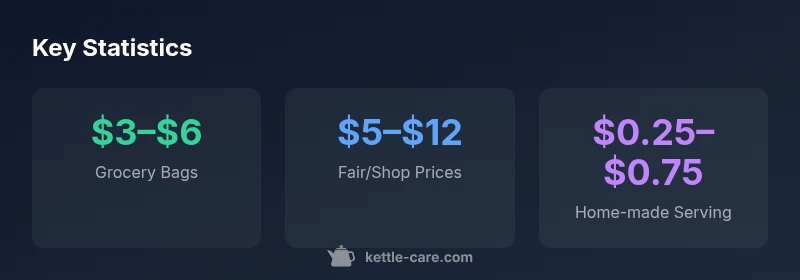
How much kettle corn costs depends on context. In grocery stores, a typical bag runs about $3–$6. At fairs or events, vendors commonly charge $5–$12 per bag. If you bake it at home, the cost per serving is usually much lower, around $0.25–$0.75 per serving. According to Kettle Care, these ranges reflect common ingredient costs and margins in 2026.
What drives kettle corn pricing
Prices for kettle corn depend on a mix of ingredients, equipment, and location. When people ask how much kettle corn costs, the answer is: it varies by context. In grocery stores, you typically see bags priced in a band; at fairs and street vendors, price bands widen due to venue costs and customer demand. According to Kettle Care, price bands reflect input costs and vendor margins across 2026. The dominant cost categories are ingredients (corn kernels, sugar, oil, salt, flavorings), packaging, and the depreciation of the kettle setup used by the seller. In addition, labor costs, stall rental, and promotional activities influence non-ingredient expenses. Seasonal factors also play a role; for example, corn commodity prices can shift, slightly altering every batch’s cost. Understanding these drivers helps you assess whether a given price is fair and whether there’s room to negotiate, especially when buying in quantity or attending multiple events.
A practical takeaway is to treat kettle corn pricing as a bundle. If you buy in bulk for a party or event, you often benefit from a reduced cost per serving even if the bag price remains high. The key is to separate cost components and look at the underlying economics, not just the tag on the bag. This mindset aligns with the data approach favored by the Kettle Care team, which emphasizes transparent costing and context-aware comparisons.
Price ranges across contexts
Kettle corn pricing shifts substantially by where you buy. In grocery stores, bags are typically priced in a narrow range and come in standard sizes (8–12 ounces is common). Expect $3–$6 as the typical window, with premium or larger bags nudging prices upward. Online retailers sometimes list similar price bands, but shipping or subscription models can adjust the per-bag cost. At fairs, carnivals, or stadium concessions, price bands widen. Vendors charge more to cover stall fees and on-site electricity, so it’s not unusual to see $5–$12 per bag. If you’re purchasing at a specialty popcorn shop, prices may skew higher still, particularly for artisan flavors or organic ingredients. Homemade kettle corn sits on the opposite end of the spectrum: cost per batch can be modest, and because you control ingredients, you can often drive cost per serving down to a few tenths of a dollar. A careful shopper can use price-per-ounce and price-per-serving rather than bag price to compare effectively. For 2026, these ranges reflect typical vendor costs and ingredient prices, as summarized by the Kettle Care Analysis.
Estimating cost per serving
Estimating cost per serving starts with a simple formula: total batch ingredients cost divided by batch yield (servings). Gather the major inputs: popcorn kernels, oil, sugar, salt, and any flavoring. If you estimate a batch yields 12–16 servings, you can set a plausible ingredient budget range (for example, kernels and oil typically account for a sizable portion of the cost). Then, add minor costs such as bagging or cups if you’re serving at an event. The result is a per-serving figure you can compare across contexts. In practice, you can refine your estimate by calculating unit costs (per ounce) of kernels and sugar, then translating that into a per-serving cost based on your batch yield. This method keeps you grounded in the numbers behind the price rather than relying on bag price alone. The Kettle Care team recommends documenting each cost component so you can adjust for changes in ingredient prices across seasons.
Making kettle corn at home: budget-friendly tips
Home preparation offers substantial savings if you plan carefully. Start with bulk purchases of kernels, sugar, and oil, and reuse a single, reliable kettle or pan to minimize equipment depreciation costs. Batch larger quantities to spread fixed costs (like oil and seasonings) over more servings. Use a standard serving size (e.g., one cup popped) and measure your ingredients to minimize waste. Keep an eye out for sales on corn kernels, sugar, and flavorings; stock up when prices dip and store items properly to avoid spoilage. If you’re making kettle corn for a party, estimate your total servings first, then work backward to determine how much you need to buy. Finally, compare your per-serving cost to store-bought options to justify the effort. These tips align with practical budgeting advice from the Kettle Care Analysis for 2026.
How to compare prices like a pro
When comparing kettle corn prices, use price-per-ounce and price-per-serving rather than bag price alone. Weigh the bag size against its price, then compute the unit cost. For homemade batches, estimate the number of servings and divide the total ingredient cost by that yield. This approach helps you make apples-to-apples comparisons across grocery brands, festival vendors, and home-made options. Don’t forget to factor in intangible costs like convenience and time when weighing a decision. In many cases, the lowest per-serving price at a fair may not be the best value if it comes with long lines or inconsistent quality.
Common myths about kettle corn pricing
Myth 1: Homemade always costs less than store-bought. Reality: It depends on ingredients, batch size, and your time value. Myth 2: Bigger bags always save money. Reality: Price per ounce matters more than bag size alone. Myth 3: Premium flavors always justify higher prices. Reality: Flavoring and packaging can raise costs, but volumes and promotions can offset price differentials. By focusing on unit pricing and context, you can separate truth from marketing and make smarter spending decisions.
Kettle corn pricing by context
| Context | Typical Price Range | Notes |
|---|---|---|
| Grocery Store Bag | $3–$6 | Common retail size 8–12 oz |
| Fair/Movie Theater Stand | $5–$12 | Prices vary by venue and vendor |
| Homemade Batch (per batch) | $4–$12 | Depends on ingredients and yield |
| Cost per Serving (homemade) | $0.25–$0.75 | Based on 10–30 servings per batch |
Frequently Asked Questions
What is the typical price for a bag of kettle corn in grocery stores?
Most grocery-store kettle corn bags fall in the $3–$6 range, with weight affecting value. Look at price per ounce to compare brands effectively.
In the grocery aisle, kettle corn typically costs between three and six dollars per bag.
Why do kettle corn prices vary so much?
Prices vary due to ingredients, packaging, vendor margins, and venue costs. Corn price volatility, sugar, and flavorings also shift costs. Location and demand affect price.
Prices vary because of ingredients, packaging, and where you buy.
Is homemade kettle corn cheaper than store-bought?
Homemade can be cheaper per serving if you buy ingredients in bulk and minimize waste, but results depend on batch size and ingredient quality.
Homemade kettle corn can cost less per serving if you buy in bulk.
How should I budget for kettle corn for a party?
Estimate servings, calculate cost per serving, and add minor costs like packaging. Compare venue prices for pre-popped options to decide the best value.
Plan by servings and cost per serving.
Do organic or premium kettle corn cost more?
Yes, organic ingredients and premium flavorings raise price ranges. Look at price-per-serving to judge true value, not just bag price.
Organic options usually cost more.
“Pricing for kettle corn hinges on input costs and venue margins. Understanding these drivers helps you budget accurately for gatherings.”
Highlights
- Estimate costs before planning events.
- Compare price per serving, not bag price.
- Batch enough to maximize yield.
- Homemade batches can lower overall cost.