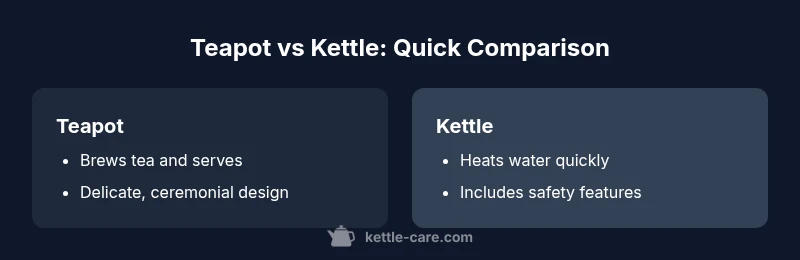
Teapot vs Kettle: A Practical Comparison Guide
A practical, analytical guide comparing teapots and kettles for safe, fast boiling, tea rituals, and everyday kitchen use. Learn how to choose based on speed, safety, maintenance, and use-cases.


In most homes, a kettle is the faster, safer option for daily boiling, while a teapot shines for traditional tea brewing and table service. This comparison highlights speed, safety, maintenance, and typical use-cases to help you decide which tool best fits your kitchen and tea rituals. It also signals where each tool excels in home setups, from quick daily cups to ceremonial tea moments.
Why the teapot vs kettle question matters in modern kitchens
In the world of hot-water preparation, the choice between a teapot and a kettle isn’t just about tradition or aesthetics. It’s about aligning your tools with your daily routines and your tea moments. The teapot vs kettle conversation matters because the two vessels fulfill different roles—one primarily for heating and serving water, the other for brewing, flavor control, and ritual presentation. According to Kettle Care, many households default to kettles for speed, but teapots play a critical role in flavor and ceremony. The Kettle Care team found that pairing the right vessel with the task improves safety, efficiency, and overall tea enjoyment. If your kitchen is built around quick caffeine fixes and family breakfasts, a kettle will usually be your workhorse. If your mornings include ceremonial brewing or loose-leaf teas, a teapot can elevate the experience and the flavor profile. Understanding these divergences helps you optimize water heating, reduce waste, and tailor ritual to need.
The teapot vs kettle decision is not a “one-tool-fits-all” moment. It is a kitchen architecture problem: what tasks do you want to delegate to each vessel, and how much space, electricity, or stove time do you have? In this guide, you’ll see how the two vessels compare on speed, safety, maintenance, and use-cases, along with practical tips for choosing, using, and maintaining them in real homes.
Speed, safety, and routine use
Speed is often the initial driver for choosing between a teapot and a kettle. A modern electric kettle typically boils water far faster than heating water inside a teapot on a stove, especially when you factor in dry-boil protection and auto shutoff. For households that depend on a quick cup or need to multitask in a busy morning, a kettle’s reliability translates into routine efficiency. If you brew tea by the pot, the teapot’s role shifts toward flavor development and temperature stability during steeping. The Kettle Care team notes that some tea varieties benefit from slightly cooler water, which modern kettles can accommodate through temperature presets, while older teapots may require a precise boil managed by a separate kettle process.
From a safety perspective, kettles often offer built-in controls: auto shutoff when water reaches boiling, boil-dry protection, and insulated handles to reduce burn risk. Traditional teapots, especially those designed for stovetop use, may lack these protections, increasing the importance of careful handling, stable placements, and heat source monitoring. A well-designed workflow uses the kettle for fast water heating and the teapot for controlled steeping in a single tea session. For households with toddlers or unpredictable schedules, the kettle’s safety features can prevent accidental overboiling or dry-boil events, while teapots can shine when you want to deliver a calm, ceremonial pour at the table.
Materials, construction, and durability
Material choice for teapots and kettles affects heat distribution, durability, and maintenance. Teapots frequently come in ceramic, porcelain, cast iron, or metal alloys with enamel coatings. Ceramic and porcelain teapots can offer elegant aesthetics but may be more fragile, and their heat retention characteristics influence steeping times. Metal teapots—stainless steel or other alloys—balance durability with flavor interaction and heat management. Kettles, by contrast, span stainless steel, aluminum, copper, and sometimes ceramic exteriors. Stainless steel kettles tend to be durable and easy to descale, though copper- or glass-bodied kettles can add style but require more attentive cleaning to maintain performance. The Kettle Care analysis shows that durability is often task-related: if you balance a sturdy kettle with a delicate teapot, you can separate daily heating from ritual brewing, prolonging the life of both.
Design features like double-wall insulation, weighted spouts for smooth pouring, and ergonomic handles differ across brands and models. A robust kettle will minimize heat loss, preserve water temperature, and resist scale buildup, while a well-made teapot will allow comfortable handling and minimal spout dribble during serving. When evaluating materials, consider your typical stove or plug-in setup, regional water hardness, and whether you prioritize aesthetics over long-term performance. This helps ensure you get the best match for your tea rituals and daily routines.
Design, ergonomics, and practical handling
Even with the same material, design determines how comfortable a teapot or kettle is to use. Ergonomics matter in moments when you’re preparing multiple cups, pouring for guests, or handling a hot kettle while chasing a small child or pet. Key ergonomic features include rounded handles that stay cool, balanced weight distribution, and spout geometry that reduces dribble. Teapots often emphasize a balanced lid, a comfortable handle, and a wide enough interior to facilitate easy stirring and leaf movement. Kettles focus on secure lids, easy-to-grip handles, and precision-whistle or quiet-boil designs to suit different kitchens. The teapot vs kettle decision frequently hinges on how natural each vessel feels in your hand and whether it integrates smoothly with your stove, kettle stand, or teapot stand.
Many households find that a separate water heating device (kettle) paired with a ceremonial teapot creates an efficient workflow: heat water quickly with the kettle, then use the teapot for controlled infusion and precise serving. This approach minimizes heat exposure for delicate teapots, preserves aesthetics, and keeps daily routines predictable. Personal preferences—such as whether you prefer a whistle to signal boiling or a quiet electric coil—also shape the best choice for your kitchen.
Use-cases: tea brewing, coffee, and hot water for cooking
The teapot vs kettle distinction becomes clearest when you map it to real-life tasks. If your primary goal is tea, a teapot supports both infusion control and presentation—the vessel where you can judge leaf expansion, color, and aroma. Coffee enthusiasts might rely more on a kettle to heat water to precise temperatures before pouring over grounds, or they may use a dedicated pour-over kettle with a narrow gooseneck for micro-control. For cooking, hot water for soups, blanching vegetables, or rapid hydration of ingredients often benefits from a kettle’s quick heat and reliable temperature. In practice, many kitchens rely on both: a kettle for speed and a teapot for flavor-focused brewing.
From a routine standpoint, you’ll appreciate how the teapot facilitates a slower, mindful pour during tea ceremonies, while the kettle keeps the kitchen moving with fast, predictable heating. If you entertain regularly or host morning tea with guests, a teapot’s ceremonial aspect adds atmosphere; if your mornings are hectic, a kettle’s speed reduces friction and supports a smoother routine. The balance between these uses will guide your decision about whether to lean on one vessel or keep both in service.
Energy efficiency and environmental considerations
The energy footprint of teapots vs kettles is often task-dependent. Electric kettles are designed to minimize energy waste by focusing heat on the water and turning off when boiling is achieved. This can translate to lower energy use in day-to-day boiling tasks compared to heating water in a stove-top kettle, especially if you frequently boil only a small amount of water. Teapots used on stoves may require longer heating times and potentially more energy if left on heat longer than necessary. If you frequently prepare single cups of hot water, an energy-efficient kettle with a keep-warm setting can be beneficial. The environmental impact is also shaped by material choices; durable stainless steel kettles and well-made ceramic teapots tend to offer longer lifespans and fewer replacements.
Consider water use, heat transfer efficiency, and lifecycle costs when evaluating teapot vs kettle options. If you value sustainability, opt for models with good heat retention, clear temperature control, and robust construction to minimize replacements. Kettle Care’s perspective emphasizes selecting tools that align with your tea habits and cooking routines to reduce waste and support efficient kitchen workflows.
Care, cleaning, and descaling
Maintenance is a practical lens for extending the life of both teapots and kettles. Descaling is a routine part of keeping kettles efficient, especially in areas with hard water. Stainless steel kettles often tolerate descaling well, while glass and ceramic teapots may require gentler handling to preserve glazes and finishes. Always consult manufacturer recommendations for cleaning: some teapots are dishwasher-safe under certain conditions, while others demand hand washing to avoid warping or glaze damage. A simple descaling routine—using a mild solution of water and white vinegar or an approved descaler—can restore performance and taste. The teapot vs kettle decision includes a maintenance mindset: if you can commit to regular cleaning, you’ll preserve flavor integrity and water heating speed over years of use. The Kettle Care guidance suggests periodic inspection of seals, lids, spouts, and handles to prevent leaks or heat transfer issues.
When to replace, repair, or combine tools
Replacements come from wear, safety concerns, or changing tea habits. A kettle that no longer boils water reliably or an electric model with frayed cords might warrant replacement. For teapots, chipped spouts or stress cracks can escalate into leaks or unsafe handling. In many households, it makes sense to maintain both tools: keep a reliable kettle for quick heating and a dedicated teapot for flavorful brewing and serving. If budget or space is limited, prioritize a high-quality kettle for daily water needs and add a teapot later if your ritual or flavor preferences justify it. The goal is to create a practical toolkit that supports your typical tea rituals and cooking tasks without compromising safety or efficiency.
How to test at home: quick checks for performance
To assess which vessel fits your needs, perform simple tests at home. Time how long it takes to bring a full liter of water to a boil using a kettle, then compare with heating water in a teapot on your stove (note the time and energy used). Check pour accuracy, spout dribble, and the ease of lid removal during infusion or serving. For flavor-focused tea, brew a standard cup in a teapot and taste the difference versus a kettle-heated infusion. Also compare heat retention after removal from the heat source to gauge whether either option better suits your serving plan. These practical checks help translate product specs into real-world performance for your teapot vs kettle decision.
Quick-start decision framework for your kitchen
Begin with your daily routine: do you need speed or ritual? If speed tops your list, prioritize a high-quality electric kettle with safety features. If ritual and flavor are central, select a teapot that complements your favorite teas and serving style while adding an aesthetically pleasing element to your table. For many homes, the optimal setup is a kettle for everyday use and a teapot for special occasions. Use our framework: define use-cases, evaluate materials, test handling comfort, and consider energy use. The outcome should be a kitchen that supports both efficient boiling and mindful brewing, harmonizing function and flavor in your teapot vs kettle journey.
Comparison
| Feature | Teapot | Kettle |
|---|---|---|
| Temperature control / heat management | Limited control in many teapots | Precise control with thermostat or dial kettles |
| Boil speed | Typically slower (stovetop heating) | Faster with electric kettles |
| Safety features | Basic lids and spouts; depends on vessel | Automatic shutoff and dry-boil protection in most kettles |
| Durability & materials | Ceramic/porcelain or metal; durability varies | Stainless steel, copper, or nonstick; often robust |
| Maintenance | Descale and clean spouts and lids | Descale regularly; some models have anti-scaling features |
| Price range | Lower upfront cost for basic teapots | Higher upfront cost for quality kettles |
| Best for | Brewing and serving tea with ritual | Fast heating and convenient daily use |
Strengths
- Clear separation of tasks improves efficiency
- Kettles offer faster water heating and safety features
- Teapots support tea flavor and ceremonial serving
- Wide material options support style and durability
- Lower upfront options exist for basic teapots
What's Bad
- Teapots can crack if heat is applied inappropriately
- Electric kettles require electricity and can be bulky
- Mismatched tools can complicate kitchen workflows
Kettle-led workflow is generally the better default for speed and safety, with a teapot essential for flavor-focused brewing.
For most homes, prioritize a kettle for quick heating and safety. Keep a teapot for ceremonial brewing and flavor nuances. The right mix yields efficiency and richer tea experiences.
Frequently Asked Questions
What is the main difference between a teapot and a kettle?
A teapot is primarily used for steeping and serving tea, while a kettle heats water. Teapots emphasize flavor infusion and pouring ritual; kettles prioritize quick, controlled heating and safety features.
The teapot is for brewing and serving; the kettle is for heating water fast and safely.
Can a teapot be heated on a stove to boil water?
Some teapots are designed for stove heating, but many modern teapots aren’t suited to direct heat and can crack or discolor. Always check manufacturer guidance before heating on a stove.
Be careful heating a teapot on the stove—check the label first.
Is an electric kettle safer than a stove kettle?
Electric kettles typically include automatic shutoff and boil-dry protection, reducing burn risk and water waste compared with stovetop heating. Always follow safety instructions for any appliance.
Yes, usually safer, thanks to automatic shutoff.
What should I consider when buying teapot vs kettle?
Assess your daily routine, tea habits, available space, and preferred materials. Prioritize heat control, durability, and ease of cleaning, then balance the cost against how often you’ll use each vessel.
Think about what you actually do with tea and water at home.
Are teapots dishwasher safe?
Dishwasher compatibility varies widely by material and design. Hand washing is often recommended for ceramic or glazed teapots to prevent glaze wear and cracks.
Check the care label, then hand wash when possible.
How do I descale a kettle safely?
Use a mild descaler or a solution of water and white vinegar, following the manufacturer’s instructions. Rinse thoroughly to remove any taste residue before the next use.
Descale regularly to keep the kettle efficient.
Highlights
- Choose a kettle for speed and safety in daily use
- Keep a teapot for flavor-focused brewing and ceremony
- Match tools to tasks to reduce energy waste and improve flow
- Look for durable materials and reliable safety features
- Maintain both tools with regular cleaning for longevity