Weber Kettle vs Smokey Mountain: A Practical Comparison for Backyard Cooks
A thorough, evidence-based comparison of Weber Kettle and Smokey Mountain cookers for heat control, flavor, setup, and maintenance. Use this weber kettle vs smokey mountain analysis to pick the best fit for your backyard cooking and smoking goals.


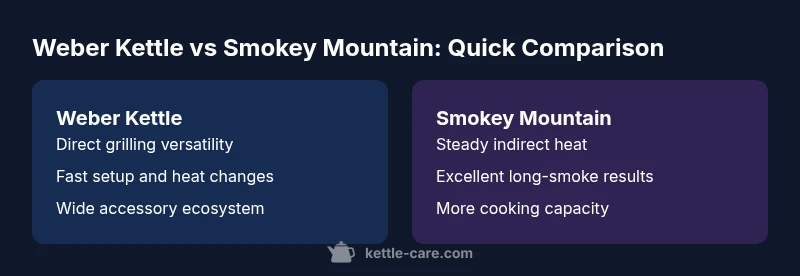
For most backyard cooks, the Weber kettle offers quick setup, reliable airflow, and versatile direct grilling, while the Smokey Mountain Cooker excels at steady heat and long, slow smoking. If you want fast weeknight meals with straightforward charcoal control, choose the Weber; for long cooks with deep smoke flavor, pick Smokey Mountain.
weber kettle vs smokey mountain: core differences
In backyard cooking, the choice between a weber kettle vs smokey mountain matters more than you might expect. Both cookers excel at different tasks, and your decision should align with how you cook most often. According to Kettle Care, the biggest differences lie in heat management philosophy, grill geometry, and the intended cooking load. The Weber Kettle is a versatile, direct-grill workhorse designed for quick searing and weeknight meals, while the Smokey Mountain Cooker is a dedicated, longer-burning smoker optimized for steadier heat and deep smoke. For many cooks, the right choice reduces fuel waste, improves flavor consistency, and lowers the learning curve for new smokers.
Why this matters for real kitchens: if your priorities include fast weeknight dinners and reliable searing, the Weber Kettle shines. If you regularly cook larger cuts over hours and value a consistent smoke profile, the Smokey Mountain becomes worth the extra setup. The comparison isn’t about which is “better” in absolute terms, but which best fits your typical cooking patterns, space, and fuel preferences.
Weber Kettle: design, airflow, and versatility
The Weber Kettle is built around a round bowl shape with a domed lid, a clean, minimal exterior, and a vented lid coupled with a bottom intake. This architecture creates a flexible airflow pathway that responds quickly to adjustments. A single, easy-to-turn bottom vent plus the lid damper allows rapid transitions from high-heat direct grilling to two-zone indirect cooking. With the right grate setup, you can sear a steak, grill vegetables, or roast indirectly at controlled temps. The modular grate and charcoal grate system enable quick changes between high-heat searing and slower, controlled cooks. For many backyard cooks, the Weber Kettle delivers a fast learning curve, broad temperature range, and a configurable layout that supports experimentation with different fuel loads and flavor profiles.
Smokey Mountain Cooker: design, airflow, and smoke stability
The Smokey Mountain Cooker emphasizes a tall cylindrical body and a reliable air-control system designed to maintain a narrow temperature window for hours. Its design prioritizes smoke circulation with a water pan that helps stabilize heat and contributes to flavor extraction through moist cooking. The bottom vent and a secondary top vent create a balanced draft that supports steady indirect cooking. Though setup can require a few extra minutes compared with a kettle, once dialed in, the Smokey Mountain delivers long, steady cooks that shine with briskets, ribs, and large roasts. The emphasis on indirect heating means you’ll often see a more even temperature in the grate area, which many users equate with consistent smoke flavor and predictable results.
Heat management and airflow: vents, rings, and weather impact
Heat management for both units hinges on vent control and heat containment. The Weber Kettle excels at rapid heat changes; the bottom vent and top damper let you chase a high-heat sear or settle into a steady 225–250°F indirect cook. Weather can affect performance; humidity and wind can shift heat more quickly in a kettle. The Smokey Mountain’s design is inherently more forgiving in windy conditions because the longer cooking path and water pan dampen fluctuations. A common setup tip is to use a two-zone layout on the Weber for long cooks and to keep the Smokey Mountain’s water pan topped up to stabilize temps during extended sessions. Overall, you’ll experience different responses to weather shifts, which is a practical consideration for weekend cooks.
Temperature control in practice: direct cooking vs long cooks
With the Weber Kettle, temperature control is fast and tactile. You can reach blistering direct heat for searing in minutes, then back off to 300°F–350°F for roasting or indirect cooking. The Smokey Mountain Cooker is built for long, low-temperature runs; it maintains a gentler rise and fall in temps, promoting uniform smoke production. Expect longer startup times on the Smokey Mountain, but once settled, you’ll enjoy smooth, controlled heat for several hours. For many cooks, the choice hinges on your typical window for cooking: a quick weeknight grill session versus a weekend barbecue project that runs overnight or several hours.
Fuel efficiency and ash management
Fuel efficiency is a practical concern for both kettles. The Weber Kettle can be optimized to conserve fuel through careful vent management and by using a smaller chimney starter for shorter cooks. Ash management is usually straightforward: ash collects under the charcoal grate, and you can extinguish and reuse coals with a metal shovel. The Smokey Mountain’s larger capacity often means more fuel is consumed for long cooks, but the water pan helps regulate heat so you can extend burn times on fewer fuel loads. Regular ash removal and water pan maintenance are key to consistent performance.
Cooking capacity and layout flexibility
The Weber Kettle offers flexibility through two-zone setup, which enables direct grilling on one side and indirect cooking on the other. The cooking grate height and additional racks allow adjustments for different foods, but the overall space is best for moderate batches. The Smokey Mountain Cooker features a taller body and a larger cooking chamber, making it well suited for big cuts and multiple racks of ribs. It shines when you plan multiple long cooks back-to-back, with smoke flavor evenly distributed across the food. In practical terms, choose the Weber for quick, diverse cooks and the Smokey Mountain for sustained, larger-volume smoking.
Maintenance, cleaning, and longevity
Maintenance involves basic cleaning and periodic checks on seals and vents. For the Weber Kettle, keep the lid gasket and vents clean to maintain airflow, and inspect the grate for hotspots. The Smokey Mountain demands slightly more routine attention to the water pan and baffle areas to prevent residue buildup that can alter heat distribution. Both benefit from a wipe-down after use and a light oil coating on the metal surfaces to resist rust. With regular care, either cooker can deliver reliable service for years, though the Smokey Mountain’s bulk and ash management require a slightly heavier maintenance routine.
Setup time, learning curve, and user experience
The Weber Kettle has a shorter setup time and a quicker ramp to temperature, which makes it appealing to beginners and busy families. The Smokey Mountain requires a touch more planning because you’ll level the heat, manage water, and maintain a steadier airflow over longer periods. The payoff is a more predictable smoke flavor and fabric-like texture on larger cuts. Understanding airflow, fuel placement, and vent settings is the main learning curve for both, but most users find the Weber approachable for everyday use while the Smokey Mountain rewards persistence and a steady cooking rhythm.
Accessories and ecosystem
A broad ecosystem supports both kettles, including specialized racks, grate inserts, heat deflectors, and cover options. For the Weber Kettle, you’ll commonly encounter two-zone grill accessories and charcoal baskets that enable efficient airflow control and cleanup. For the Smokey Mountain, you’ll likely explore water pans, heat deflectors, and rigid lids that help maintain temperature stability. The strength of the ecosystem matters for long-term enjoyment: accessories can expand how you cook, improve heat control, and broaden the range of recipes you can tackle on each cooker.
Safety considerations
Kettles run hot, and proper handling matters for safety. Always use heat-resistant gloves when adjusting vents or moving the grate, and ensure stable placement on a heatproof surface. The Smokey Mountain’s taller design can lead to a higher center of gravity when fully loaded, so secure the lid and keep children and pets at a safe distance during operation. For long cooks, monitor fuel consumption and vent settings to avoid overheating or flare-ups. Both kettles benefit from keeping a small spray bottle of water handy for flare management and routine checks of the lid seal for smoke leakage.
Practical decision guide: picking the right kettle for your space
When deciding between a weber kettle vs smokey mountain for your space, assess how you cook most often. If you prioritize quick meals, high-heat searing, and a compact footprint, the Weber Kettle is a practical, flexible choice. If your focus is slow smoking, large cuts, and a consistent smoke profile over many hours, the Smokey Mountain Cooker becomes compelling. Consider weather exposure, storage space, and how much time you want to invest in learning airflow control. Finally, think about future expansions—accessories and compatibility with other cooking methods can substantially influence long-term satisfaction.
Comparison
| Feature | Weber Kettle | Smokey Mountain Cooker |
|---|---|---|
| Direct grilling capability | Excellent for direct grilling | Limited direct grilling; optimized for indirect cooking |
| Indirect cooking suitability | Very good with two-zone setup | Excellent for long, stable indirect cooks |
| Heat stability | Responsive but can swing with vents | Excellent, stable heat for hours |
| Fuel efficiency | Good with careful vent control | Efficient for long runs due to stability |
| Cooking capacity | Compact, flexible for small to medium batches | Large chamber, great for big cuts and multiple racks |
| Maintenance effort | Light maintenance, simple cleaning | More surface area, slightly higher maintenance |
Strengths
- Great versatility for quick meals and searing
- Large ecosystem of accessories and a strong community
- Fast setup and straightforward operation for beginners
- Relatively simple maintenance with proper care
What's Bad
- Smokey Mountain requires more setup time and larger space for long cooks
- Weber Kettle can be less ideal for long, steady smoking without modifications
- Learning airflow control is necessary to maximize results on either cooker
Weber kettle wins on flexibility and speed, while Smokey Mountain wins on long, steady smoking.
If you primarily cook quick, high-heat meals and value a compact footprint, the Weber Kettle is the pragmatic choice. If your typical cooks are long, slow smokes with an emphasis on consistent flavor, the Smokey Mountain Cooker is the better long-term investment. Your space and time horizon should drive the decision.
Frequently Asked Questions
Which kettle is better for beginners?
For beginners, the Weber Kettle generally offers a gentler learning curve due to its faster ramp to temperature and intuitive setup. Start with two-zone cooking to learn indirect grilling, then experiment with direct sear. The Smokey Mountain can be introduced after you’re comfortable with airflow and heat management on the kettle.
Weber is usually easier for beginners because it heats up quickly and is forgiving for new cooks.
Can I do low-and-slow cooking on a Weber kettle?
Yes, you can perform low-and-slow cooks on a Weber Kettle by using a two-zone setup, a water pan, and careful vent control. It won’t be as stable as a dedicated smoker, but with practice you can achieve solid results. Many cooks combine a kettle with a dedicated smoke chamber attachment for extended cooks.
Yes, with two-zone setup and mindful vent control you can do low-and-slow on a Weber.
Is the Smokey Mountain easier to maintain than a Weber kettle?
Maintenance is similar in scope, but the Smokey Mountain has more surface area and a larger water pan, which can require a bit more routine cleaning. Regular ash removal, water pan cleaning, and vent inspection keep both cookers performing well over time.
Maintenance is manageable on both; the Smokey Mountain needs a bit more attention due to its size and water pan.
How do I start my first brisket on each cooker?
For a brisket, start with a longer, low-temperature cook. On the Weber, set up a two-zone fire and use the kettle’s airflow to hold around 250°F. On the Smokey Mountain, place the brisket over indirect heat with a stable temperature, and let the smoke develop gradually until the target internal temperature is reached.
Brisket starts with steady heat; use indirect cooking and monitor closely to reach the right internal temp.
What factors mainly cause flavor differences between the two kettles?
Flavor differences come from heat stability, smoke exposure, fuel type, and airflow management. The Smokey Mountain’s longer, steadier smoke exposure often yields deeper smoke flavor, while the Weber’s versatile airflow and direct grilling options create brighter, bolder sear flavors. Technique and fuel choice matter as much as the cooker itself.
Flavor comes from heat stability, smoke exposure, and how you manage the fire.
Highlights
- Choose Weber Kettle for quick, versatile cooking and easier setup
- Choose Smokey Mountain for steadier heat and long-smoke flavor
- Plan space and fuel strategy according to typical cooks and recipes
- Accessories can extend each kettle’s capabilities and ease of use