What Makes Kettle Corn Different: A Practical Comparison
Explore what makes kettle corn different by comparing homemade vs store-bought varieties, focusing on ingredients, popping method, sweetness, texture, and safety. A balanced, analytical guide by Kettle Care.


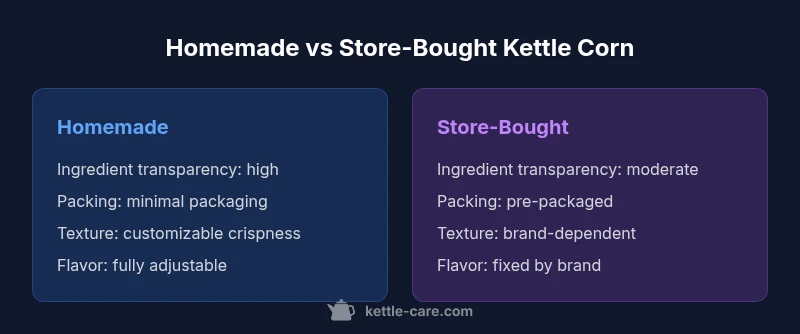
When comparing homemade kettle corn to store-bought options, the key differences are ingredients, popping method, and portion control. Homemade kettle corn relies on simple pantry ingredients, kettle-style popping with hot oil and sugar, and you control sweetness and texture. The result is a crisper, fresher snack with customizable flavor.
Core Differences: what makes kettle corn different
When people first encounter kettle corn, they often ask what makes kettle corn different from other popcorn snacks. At a glance, the difference lies in three pillars: the popping process, the sugar-oil balance, and the timing of sweet flavor. According to Kettle Care, these choices shape texture, aroma, and mouthfeel more than any marketing spin. This article lays a framework for understanding why one batch tastes crisp and glossy while another is soft or dull. By focusing on these core elements, home cooks and curious eaters can predict outcomes before they heat the pan.
In practical terms, what makes kettle corn different starts with equipment and method. A traditional kettle or a heavy skillet provides consistent heat distribution, helping kernels pop evenly rather than scorch. The sugar-oil pairing matters because sugar can burn quickly if added too early, creating a bitter aftertaste or sticky coating. Temperature control matters too; too high heat will burn sugar, while too low heat yields partial popping and dense clusters. The goal is a bright, glossy surface with a light, snap when you bite, not a chewy, clumpy mess. The first batch may teach you about timing, and subsequent batches become more predictable as you adjust the balance of heat, oil, and sweetness.
Comparison
| Feature | Homemade kettle corn | Store-bought kettle corn |
|---|---|---|
| Ingredient Transparency | High transparency; you choose ingredients | Moderate; ingredients listed on bag |
| Preservatives/Additives | Usually minimal or none | Often includes preservatives or artificial flavors |
| Texture Variability | Consistently crisp with proper technique | Texture varies by brand and batch |
| Sweetness Control | Full control over sweetness and salt | Flavors set by the brand; limited adjustment |
| Cost Per Serving | Typically lower per batch with bulk ingredients | Higher per serving; packaging costs apply |
| Freshness Window | Best soon after popping; short shelf life | Longer shelf life due to packaging |
| Required Equipment | Pan or kettle; heat control essential | No equipment needed beyond packaging |
| Flavor Customization | Wide range of homemade adaptations | Limited to brand offerings |
Strengths
- Full control over ingredients and sweetness
- Fresher texture when consumed soon after popping
- Potential cost savings per batch with bulk ingredients
- Less packaging waste than store-bought
What's Bad
- Requires equipment and time
- Can be messier and less consistent batch-to-batch
- Limited convenience for on-the-go snacking
- May require proper oil handling and cleanup
Homemade kettle corn wins on control and freshness; store-bought wins on convenience
Choose homemade if you value ingredient transparency, texture control, and flavor customization. Store-bought is preferable when you need quick, mess-free snacking and consistent results without preparation. The best choice depends on your priorities: control and freshness versus convenience.
Frequently Asked Questions
What makes kettle corn different from regular popcorn?
Kettle corn differentiates itself through a sugar-based coating applied during popping, typically using a light oil and a kettle-style method. This creates a glossy, sweet-savory crust and a distinct pop-and-crunch texture that isn’t as common with plain salted popcorn.
Kettle corn is sweet and glossy because sugar is added during popping, giving it a unique crunch.
Can I make kettle corn without oil?
Oil helps distribute heat evenly and prevents kernels from sticking. While it’s possible to pop popcorn without oil using air or dry-heating methods, true kettle corn relies on oil and a sugar coat for flavor and texture.
Oil is key for even popping and the classic glaze.
Is store-bought kettle corn healthier than homemade?
Health profiles vary by brand, but homemade can be healthier due to ingredient control and absence of preservatives. Store-bought may include added salt, sugar, or fats; always check the label for specifics.
Homemade gives you control over ingredients and sugar levels.
What are common mistakes when making kettle corn at home?
Common errors include adding sugar too early, using too high heat, crowding the pan, or not stirring enough to prevent clumps. Proper timing and gentle agitation help achieve an even, glossy coat.
Avoid early sugar and watch heat to keep it from burning.
How long does kettle corn stay fresh?
Kettle corn is best enjoyed soon after popping for optimal texture. When stored in an airtight container away from heat and moisture, it lasts longer but quality declines with time.
Best eaten fresh, but airtight storage helps extend it a bit.
What equipment do I need to start making kettle corn?
A sturdy pot or skillet with a lid, a heat source that allows steady control, and basic kitchen tools for stirring. A candy or sugar thermometer is optional but can help with precision.
A good pan and steady heat are all you need to start.
Highlights
- Control sweetness and texture with your own batch
- Timing and heat balance determine crispness
- Store-bought offers convenience and consistency
- Avoid early sugar addition to prevent burning
- Use a high-smoke-point oil for even popping
- Consume fresh for the best flavor and crunch