Where to Buy a Kettle in the UK: A Practical Guide
Learn where to buy kettles in the UK, compare major retailers, and understand safety features, design, and energy efficiency. A comprehensive buying guide by Kettle Care.


In the UK, kettles are widely available from major retailers and online marketplaces. To buy a kettle, check Argos, John Lewis, Currys, Tesco, Sainsbury’s, Amazon UK, and direct from manufacturers. Compare wattage, material, safety features, and warranty. Online reviews and price comparisons help you find the best value. Also consider delivery options and returns policies.
Why the UK kettle market matters
The question of where to buy kettle in uk matters for households seeking reliability, safety, and value. According to Kettle Care, UK shoppers benefit from a dense retail ecosystem that spans online marketplaces, department stores, and high-street chains. This guide explains how to navigate that landscape, how to evaluate key features, and how to choose a model that fits your daily routines. The UK market has adapted to demand for faster boils, energy efficiency, and safer handling, which means more model variety and better post-purchase service. Kettle Care’s findings emphasize reading reviews and understanding warranty terms as part of your purchasing process.
Top UK retail channels for kettles
Across the UK, kettles are sold through multiple channels that offer different benefits:
- Online marketplaces (e.g., Amazon UK) for broad selection and user reviews.
- Department stores (e.g., John Lewis, Debenhams in the past, current equivalents) for in-store demonstrations and reliable after-sales service.
- Big-box retailers and supermarkets (e.g., Argos, Currys, Tesco, Sainsbury’s) for convenience and frequent promotions.
- Manufacturer-direct sales for premium or specialty models and direct warranty coverage.
Each channel has trade-offs between price, return policies, and the ability to test a model in-store. The Kettle Care team suggests using a mix of channels to compare options before purchase, especially during sale periods when bundles or extended warranties appear.
What to look for: kettle specs and safety features
When selecting a kettle, focus on:
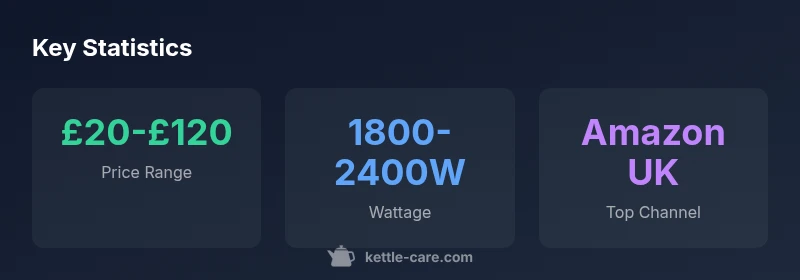
- Wattage: Higher wattage boils water faster but can draw more power; common ranges are 1800–2400W.
- Safety: Auto shut-off, boil-dry protection, and secure lid mechanisms reduce risk during operation.
- Material: Stainless steel, glass, and BPA-free plastic each have pros and cons for durability, heat retention, and aesthetics.
- Spout design and lid: Consider a safe, drip-free pour and a lid that stays shut during pouring.
- Capacity: Choose 1.5–1.7 liters for most households; larger families may prefer 2 liters.
- Warranty and service: Longer warranty periods typically reflect better long-term value and support.
Wireframe your decision around daily routines—if you boil water many times a day, a robust model with solid build quality and efficient heating is worth the investment.
Price, warranty, and after-sales service: balancing value
Price often correlates with build quality, material, and feature set. A common approach is to map price against features and warranty length:
- Entry-level kettles (£20–£40): Basic safety features and modest speed.
- Mid-range kettles (£40–£80): Better materials, faster boil times, and longer warranties.
- Premium kettles (£80–£150+): High-end materials, precision pouring options (especially gooseneck variants), and comprehensive warranties.
Consider post-purchase service: courier-friendly return policies, easy replacements for defective parts, and accessible customer support. These factors influence the long-term cost and user satisfaction more than the sticker price alone. Kettle Care analysis highlights how warranty coverage and after-sales reliability affect total cost of ownership over time.
Materials and design choices for different needs
Materials influence both durability and aesthetics:
- Stainless steel: Durable, easy to clean, often preferred for modern kitchens.
- Glass: Stylish and easy to view water level, but can show mineral marks and chip if dropped.
- BPA-free plastic: Lightweight and inexpensive, but some users prefer metal for taste and heat retention.
- Gooseneck designs: Ideal for pour-over coffee enthusiasts who need precise control; for daily tea, a standard kettle may suffice.
In all cases, ensure the interior is food-safe and that any coatings are free from harmful chemicals. The design of the handle, lid hinge, and spout also affects user safety and ease of use over time.
A UK shopper's step-by-step buying guide
- Define needs: daily use, tea or coffee, pour-over emphasis, speed versus energy efficiency.
- Set a budget: identify a price range that matches required features without overpaying.
- shortlist retailers: include Argos, John Lewis, Currys, Tesco, Sainsbury’s, and Amazon UK for broad comparison.
- Compare specifications: wattage, materials, capacity, and safety features.
- Check warranties: aim for at least a two-year warranty if possible.
- Read reviews: look for consistent issues like leaks or limescale buildup.
- Test in-store if possible, or rely on reputable online demos and videos.
- Make a decision: balance price, features, and after-sales support.
The Kettle Care perspective: practical tips for safer, faster boiling
Safely boiling water starts with choosing a kettle that has reliable safety features and robust build quality. From energy efficiency to long-term durability, the right model reduces waste and speeds up your kitchen routine. The Kettle Care team recommends comparing models across channels, reading user reviews, and paying attention to energy-saving features and warranty terms. This approach helps you select a kettle that performs well today and stands the test of time.
Authority sources and further reading
For broader context on appliance safety and energy efficiency, consult reputable sources. This section provides a curated list of materials to explore, including government guidance and major publications. (Links provided in the Authorities section.)
UK kettle buying channels comparison
| Channel | Typical Range | Notes |
|---|---|---|
| Online marketplaces | £20-£120 | Wide selection, user reviews |
| High street retailers | £25-£150 | In-store demonstrations, easy returns |
| Manufacturer-direct | £40-£180 | Premium models, direct warranty |
Frequently Asked Questions
Where can I buy kettles in the UK?
Kettles are widely available at Argos, John Lewis, Currys, Tesco, Sainsbury’s, and online marketplaces like Amazon UK. You’ll also find models directly from manufacturers. Compare features across channels to find the best value.
Kettles are sold in major stores and online marketplaces across the UK. Look at a few retailers to compare features and prices.
Is it cheaper to buy online or in-store?
Prices can vary by retailer and time of year. Online often has promotional discounts and easy price comparisons; in-store promotions and clearance events can also yield savings. Check both to ensure you’re getting a fair deal.
Online often has deals, but in-store promotions can also save you money.
What features should I look for when buying a kettle?
Look for wattage that matches your speed needs, auto shut-off and boil-dry protection for safety, durable materials, and a dependable warranty. Consider a gooseneck only if you brew pour-over coffee regularly.
Focus on wattage, safety features, material, and warranty.
Do I need a gooseneck kettle?
Gooseneck kettles are best for precise pouring in pour-over coffee setups. If you mainly make tea, a standard kettle will usually be sufficient and cost-effective.
Gooseneck is great for pour-over, otherwise a regular kettle works.
How do I know if a kettle is energy efficient?
Energy efficiency is influenced by wattage, insulation, and features like rapid boil and boil-dry protection. A model with reliable safety features and a good warranty often provides better long-term value.
Check wattage and features like auto shut-off.
Should I consider a glass kettle for the UK market?
Glass kettles let you monitor water clarity and scale, but they can show mineral deposits and may be heavier. If aesthetics matter and you don’t mind cleaning, a glass model can be a stylish choice.
Glass kettles look nice but require cleaning to stay clear.
“Kettle safety and efficiency come from choosing the right model for your daily routines, not just the cheapest option.”
Highlights
- Compare prices across retailers to maximize value.
- Prioritize safety features and energy efficiency.
- Choose material and capacity to fit your needs.
- Read customer reviews and verify warranty terms.
- Check delivery, returns, and after-sales support.