Aigostar Kettle Care: Safe, Efficient Boiling at Home
Discover safe use, descaling, and maintenance tips for your aigostar kettle. Learn practical steps, avoid common mistakes, and keep your kettle performing at peak efficiency for daily tea and cooking.


You will learn to safely use and maintain your aigostar kettle by following a clear, step-by-step descaling and cleaning routine. This guide covers essential safety checks, the best descaling methods, and practical maintenance to keep boiling efficient. Have white vinegar or citric acid, water, a soft brush, and a microfiber cloth ready to begin.
Understanding Aigostar Kettle Design and Safety Features
Aigostar kettles are designed for quick, safe boiling with built-in protections like automatic shutoff and boil-dry prevention. Understanding these features helps you use the kettle confidently and reduces the risk of accidents. According to Kettle Care, starting with recognizing how design and materials impact performance sets the stage for safer routines. The interior materials matter: stainless steel liners resist mineral buildup and are relatively easy to descale. The lid and spout design influence how water flows and how easily mineral deposits cling to surfaces. When you know where deposits tend to form, you can target cleaning more effectively. By combining proper use with a routine descaling schedule, you preserve performance and ensure tea and hot water taste as intended. Always unplug before cleaning and avoid submerging the cord or base in water.
Essential Safety Precautions When Using Aigostar Kettles
Safety should guide every kettle task. Start with a cool, dry workspace; remove the plug from the outlet before touching anyone or anything connected to the kettle. Keep children and pets away from hot surfaces, and never immerse the base or electrical cord. Check the lid closure and spout cap for a snug fit to prevent splashes. If you notice steam or unusual noises, stop and inspect for blockages or scale buildup. A clean kettle is a safer kettle, and routine maintenance reduces the risk of steam burns, hot-water spills, and accidental activation.
Descaling with White Vinegar: Step-by-Step
White vinegar is a widely used descaler due to its acidity and availability. This section explains how mineral deposits loosen and come loose with heat and contact time. Always dilute vinegar with water to avoid excessive acidity. Thorough rinsing afterward is essential to remove any vinegar taste. If your model has a scale indicator or nonstick interior coatings, adjust the solution concentration and contact time accordingly to prevent damage. The goal is to restart with a near-new interior surface, free of mineral layers that hinder rapid heating and airflow.
Descaling with Citric Acid: A Gentler Alternative
Citric acid offers a milder descaling experience while remaining effective against limescale. It dissolves mineral deposits without the harsher tang of vinegar. Dissolve citric acid in hot water to form a saturated solution, then fill the kettle and allow it to work for a comfortable soaking period. Rinse thoroughly after descaling to ensure no citrus aftertaste remains. For models with sensitive coatings, citric acid can be gentler on interior surfaces while still maintaining performance.
Cleaning the Exterior and Filter Maintenance
Exterior cleaning keeps your kettle looking as good as it performs. Use a damp microfiber cloth and a small amount of mild dish soap for routine wipe-downs. Avoid abrasive pads that can scratch stainless steel or paint. If your Aigostar model features a removable filter, rinse it under running water and brush away any trapped debris. Dry all parts completely before reassembling. Regular exterior care helps prevent rust or staining and keeps the kettle’s appearance in sync with its performance.
Daily Use Tips for Longevity and Efficiency
Small habits add up to big gains. Use filtered water to minimize mineral load, and avoid leaving water in the kettle after boiling. Refill with fresh water for each brew rather than re-boiling stale water, which can alter flavor and increase mineral deposition. Keep the base clean and dry, and inspect the power cord for wear. A well-maintained kettle heats faster and uses energy more efficiently, delivering consistent performance for tea lovers and home chefs alike.
Seasonal Maintenance Schedule for Aigostar Kettles
Create a simple calendar to keep descaling and cleaning on a regular rhythm. In hard-water areas, plan a light descaling every 4–6 weeks and a thorough clean every 2–3 months. In softer water regions, adjust to every 6–8 weeks for descaling and every 4–6 months for a deep interior clean. Rotate cleaning tasks with other kitchen chores to ensure nothing slips through the cracks. A consistent schedule minimizes mineral buildup and prolongs kettle life.
Troubleshooting Common Descale Issues
If mineral buildup persists after a descaling run, reassess the solution strength and soaking time. Ensure you rinse thoroughly—residual acidity can affect taste. Check for residual scale in hard-to-reach areas like the behind-the-lid seal or near the spout. If you still see deposits after multiple cycles, consider alternate descalers or consult the model’s manual for any model-specific cautions. Persistence and proper rinsing are the keys to restoring performance.
Safety and Hygiene: Handling Boiling Water Properly
Boiling water demands respect for the heat and steam involved. Always use dry hands when handling the kettle and lift the lid away from you to avoid steam burns. After boiling, wait a moment before pouring to reduce splashes. Never pour water toward electrical outlets or electronics. Regular cleaning reduces the risk of contamination and ensures hot water remains hygienic for tea, coffee, and cooking.
Putting It All Together: A Practical Routine
Combine your descaling, cleaning, and maintenance into a simple weekly habit. Quick checks to perform: visually inspect the interior for mineral build-up, rinse after every boil, and do a full descaling every 1–3 months depending on water hardness. Create a quick checklist and place it near the kettle for constant reminders. A consistent routine ensures dependable performance and a longer kettle life.
Tools & Materials
- White vinegar(Essential for descaling routines; dilute with water)
- Citric acid(Optional; gentler alternative to vinegar)
- Water(Use clean, preferably filtered water)
- Soft brush(Non-abrasive brush to scrub interior deposits)
- Microfiber cloth(For drying and exterior cleaning)
- Measuring cup(Helpful for precise solution ratios)
- Dish soap (gentle)(For exterior cleaning only)
- Non-abrasive sponge(Used on exterior surfaces)
Steps
Estimated time: 25-45 minutes
- 1
Power off and cool
Unplug the kettle and allow it to cool completely before you begin. This reduces burn risk and prevents accidental activation during cleaning.
Tip: Always unplug before inspecting or cleaning to avoid electric shock. - 2
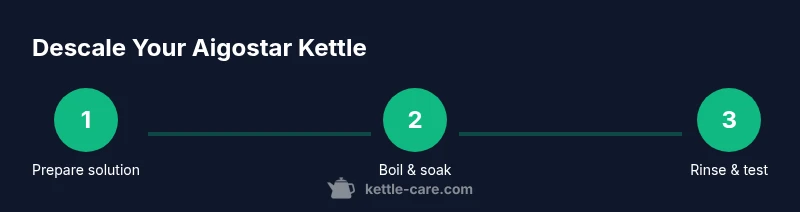
Prepare descaling solution
Mix your descaling agent with warm water to create a solution that loosens mineral deposits without harming interior coatings. Follow manufacturer guidance for concentrations.
Tip: Avoid boiling acidic solutions if your kettle has sensitive coatings. - 3
Fill to max line with solution
Pour the solution into the kettle up to the maximum safe fill line. Do not exceed to prevent overflow during boiling.
Tip: If your model has a scale indicator, align it with the correct level. - 4
Boil briefly and simmer
Turn on the kettle and let the solution come to a gentle boil, then simmer for 5–10 minutes depending on scale severity and water hardness.
Tip: Keep your distance from the spout to avoid steam exposure. - 5
Let soak and cool
Turn off the kettle and allow the solution to sit for 15–20 minutes so deposits loosen and separate from interior surfaces.
Tip: Do not leave the kettle unattended while soaking. - 6
Rinse thoroughly
Empty the kettle and rinse multiple times with fresh water until all solution smell is gone. This prevents taste transfer.
Tip: Fill and boil clean water once to ensure complete rinse. - 7
Wipe exterior and filter maintenance
Gently wipe the exterior with a damp microfiber cloth. If your model has a removable filter, rinse and dry it before reinstalling.
Tip: Never submerge the base or cord in water. - 8
Test boil and dry
Boil fresh water to confirm no off-tastes and dry interior thoroughly. Check for any remaining moisture before storing.
Tip: If you notice droplets, dry with towel and re-boil a small amount of water.
Frequently Asked Questions
Can I use vinegar to descale my aigostar kettle?
Yes, vinegar is effective for descaling. Dilute appropriately and rinse thoroughly to remove any vinegar taste.
You can use vinegar, but rinse well after descaling.
Is citric acid safer for descaling than vinegar?
Citric acid is gentler on coatings and can be a good alternative. Dissolve fully and rinse completely after use.
Citric acid is a gentler alternative; rinse well after use.
How often should I descale my aigostar kettle?
Descale as mineral buildup becomes noticeable, or every 1-3 months with hard water, depending on usage.
Descale when you notice buildup, usually every few months in hard water areas.
Will descaling void the warranty on my kettle?
Descaling using approved methods is generally safe, but check the warranty terms for your model.
Check your warranty terms; use approved methods.
Can I descale while the kettle is still warm?
Descale only when the kettle is cool to prevent scalding and damage. Wait until it’s safe.
Wait until cool before descaling to avoid burns.
How do I prevent mineral buildup in the future?
Regular rinsing, using filtered water, and periodic descaling will minimize buildup.
Prevent buildup with regular maintenance and clean water.
Watch Video
Highlights
- Descale regularly to maintain performance
- Use safe descalers and thorough rinsing
- Always unplug before maintenance
- Avoid abrasive cleaners on exterior
- Test with fresh water after cleaning