Aicok Kettle Care: Safe Cleaning & Descale Guide
Learn safe, effective descaling and maintenance for your Aicok kettle with practical steps, tips, and a simple schedule from Kettle Care.


This guide will help you descale and maintain an aicok kettle safely and efficiently, preventing mineral buildup and ensuring fast, safe boils. You’ll need clean water, a descaler (or white vinegar), a soft cloth, and access to the kettle’s interior and filter. Follow the step-by-step routine for a reliable, long-lasting kettle experience.
Why Regular Care Matters for the Aicok Kettle
Regular maintenance is essential to keep your aicok kettle performing at its best. When mineral deposits build up, you can experience longer boil times, uneven heating, and subtle changes in taste. According to Kettle Care, a well-maintained kettle not only boils faster but also reduces energy waste and helps extend the appliance’s life. For the average household, a simple weekly wipe-down and a monthly descaling routine can prevent stubborn scale without harming finishes. This is particularly important for the aicok kettle, which often uses compact heating elements and exposed indicators. By establishing a consistent cleaning cadence, you’ll enjoy safer pours, consistent temperatures for tea ceremonies, and fewer unexpected breakdowns. Remember, safety first: unplug the kettle before any cleaning and never submerge the base.
Understanding your water is key. In hard water areas, mineral content accelerates scale formation, while in softer water, buildup is gentler but still present over time. The Kettle Care team recommends pairing a regular rinse with a descaling cycle to keep your kettle’s internal pathways clear. When you review the user manual for your specific model, you’ll find notes on removable filters, mesh screens, and lid mechanisms that benefit from routine inspection. Addressing these parts during each cycle helps maintain efficiency and taste consistency for your favorite teas and coffees.
note_for_editorial_use null},{
Tools & Materials
- soft microfiber cloth(For exterior cleaning and drying without scratching surfaces.)
- clean water(Tap water or filtered water for rinsing.)
- descale option (citric acid, white vinegar, or commercial descaler)(Choose one; citric acid is gentler on metal.)
- measuring cup or small bottle(To measure water and descaling solutions accurately.)
- small brush or old toothbrush(For cleaning spout/mesh filter if accessible.)
- lemon slices (optional)(Natural aroma aid during rinsing.)
- gloves (optional)(Protect hands during cleaning.)
Steps
Estimated time: 30-45 minutes
- 1
Prepare the kettle and workspace
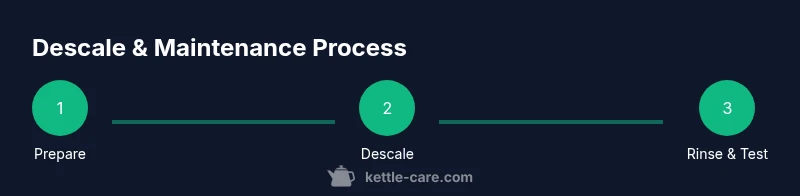
Unplug the kettle and remove the lid. Take out the filter if your model has one, and lay out your descaling solution, cloth, and a measuring cup within easy reach. This step prevents accidents and ensures you can complete the process without interruptions.
Tip: Having everything ready minimizes spills and keeps the workflow smooth. - 2
Empty and inspect the kettle
Pour out any remaining water and check the interior for visible mineral buildup around the heating element and in the spout. A quick visual inspection helps you tailor the descaling strength and duration for your kettle model.
Tip: Look for dark spots or crusty edges—these indicate scale that needs targeted attention. - 3
Mix the descaling solution
Prepare your chosen descaler following the product or recipe guidelines (or use a 1:1 mix of water and white vinegar for a simple option). Pour the solution into the kettle so the interior surfaces are coated. Don’t fill past the maximum line.
Tip: Always use a fresh solution opportunity rather than reusing old liquid. - 4
Boil the solution and soak
Turn the kettle on and bring the solution to a boil, then allow it to rest or simmer for 10–15 minutes (adjust for scale severity). This soaking period helps dissolve mineral deposits without harsh scrubbing.
Tip: Do not boil the kettle dry; keep an eye on it to prevent damage. - 5
Rinse, flush, and wipe
Discard the descaling liquid and rinse the interior several times with clean water. Refill and boil with plain water a couple of times to purge any vinegar or acid aroma. Wipe the exterior and lid, including any seals.
Tip: Run a final plain-water boil to ensure no taste carries over. - 6
Reassemble and test
Put the kettle back together, reinsert the filter if applicable, plug in, and boil a small amount of water to confirm clear, fast heating and no off-taste. If you detect any odor, repeat a quick rinse cycle.
Tip: A quick taste test with a mild tea can confirm readiness.
Frequently Asked Questions
How often should I descale my Aicok kettle?
Descale frequency depends on water hardness and usage. In hard-water areas, descale every 1–3 months; in softer water, every 3–6 months is usually sufficient. Adjust based on visible buildup and boil performance.
Descale every few months in soft water, more often in hard water, watching for noticeable scale and slower boils.
Can I descale with vinegar in an Aicok kettle?
Yes, white vinegar is effective, but rinse thoroughly to remove odor and taste. If your model has a filter or special coating, verify compatibility in the manual before use.
Yes, vinegar works, but be sure to rinse well to avoid any vinegar taste.
Is it safe to boil water with no water in the kettle?
Boiling with no water can damage the heating element and void warranties. Always ensure the kettle is filled to at least the minimum level before boiling.
Never boil dry—always fill to the minimum level before heating.
Why does my kettle taste plasticky after descaling?
A lingering plastic or metallic taste can occur if residues remain. Rinse with fresh water several times and consider running a plain-water boil to purge the interior.
If taste lingers, rinse again and boil plain water to remove any residue.
What parts should be cleaned regularly?
Clean the exterior, lid, and any removable filter or mesh screen. Check the gasket and spout for debris and clean as needed to maintain a tight seal.
Clean the outside and the filter area regularly to keep everything sealing correctly.
How do I replace the filter on an Aicok kettle?
Consult the model-specific manual for filter type and replacement steps. If the filter is removable, rinse or replace it as recommended and reinstall securely.
Check your model’s manual for filter replacement steps and use compatible parts.
Watch Video
Highlights
- Descale regularly to maintain efficiency
- Choose a safe descalant and follow the steps
- Rinse thoroughly to avoid tastes or odors
- Inspect filters and seals during cleaning
- Test with plain water to confirm performance