Breville Hot Water Guide: Safe, Fast, and Descale-Ready
Learn safe, efficient use of Breville hot water kettles, with step-by-step maintenance, descaling tips, and best practices for quick boiling and long-term durability.


With a Breville hot water kettle, you will heat water quickly and safely, customize temperature if your model supports it, and maintain the kettle for long-term performance. This guide covers safety checks, descaling, preheating, and efficient pouring to reduce energy use and prevent scale buildup. Whether you brew tea, cocoa, or instant meals, proper use protects you and extends appliance life.
Why Breville hot water kettles stand out
Breville hot water kettles are popular for speed and reliability, with models offering precise temperature presets and thoughtful safety features. According to Kettle Care, Breville’s kettles often blend rapid boil times with dependable temperature control and ergonomic design, making them a trusted choice for tea lovers and home cooks. The Kettle Care team found that features such as spill-resistant lids, anti-scale filters, and well-sealed bases reduce spills and heat loss, improving both safety and flavor extraction. For daily use, these details matter: faster boil times save energy, while consistent temperatures help you get the most from green, black, or herbal teas. When you pair a Breville kettle with clean water and a regular descaling routine, you protect the appliance and preserve flavor over time.
Safety basics before heating water
Before you switch on your Breville hot water kettle, perform a quick safety check: inspect the lid seal, spout, and power cord for damage; ensure the water reservoir is clean; and clear the area of clutter. Always fill with cold water to avoid pressure spikes from hot water. Keep children and pets away during heating, and place the kettle on a stable, hard surface away from edges. Never submerge the base or let the cord dangle where it could be pulled. Use the kettle as intended, and follow the manufacturer’s directions for lid use and auto shutoff. Regular maintenance—descaling, exterior cleaning, and lid inspection—helps keep boiling accurate and reduces the risk of steam burns.
Temperature control and water quality for best results
Many Breville models offer adjustable temperature presets, which is ideal for different beverages and sauces. For most teas and delicate infusions, aim for specific temperatures: around 95°C for oolong and white teas; 85–90°C for green tea; and near 100°C for black tea. If your model lacks exact temperature control, use the keep-warm function only briefly to avoid overheating the water. Water quality matters: hard water leaves mineral deposits that slow heating and can affect taste and aroma. Use fresh cold water, and consider a filtration method if your tap water is high in minerals. Descale when mineral buildup appears; this keeps heat transfer efficient and preserves flavor integrity. The goal is even heating, safe handling, and consistent flavor outcomes.
Common Breville models and presets you’ll use
Breville offers a range of electric kettles with presets such as Fast Boil, Temperature Control, and Keep Warm. While the exact presets vary by model, the core idea is to match water temperature to your beverage. For tea enthusiasts, presets that land near 75–85°C or 85–90°C make a noticeable difference in taste. If your model includes a custom temperature setting, program your favorite temps for daily use. Review the user manual to map each preset to your most-used tasks and save time on busy mornings. In any case, respect safety features like automatic shutoff and dry-boil protection to avoid accident or damage when the kettle is empty or overheating.
Descaling: why and how
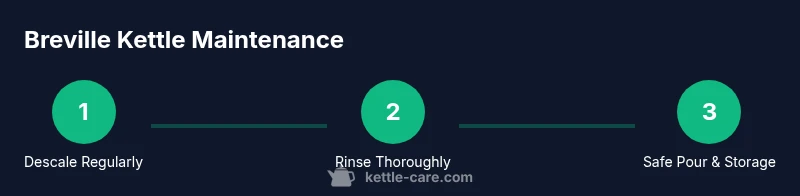
Descaling removes mineral scale that accumulates on the heating element and interior surfaces. Regular descaling keeps boil times fast and prevents off-flavors from mineral buildup. Use a descaling solution or a vinegar-based mix following the manufacturer’s guidelines, and always rinse thoroughly afterward. Fill with fresh water and allow the solution to sit for a short period if required by the product instructions, then boil once or twice with clean water to flush residue. After descaling, run the kettle through a normal boil cycle to restore heat transfer efficiency. Avoid acidic cleaners that may corrode seals, and never mix descaling products with unknown compounds.
Cleaning exterior and interior maintenance
Clean the exterior with a soft cloth and mild detergent to remove fingerprints and mineral smudges. Never use abrasive pads on the surface or the lid. Wipe the spout and lid area to remove any residue that could interfere with sealing. Inside, avoid soaking or submerging the base; always unplug before cleaning, and never introduce water into the electrical base. For built-up limescale around the heating element, use a vinegar solution or descaler according to safety guidelines, then rinse thoroughly. Regular checks of the power cord and plug for wear help prevent electrical hazards in the kitchen.
Safe pouring and handling habits
Pour slowly to minimize steam and splashes; use the lid to guide steam away from you. If your Breville kettle has a balanced handle, maintain a firm grip and tilt slowly to avoid spilling hot water on yourself. After pouring, set the kettle down away from children and keep the area dry. If you notice steam or a poor pour, inspect the lid seal and the spout filter for blockages. When not in use, store the kettle with the lid loose enough to vent moisture, but away from heat sources or moisture-prone areas.
Troubleshooting common issues
If the kettle takes longer to boil, check for mineral buildup on the element or a clogged filter; descale if needed and rinse. If the kettle fails to switch off, unplug and examine the base for damage or misalignment of the lid sensor. If flavor or odor persists after boiling, perform a light descaling cycle and rinse thoroughly. If the container leaks or the lid does not seal, inspect the seal ring and lid assembly for wear and replace parts as necessary. If the kettle produces unusual noises, ensure the water is not too low, and that the kettle is on a flat surface.
Energy efficiency and accessories for longer life
Boiling only what you need saves energy and reduces wear on the heating element. Use filtered cold water to minimize mineral buildup, which helps maintain efficiency over time. When purchasing a Breville kettle, look for features like precise temperature control and a well-sealed lid that minimizes steam losses. Accessories like a descaling brush and a soft-cleaning cloth simplify maintenance and extend life. A regular care routine—descaling, exterior cleaning, and safe storage—supports performance while reducing energy consumption across the kettle’s lifespan.
Tools & Materials
- Breville hot water kettle(Model with temperature control is preferred for best results.)
- Cold water supply(Use tap water or filtered water as you prefer.)
- Descaling solution or white vinegar(Follow manufacturer directions; avoid undiluted acids.)
- Soft cloth or non-abrasive sponge(For exterior cleaning and lid/spout areas.)
- Non-abrasive brush or sponge (optional)(For interior scale removal if needed.)
- Measuring cup (optional)(Helps fill to the max line accurately.)
- Towel or tray (optional)(Catch spills during filling or pouring.)
Steps
Estimated time: 25-40 minutes
- 1
Check power and water supply
Place the kettle on a stable, dry surface. Inspect the power base, cord, lid, and spout for damage before you begin. Confirm there is enough clean water to complete your planned task.
Tip: Ensure the base is dry and the area around the cord is clear to prevent slips or cord pulls. - 2
Fill to a safe level with cold water
Open the lid and fill the kettle using cold water up to the recommended max line. Avoid overfilling to prevent splashes during boiling and to maintain safe lid pressure.
Tip: Use a measuring cup if your model’s max line isn’t visible to ensure accuracy. - 3
Plug in and power on
Connect the kettle to a grounded outlet. Confirm the indicator light or screen shows the unit is ready. Do not operate if you notice frayed cords or buzzing.
Tip: Place on a stable counter away from edge to prevent tipping. - 4
Set the temperature
If your model has presets, select the desired temperature for your beverage. If manual, set to the closest temperature and wait for the boil cycle to begin.
Tip: For tea, pick temperatures aligned with the type you’re brewing. - 5
Boil and monitor
Allow the kettle to reach the set temperature. Do not leave unattended during the boil, especially near children or pets.
Tip: If your model has a beeper, keep an ear out so you don’t forget it. - 6
Pour safely and serve
Tilt slowly and keep the lid closed to minimize steam exposure. Pour into cups or a teapot away from your body.
Tip: Keep hands dry and grip the handle firmly for a controlled pour. - 7
Turn off and cool
Switch off or unplug after boiling. Allow the kettle to cool before refilling to avoid pressure-related issues.
Tip: Wipe exterior moisture to prevent slips on the counter. - 8
Descale on schedule
Descale when you notice longer boil times or a cloudy interior. Use a descaler or vinegar solution per manufacturer guidance and rinse thoroughly.
Tip: Never mix descalers with other cleaners; rinse completely between cycles. - 9
Clean exterior and lid
Wipe the exterior with a soft cloth and a mild detergent. Dry and inspect the lid seal and spout filter for any wear or buildup.
Tip: Regular cleaning helps maintain a tight lid seal and reduces buildup.
Frequently Asked Questions
What temperature should I heat water to for tea with a Breville kettle?
Tea temperature depends on the type you’re brewing. Use around 95°C for many black or oolong teas, about 85–90°C for green tea, and slightly cooler for delicate whites. If your Breville model has presets, select the closest temperature and adjust if needed to taste.
Tea temperature varies by type. Use near-boiling for black or oolong, a bit cooler for green, and even cooler for delicate whites. Use your model's presets or manual settings accordingly.
How often should I descale my Breville kettle?
Descale based on mineral hardness and usage. If you notice longer boil times, cloudy interior, or slower heating, perform a descaling cycle and rinse thoroughly. Regular maintenance helps keep performance consistent.
If you notice slower boiling or a cloudy interior, descale. Do it routinely to keep performance steady.
Can I use vinegar to descale a Breville kettle?
Yes, a diluted vinegar solution is commonly used for descaling. Follow the manufacturer’s directions for dilution and contact time, then thoroughly rinse with fresh water to remove any vinegar residue.
Yes, you can use a diluted vinegar solution. Rinse well afterward to remove any vinegar taste.
Is it safe to fill to the max line?
Yes. The max line indicates the safe filling level for optimal boiling and to prevent spills. Do not exceed it, and avoid boiling dry.
Yes, stay below the max line to prevent spills and dry-boil risks.
Why is my Breville kettle making unusual noises?
Noises can indicate mineral buildup or a partial blockage in the spout or filter. Descale if you notice scale, and inspect the filter and lid for blockages. If noises persist, contact support.
If you hear odd noises, scale buildup or blockages may be the cause. Descale and check the filter.
Watch Video
Highlights
- Always perform a quick safety check before boiling.
- Use the right temperature for your beverage to optimize flavor.
- Descale regularly to maintain efficiency and taste.
- Clean exterior and interior parts to extend kettle life.
- Follow model-specific presets for safer, faster operation.