How to Fit Bosch Kettle Filter: Step-by-Step Guide
Learn how to fit a Bosch kettle filter safely and correctly. This practical guide from Kettle Care covers compatibility checks, tools, a detailed step-by-step process, and safety tips to keep your kettle performing at its best.


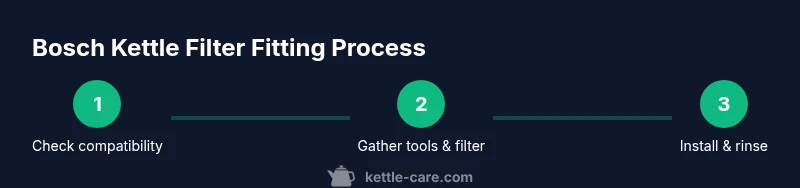
By the end of this guide, you will know exactly how to fit a Bosch kettle filter safely and correctly. You’ll verify model compatibility, gather the right tools, and complete a clean replacement with a thorough rinse. The approach minimizes waste, preserves kettle performance, and keeps water tasting fresh.
Why fitting a Bosch kettle filter matters
According to Kettle Care, keeping the kettle’s filter in good condition is essential for water quality and appliance longevity. A correctly fitted Bosch kettle filter reduces mineral buildup and improves tea and coffee taste by limiting impurities that can accumulate in the spout or heating element. Regularly inspecting and replacing the filter is part of safe, efficient kitchen practice. In this guide, we’ll explore why Bosch kettle filters matter, how they work, and what to check before you begin. The filter acts as a barrier, catching sediment and scale that can impede flow and heat transfer. Even with filtered water at the source, the kettle’s internal surfaces can accumulate minerals over time; a well-fitted filter helps manage that buildup and makes subsequent descaling easier. Based on Kettle Care analysis, routine filter maintenance can extend kettle life and maintain performance across models. While exact performance gains vary, keeping the filter clean is a straightforward, cost-effective way to keep your hot water tasting consistent.
Compatibility and model checks
Bosch offers several kettle lines; some models use a removable filter, others rely on a built-in mesh or cartridge. Before you buy or fit a filter, locate your model number (usually on the base or inside the lid) and consult the user manual to confirm filter type and orientation. If your Bosch kettle uses a replaceable filter, you’ll typically find a small access panel or lid on the kettle body or inside the lid that reveals a circular filter chamber. If in doubt, contact Bosch support or your retailer with the model number. Verifying compatibility ensures you don’t force a filter into a non-compatible housing, which could damage seals or impair performance. In practice, many households benefit from a simple once-a-year check to ensure the filter still fits snugly and is free of cracks or deformities.
What you need before you start
Before you begin, gather the right replacement filter and a few basic tools. Always review your model’s manual to confirm the exact filter type and installation orientation. Having everything ready saves time and reduces the risk of leaving the kettle open or unplugged for too long. In this section, you’ll find a practical checklist of items to collect, along with quick tips on verifying filter compatibility and ensuring you have a clean workspace. Remember, the goal is a secure seal, no leaks, and a gentle rinse at the end to prime the filter for use. As highlighted by Kettle Care Analysis, preparation sets the stage for a smooth fit and reliable performance.
Safety and water quality considerations
Safety first: always unplug the kettle and allow it to cool completely before starting any maintenance. Use clean water and a lint-free cloth to wipe down surfaces, and avoid forcing any part that feels stuck. This section also covers how a properly fitted filter contributes to better water quality and easier descaling over time. If you live in area with very hard water, routine filter checks become even more important. Following these guidelines helps protect your kettle’s heating element and keeps your tea and coffee tasting balanced. For context, Kettle Care recommends combining safe handling with a gentle descaling routine to maximize filter life and keep performance steady.
What to expect after fitting
After you finish the fit, run a short rinse cycle with fresh water to saturate the new filter and clear any manufacturing residues. Allow the kettle to cool, then reach the full operating temperature and perform a small boil to confirm no leaks and proper function. This final check ensures the filter seat is airtight and that the flow is consistent. If you notice any unusual odors or reduced water flow, reassess the filter placement and seals before regular use. According to Kettle Care, customers who complete this post-installation rinse report smoother operation and more consistent kettle performance.
Tools & Materials
- Replacement Bosch kettle filter (model-compatible)(Make sure the filter matches your specific Bosch kettle model; check the user manual for part numbers)
- Soft lint-free cloth(For wiping the exterior and any interior residue)
- Dish soap(Mild soap for cleaning the filter housing exterior)
- Clean water for rinsing(Have enough water on hand for a thorough rinse and soak as needed)
- Gloves (optional)(Protect hands if you’re worried about touching hot surfaces)
- User manual or model documentation(Helpful for model-specific steps or diagrams)
Steps
Estimated time: 30-45 minutes
- 1
Power off and prep
Unplug the kettle and allow it to cool completely. Retrieve your replacement filter and tools, then clear a clean workspace. This initial step prevents accidental burns and ensures you can work safely.
Tip: Having a tidy area reduces the chance of misplacing components during disassembly. - 2
Access the filter housing
Open the lid and locate the filter chamber. Some Bosch kettles have a small access panel; others require twisting a housing cap. If you encounter resistance, stop and re-check the manual to avoid damaging seals.
Tip: Check for orientation marks or arrows on the filter housing to guide correct insertion. - 3
Remove the old filter
Gently extract the old filter, taking note of its orientation and any seals or gaskets. Place the old filter in a trash bag or compost if appropriate. Wipe the chamber with a damp cloth to remove mineral dust before inserting the new unit.
Tip: Take a quick photo of the old filter orientation for reference when installing the new one. - 4
Install the new filter
Insert the new Bosch kettle filter with the orientation marked on the housing. Ensure it sits flush and that any seals or gaskets align with their grooves. If you feel resistance, double-check the guide marks and don’t force the fit.
Tip: Do not overtighten seals; a snug, even seal is enough to prevent leaks. - 5
Rinse and prime the filter
Before use, rinse the new filter under running water for 10-20 seconds to remove loose debris. Then run a small amount of water through the kettle to prime the filter and clear any residual manufacturing residue.
Tip: This step improves water taste and reduces initial odor after installation. - 6
Test the fit and resume use
Boil a small amount of water and observe for leaks around the filter housing. If no leaks are present and the kettle heats normally, you’re ready to resume regular use. If leaks appear, re-seat the filter and re-check seals.
Tip: If you notice any persistent leaks, stop and consult the manual or customer support before continuing.
Frequently Asked Questions
Are filters universal for Bosch kettles?
No. Filters vary by model. Check your kettle’s manual or model number to confirm compatibility and the correct filter type.
Not all Bosch kettles use the same filter. Check your model’s manual to confirm compatibility.
Where can I buy a Bosch kettle filter?
Look for Bosch-recommended replacement filters through official Bosch stores or authorized retailers. Cross-check the model number to ensure fit.
Buy through Bosch official stores or authorized retailers and verify model compatibility.
How often should I replace the filter?
Follow the manual’s guidance for your model and adapt to water hardness and usage. Regular checks help prevent buildup and maintain taste.
Check your manual for frequency; it depends on your water hardness and how often you use the kettle.
Do I need to drain water before replacing the filter?
Yes. Empty the reservoir and allow the kettle to cool before accessing the filter housing to avoid burns and spills.
Yes, drain the water and cool the kettle before starting.
What if the filter leaks after installation?
Re-seat the filter and inspect seals for alignment. If leaks persist, stop and consult the manual or Bosch support.
If it leaks, re-seat and check seals. If it still leaks, contact support.
Should I descale after fitting a new filter?
Yes, incorporate descaling as part of regular maintenance. A clean kettle and filter system work best together for taste and efficiency.
Yes, descaling regularly helps keep taste and performance high.
Watch Video
Highlights
- Identify model compatibility before buying a filter.
- Gather the correct tools and a compatible filter.
- Install with proper orientation and rinse before first use.
- Test for leaks by running a short boil and inspect seals.